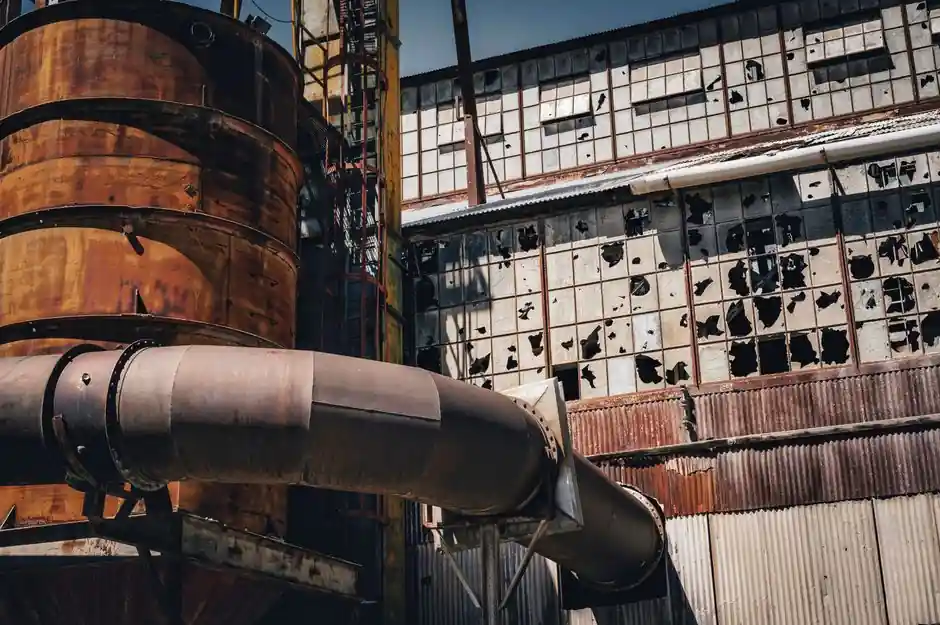
A force gauge destined for outdoor service is not the same purchase as a bench-top unit: capacity and accuracy alone will not survive salt, UV, fertilizer mist, or temperature swings, and the corrosion-rated options on most catalogs all read "stainless" until you compare them against ASTM B117 hours and IP code [S2][S5].
Outdoor duty on a force gauge is defined by four overlapping stresses: atmospheric corrosion (chloride, SO2, fertilizer aerosol), water and dust ingress, UV-driven elastomer and display degradation, and thermal cycling that loosens mechanical interfaces. A clean RFQ line names each one with a number attached.
Capacity, Accuracy, and Resolution: The Indoor Numbers Still Apply
The first three lines on any RFQ for a force gauge are capacity, display resolution, and accuracy class, and they should be set by the application before the environment is discussed [S4]. Push-pull versus compression-only duty, peak hold versus track mode, and the sampling rate all sit in this block, because they determine the load cell family the supplier will quote.
Typical industrial force gauge capacities cluster between 10 N and 1,000 N for hand-tool calibration and go up to 50 kN for structural test fixtures; accuracy of 0.1 percent of full scale is a common premium-tier target, with 0.5 percent acceptable for general production checks [S3]. Leave these blank and every supplier will assume their house default, which is how you end up with one quote at 0.1 percent FS and another at 1 percent FS for the same SKU.
IP Code, Salt-Fog Hours, and the Outdoor Exposure Stack
IP65 is the minimum practical rating for any force gauge used outdoors, with the second digit covering jetting from any direction; IP67 (temporary immersion to 1 m) is the safer lower bound for wash-down or coastal sites, and IP65K is the high-temperature, high-pressure jet variant specified on many food and agricultural lines [S2][S5].
Salt-fog exposure is conventionally tested per ASTM B117 (neutral 5 percent NaCl, 35 °C chamber), with 48 h to 96 h a common "outdoor" pass mark and 240 h to 1,000 h reserved for marine and offshore service; ASTM B117 hours, not a vague "salt resistant" claim, are what should appear on the RFQ line [S2]. For cyclic corrosion the comparable test is ISO 12944, where C4 (industrial, coastal) and C5 (marine, offshore) are the two categories buyers actually specify, each with a stated durability range in hours [S2].
UV is the third leg of outdoor exposure and is frequently missed: powder-coat and anodized finishes can chalk and lose thickness under sustained UV, while TPE and PVC cable jackets harden and crack. Where the gauge sits in direct sun for more than a few hours per day, request a UV-stabilized polymer reference (a common example is a carbon-black-loaded TPE rated for outdoor use) and confirm the display window is bonded optical-grade acrylic or chemically strengthened glass, not uncoated polycarbonate.
Material Selection: 304 vs 316, Anodized Aluminium, and Plated Hardware
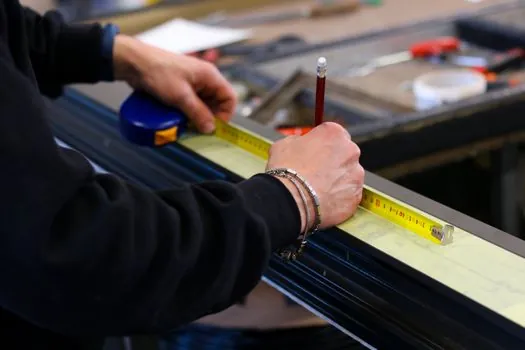
Load cell body and frame material is the single most quoted line in the corrosion block: 304 stainless is adequate for most rural and light-industrial outdoor sites, 316 stainless is the right answer within roughly 1 km of breaking surf or in chemical wash zones, and anodized aluminium (typically Type II or Type III per MIL-A-8625) is acceptable where weight and cost matter more than chloride resistance [S2].
Fasteners are the failure point engineers forget: stainless body with zinc-plated steel eye bolts defeats the rating. Specify 316 or A4-80 fasteners, A2-70 as the minimum, and require the same finish class on load buttons, hooks, and any swiveling fixture. For aggressive chemical exposure (fertilizer, chlorine, caustic wash), request a full material declaration including seal material (FKM/Viton is the common outdoor-chemical choice above 0 °C, EPDM for hot water and steam) and any o-ring compound used at cable entry [S1][S2].
Coating choice has measurable trade-offs: powder coat over zinc-rich primer is the typical cost-effective stack for agricultural equipment, while electrophoretic deposition (e-coat) gives a more uniform film on complex load-cell geometries and is widely used on outdoor enclosures [S1]. Where both are offered, the e-coat plus powder topcoat tends to outlast powder alone in salt-fog, but only if the supplier documents the DFT (dry film thickness) in micrometres, not a vague "double-coated" claim.
Operating Temperature, Humidity, and Cable Entry
Outdoor force gauges commonly operate between -10 °C and +50 °C, with low-temperature variants rated to -20 °C or -30 °C using extended-range LCDs and low-temperature greases; above +50 °C the electronics and seal materials begin to drift, and the gauge should be specified as high-temperature with an explicit upper limit and derating note [S1].
Humidity is paired with temperature: 95 percent non-condensing is a typical industrial outdoor rating, and the RFQ should state whether condensation is expected (it is, in any enclosure that breathes). Cable entry is the leak path most buyers miss, and the right answer is a sealed cable gland sized to the actual cable OD, with IP rating matched to the enclosure; for a wireless or battery-only gauge this collapses to a sealed battery cap and a USB port behind a captive silicone plug [S2][S5].
Display window condensation is a separate failure mode: a heated display option, or a desiccant cartridge behind a vented gland (Gore-type membrane vent), is the standard fix and should be requested where the gauge sits in a marine or tropical outdoor environment.
Comparison Table: Typical Outdoor Force Gauge Build Options
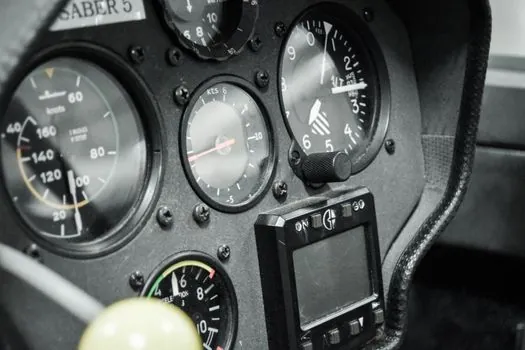
Three build tiers cover most outdoor RFQs, and the trade-off is between cost, weight, and chloride resistance. The numbers below are typical catalog values for industrial handheld and inline force gauges and are useful for sanity-checking supplier proposals rather than as a fixed spec. [S4]
Entry outdoor build: anodized aluminium body, 304 stainless load fittings, IP65 rating, ASTM B117 48 h pass, -10 °C to +50 °C, intended for sheltered outdoor use (covered test bays, agricultural sheds). Typical capacity range 50 N to 5,000 N.
Standard outdoor build: 304 stainless body with bead-blasted finish, 316 stainless fittings, IP67 rating, ASTM B117 96 h pass, -20 °C to +60 °C, FKM seals, vented cable gland. Typical capacity range 10 N to 50 kN.
Marine/chemical build: 316 stainless body and fittings throughout, IP67 or IP65K rating, ASTM B117 240 h to 1,000 h pass or ISO 12944 C5 classification, -30 °C to +70 °C, FKM or FFKM seals, Gore vent, optical-grade bonded window, full material traceability certificate. Typical capacity range 10 N to 100 kN, with cost roughly 2.5 to 4 times the entry build at the same capacity.
RFQ Line Items That Cut Requote Cycles
Three document practices measurably reduce clarification back-and-forth: a single line item per capacity range, an explicit list of "not required" features (Bluetooth, data logging, peak hold), and a separate line for calibration certificate scope (factory traceable versus UKAS/ACCREDIA, with the number of test points) [S4].
The most common RFQ mistakes that force requotes are: specifying capacity without specifying the safety factor (2x for static, 5x for dynamic is a common baseline), omitting the test cycle or expected service life, and leaving the connector type open, which lets the supplier default to a bare cable and then charge extra for a sealed M12 or military-grade plug on the change order [S3][S4][S5]. For a process-engineering analog, the same discipline that drives a clean pressure gauge RFQ line applies: each parameter with units, a tolerance, a standard, and an explicit "not required" for everything else.
Acceptance Criteria and Documentation to Demand
Acceptance should be written into the PO, not negotiated at incoming inspection: a 100 percent calibration check at three points (0, 50 percent FS, 100 percent FS), a visual salt-fog or ISO 12944 report matching the RFQ line, and a material declaration listing alloy, seal compound, and any surface treatment with the relevant standard number [S1][S2].
Two trackable signals to watch on the supplier side: whether the datasheet quotes ASTM B117 hours directly (many low-cost catalogs will not, and that is itself a red flag), and whether the IP rating is third-party certified versus self-declared, since the test cost is small but the paperwork is a reliable proxy for build quality [S2][S5].
Detailed specification references: weighing force.
For related coverage, see Check Valve Types and Classifications: A Spec-Driven Map for Process Engineers.