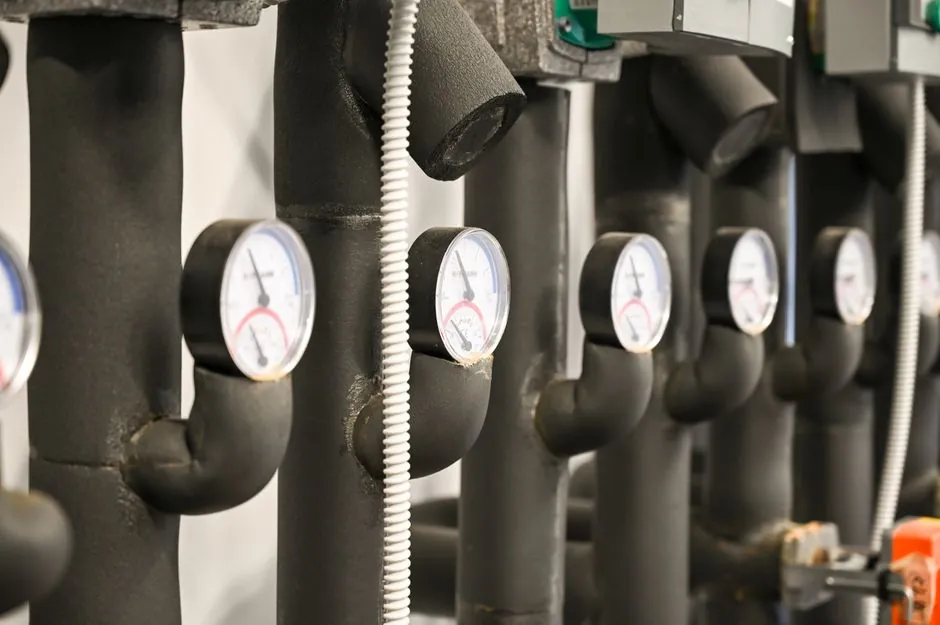
Check valves, also designated CV or non-return valves, open automatically when forward differential pressure lifts the closure element off its seat and close under gravity, spring force, or reverse pressure, blocking backflow without external actuation [S1][S2][S3].
Nine construction families dominate industrial specification: swing, ball, lift, dual plate, nozzle, piston, silent, spring-loaded, and stop check valves, each defined by a different closure element, body pattern, and assist mechanism [S1]. Selection is governed by media type, solids content, pressure drop, slam risk, and pipe orientation, not by face-to-face interchangeability [S1][S2].
Classification Axes: Closure Element, Assist Force, and Flow Path
Check valves are classified along four engineering axes: by closure element (disc, ball, poppet, plate, piston, nozzle), by closing assist (gravity-only, spring-assisted, or hydraulic), by body pattern (globe-style, wafer, swing-through, axial), and by application fit (clean service, slurry, pump discharge, high-pressure) [S1]. The standard core anatomy across all types is body, seat, disc/closure, bonnet, and gaskets, with materials commonly cast steel, stainless steel, or cast iron depending on duty [S2]. A lift-type uses a guide bracket to constrain linear disc travel, while a swing-type uses a pin shaft to support rotary disc motion [S2].
The Nine Principal Types Compared
A side-by-side decision table for the nine check valve families, with typical operating envelope and primary duty: [S1]
Swing check: hinged disc, gravity return, low pressure drop, general pipeline service; standard for water and HVAC, but slam-prone on long pump-discharge lines [S1].
Ball check: spherical closure seated in a conical seat; tolerant of solids and fibrous media, common in wastewater and slurry duty [S1].
Lift check: conical disc lifted off a metal seat by upstream pressure; short stroke, sturdy, requires horizontal pipe with flow entering from below the disc, with spring preload optional [S2].
Dual plate (wafer): two half-discs on a central hinge, compact face-to-face for large line sizes, common in offshore and process modules [S1].
Nozzle check: streamlined poppet on a spring, designed for pump discharge and non-slam duty where rapid closure matters [S1].
Piston check: guided piston-style disc for clean, high-pressure service, similar envelope to lift but with positive linear guidance [S1].
Silent check (spring-assisted lift): centreline-guided disc with closing spring, fast-closing to mitigate water hammer on pump stop [S1].
Spring-loaded check: generic family where any closure element is assisted by a spring to guarantee closure regardless of orientation; vertical installation is allowed where gravity-only types fail [S1].
Stop check: combines a globe-style disc with a separate stop mechanism so the valve can throttle or isolate in addition to blocking reverse flow, critical on boiler feed and steam service to prevent condensate backflow into a generator [S1][S3].
For comparison with adjacent valve families, gate valves and globe valves are normally used for isolation rather than automatic backflow prevention, and pairing the wrong type in pump-discharge duty is one of the most common specification errors. A swing check valve in particular should be cross-checked against available installation space and slam tolerance before approval, since its face-to-face envelope and slam behaviour differ sharply from a wafer dual-plate unit.
Selection Criteria: Media, Head Loss, Slam, and Orientation
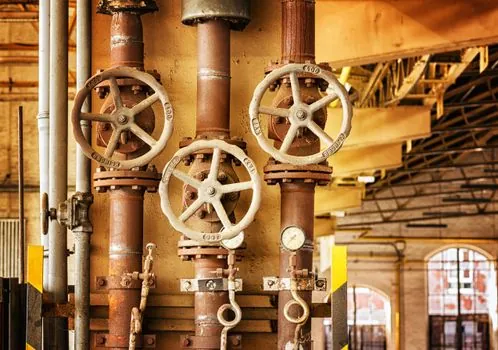
Selection starts with flow rate and normal operating differential, then layers in media cleanliness, solids content, and viscosity; a swing or dual-plate unit suits clean general service, while ball or swing units are preferred where fibrous solids or slurry would jam a guided lift disc [S1][S2]. Head loss and pressure drop are tied directly to body pattern: swing and dual-plate have the lowest loss, lift and piston types incur higher loss because flow turns through the seat, and nozzle and silent check units add spring cracking pressure on top of geometry loss [S1]. Non-slam and water-hammer requirements are the dominant criterion for pump discharge: silent, nozzle, and spring-assisted lift types are specified where reverse-flow velocity would slam a gravity swing disc and damage the seat or piping [S1]. Pipe orientation and available face-to-face envelope are physical constraints: lift check valves must be installed in a horizontal pipe with flow entering from below the disc, whereas spring-loaded and silent checks can be mounted in any orientation including vertical lines [S2][S1]. Pressure class, temperature, body and seat material, and datasheet review close the loop, with cast steel and stainless steel bodies dominating higher-pressure and corrosive duty respectively [S2].
Limitations, Failure Modes, and Risk of Wrong Selection
Each type has a defined failure mode. Swing checks can slam on pump trip, with reverse velocity at pump shutoff typically the controlling variable; the disc, seat, and hinge pin take the impact and are the wear parts [S1]. Lift checks are restricted to horizontal pipe with upward flow because the disc relies on gravity plus reverse pressure to seat, and a vertical install will not guarantee positive closure [S2]. Silent and nozzle checks add a spring cracking pressure that becomes a permanent head loss in the system, so the spring setpoint must be reconciled with the minimum forward differential available at start-up. Stop checks introduce a second mechanism that must be exercised, and are not a drop-in replacement for a plain NRV where maintenance access is constrained [S1]. Common risks when the wrong type is specified include water hammer on long pump-discharge lines fitted with swing units, jamming of lift or piston discs in slurry service, leakage past a ball check seated in solids-laden media, and premature seat wear on a wafer dual-plate running outside its pressure-temperature envelope [S1].
Standards, Sourcing, and Specification Discipline
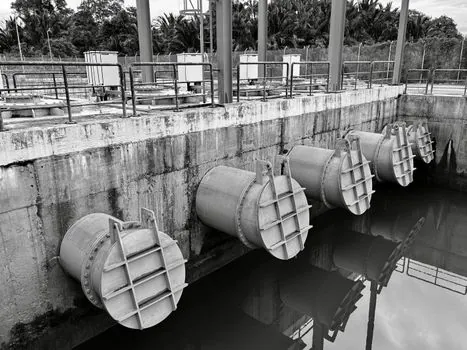
Check valves are addressed in the broader valve datasheet ecosystem covering ANSI (in) face-to-face dimensions, with check valves catalogued as a discrete type alongside ball, butterfly, gate, globe, and plug valves [S3]. The abbreviation convention is CV for check valve, BTFLV for butterfly, BV for ball, and V for the generic valve category [S3]. A datasheet review is the final gate: pressure class, temperature, body and trim material, seat type, end connection, and applicable piping code are checked against the service fluid before an RFQ is released [S1]. For broader product context inside the same fluid-control domain, globe valve classifications follow a parallel spec-driven logic, while gate valve installation field checks address the isolation-side counterpart of any system that also includes check valves. Track the next design review of pump-discharge check selection against measured reverse velocity, and confirm whether silent or nozzle units have been substituted on lines where swing units were originally installed.
For component-level specifications, see construction machinery and equipment.