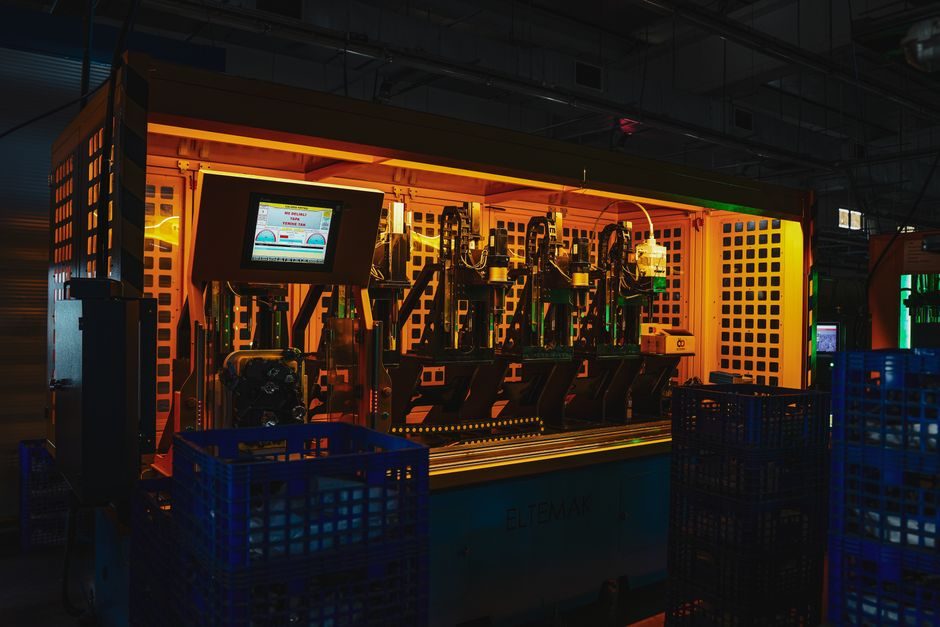
An outdoor maintenance-area capper or sealer has to clear four hard gates before a process engineer signs the PO: IP-rated enclosure for weather and washdown, cap-type compatibility with the containers actually used on site, throughput matched to maintenance-day volume, and torque or seal-integrity monitoring that keeps partial-seal leakers below the 2% threshold documented in production-capper acceptance criteria [S6].
Selection is rarely a like-for-like swap with an indoor unit because the duty cycle is bursty (campaign-based demand, 2-3 day runs per month for drum-top-up, pail changeover, or field-filling of deionized water and cutting-fluid drums) rather than continuous [S5][S7].
Enclosure, Corrosion, and Outdoor-Rated Construction
Outdoor units are routinely cited in the IP65-or-better band when the maintenance yard is open to rain, splashed coolant, or hose-down cleaning; tin and can cappers aimed at chemicals and paints ship with heavier-gauge stainless contact parts to keep heavy-duty sealing stable when ambient humidity swings [S8]. The can-seamer category on Made-in-China confirms 360° programmable automatic models at US$10,000/piece MOQ for chemical and food-can ranges, with customisation available and a one-year warranty [S2]. For an outdoor maintenance area this translates to: a stainless frame, sealed bearing blocks, and an induction head with a gasketed junction box are non-negotiable when the capper lives outside.
What an outdoor machine is NOT for: cleanroom filling, sterile pharmaceutical aseptic filling, or any line that needs a fully stainless NEMA 4X interior with sanitary tri-clamp connections. Those belong inside a wash-down room, not on a pad under a canopy [S7].
Cap-Type and Container Compatibility Matrix
The first screening question is always cap family versus container: ROPP alu caps need a different head geometry from screw-caps, pump-caps, press-on caps, and child-resistant closures, while tin/can cappers are dedicated to metal cans in food, chemical, and paint service [S5][S8]. Bottle-capping guides rank the decision criteria as throughput, cap type, and automation level in that order, with the capper's containers-per-minute rating having to meet or exceed the filler's rating so the capper never starves the line [S4].
For an outdoor maintenance area the practical options narrow to: a portable ROPP bench-top capper for small-pail alu closures, a torque-controlled screw-capper for HDPE jerry-cans, and a single-head can seamer for 5-25 L chemical drums. The decision pivots on container diameter range (typically 30-110 mm for bottles, 50-300 mm for cans) and on whether the closure is foil-lined, induction-sealed, or a plain screw [S4][S8].
Throughput, Torque, and Seal-Integrity Acceptance Criteria
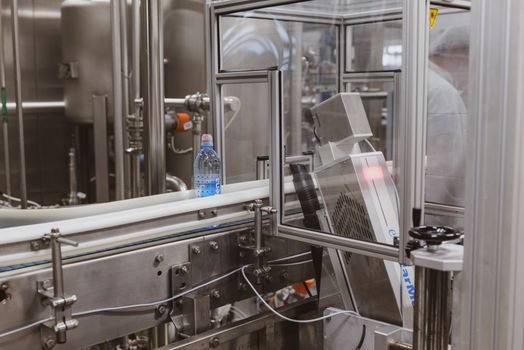
Consistency of capping torque and seal quality at varying speeds is the core quality gate, and high speed is only an advantage if it does not compromise cap integrity [S5]. The published acceptance threshold for an induction-cap sealing line treats leaker rates under 2% as the pass bar, with partial seals and high-percentage leakers traced back to inconsistent torque, unflat land area, contaminated land, liner thickness, or closure geometry that cannot accommodate the liner overhang [S6].
Concrete numbers to specify on the PO: capping-head speed in containers per minute (typical bench-top ROPP: 15-30 cpm; inline automatic: 60-200 cpm), torque range in Nm (commonly 4-25 Nm for plastic bottles), torque-monitoring tolerance ±5%, and a documented leaker-rate test on three production runs before sign-off [S5][S6][S7]. The link to the capping sealing machine reference page consolidates the capper family terminology so procurement and the maintenance lead are speaking the same vocabulary during the FAT.
Outdoor-Specific Failure Modes and Maintenance Traps
Condensation inside the control panel is the single most common outdoor-capper failure; specifying an IP65 enclosure with a thermostatically controlled anti-condensation heater (typically 30-50 W) is cheaper than replacing a PLC after the first cold snap. Bearing corrosion on the capping chuck follows next, traced to washdown water and chloride exposure, and is mitigated by stainless chuck inserts greased with a food-grade or H1 lubricant. [S7]
When the capper fails outdoor because the torque sensor drifts or the induction head de-tunes, escalation rules apply: replace the torque transducer every 12 months or 2 million cycles, whichever comes first, and never field-recalibrate the induction coil impedance without the OEM fixture; on-line leaker-rate trending is the leading indicator, and a sustained climb above the 2% leaker threshold is the trigger to pull the head for overhaul rather than to keep adjusting setpoints [S6][S7].
Power, Compressed Air, and Site Integration
An outdoor capper needs a stable 110/220 V single-phase or three-phase feed, clean dry compressed air at 6-8 bar for pneumatic chucks, and a shelter or canopy that keeps operators dry enough to read the HMI. ROPP cappers in the procurement range of US$10,000/piece typically run on 220 V, with a compressor sized to the cylinder stroke volume plus a 20% margin for leakage and simultaneous actuator demand [S2].
What a maintenance yard is NOT for: a fully automatic inline capper fed by a conveyor and a bottle-orienter, because the surrounding infrastructure (guard-rail, light curtain, rejection bin) cannot be installed safely on a temporary outdoor pad. The site-integration constraint is also why sealing washer selection — induction foil, pressure-sensitive foam, or pulp-and-wax — must be locked in parallel with the capper head, since mismatched land-flatness tolerance is the root cause of partial seals [S6].
Standards, Documentation, and Test Acceptance
Documentation has to travel with the machine: a CE/UKCA declaration for the EU/UK, an FCC Part 15 subpart B for the US, and a wiring diagram that matches the as-built enclosure. A SAT (site acceptance test) protocol should reproduce the leaker-rate test on three 30-minute runs, record torque histograms, and document the 2% leaker bar as the pass/fail line [S6][S7].
For chemical-service outdoor capping, the capper is often paired with a metal-can geometry selection — that is where the capping sealing machine reference, the tin/can capper notes and the sealing washer liner guide all converge so the procurement spec is consistent end-to-end. Track two signals into 2026 Q4: a sustained drop in ROPP-bench-top unit pricing as Chinese suppliers widen the 220 V single-phase catalogue, and any move by US/EU regulators to require IP66 on outdoor chemical-line cappers under revised machinery-safety guidance.
The underlying component specifications are covered under variable area flowmeter.
For related coverage, see Serial device server vs industrial router for surface roughness tester cells.