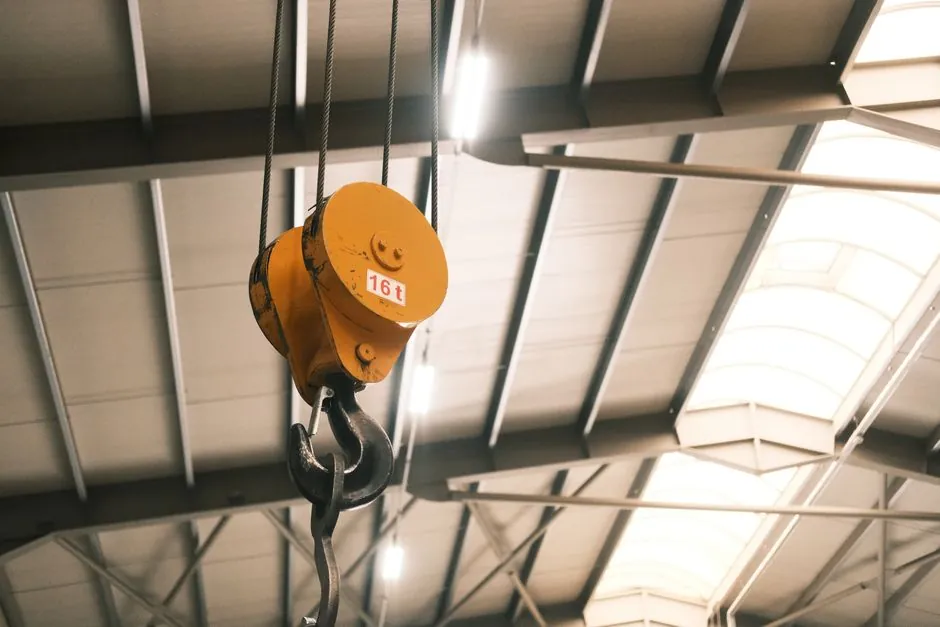
An overhead bridge crane is defined by three numbers buyers must lock first: lift capacity in tonnes, span between runway rails in metres, and hoist lift height in metres, with a CMAA duty class stamped on the nameplate per ASME/ANSI B30.2 [S1].
Buyers matching those four numbers to the actual work cycle (number of starts per hour, average load vs. maximum load, indoor vs. outdoor service) avoid the two most common write-offs: under-spec'd hoists that fail inspection within five years, and over-spec'd double girder cranes inflating building cost on light work [S1][S2].
CMAA Duty Classes: The First Gate
CMAA 70 covers standby or infrequent service cranes used in powerhouses, turbine rooms, and pump houses, where loads are typically near rated capacity but the crane moves only a few times per day [S1].
CMAA 74 applies to light service such as repair shops, light assembly, and warehouses, with up to 2-5 lifts per hour at light loads. CMAA 78 is general purpose service for machine shops and steel warehousing with moderate duty cycles. CMAA 79 covers heavy production service in steel mills, foundries, and paper mills with continuous or near-continuous operation at or near rated load [S1]. Specifying a CMAA 70 crane on a CMAA 79 duty cycle is the textbook path to a cracked bridge weld within the first 18 months of service.
Single Girder vs. Double Girder: Capacity and Span Thresholds
Single girder overhead cranes typically handle lifts up to about 10 t and spans to roughly 25 m, with the hoist suspended beneath the bridge girder; double girder cranes carry higher capacities and are used when 160 t lift and longer spans are required, since the trolley rides on top of the two girders for greater stability and headroom [S3].
The decision split is straightforward: under 10 t and short span, single girder saves on building height, runway beam cost, and crane weight (often 30-40% lighter than a double girder of equivalent capacity). Above 10 t, or when the application needs a maintenance platform on the bridge, a double girder pays for itself in serviceability. For a 160 t QD-type heavy work duty mobile bridge crane, the double girder configuration supports the high capacity and the heavy work duty classification, while the matching rail-mobile design adds the flexibility to relocate along extended runways [S3].
Hoist Type, Control Method and Operating Environment
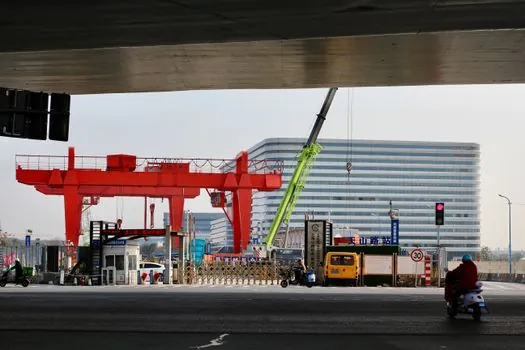
Three control methods dominate bridge crane specification: pendent controller with push buttons (lowest cost, fixed cable), remote control with push buttons (most common retrofit, safer for the operator), and cabin control with joystick (reserved for high-cycle steel mill or foundry duty where the operator rides the crane) [S3].
Hoist selection is the second big decision. Electric chain hoists (Columbus McKinnon Coffing JLC and similar) cover light to medium duty in machine shops, paper mills, and metal fabrication; wire rope hoists carry the heavy and high-cycle loads above 5 t. Waukesha Crane, a Milwaukee-area builder, supplies electric chain hoists and the CM Man Guard heavy-duty hoist, and routinely ships to Wisconsin, Illinois, and the wider Midwest [S2]. For hazardous or corrosive environments, explosion-proof or acid-proof customisation is offered as an option, with standard safety devices including overload limiter, lifting and travelling limit switches, interlock protection, buffers, anti-collision devices, main isolating switch, and motor overload protection [S3].
Runway, Power Delivery and Building Interface
The runway rail size, alignment tolerance, and power delivery system (festoon cable reels vs. conductor bar/bus bar) determine whether a new crane can even be commissioned without structural modifications. Common safety add-ons on the bridge include rail clear plates, protective covers, bus bar prevent plates, and overhaul cages for maintenance access [S3].
Buyers often underestimate the runway. A 20 t crane on a poorly aligned runway will produce wheel flats within a year, and the cost of realigning 200 m of runway rail typically exceeds the price of the crane itself. Standard delivery time from order is 30-40 working days after deposit for a typical unit, with 35-50 days to destination port for international container or bulk shipment [S3]. Related reference on component-level selection: a linear guide inside the trolley mechanism and the overhead bridge crane specification page are useful cross-references for designers checking travel smoothness.
Compliance: OSHA 1910.179, ASME B30.2 and the Canadian Layer

OSHA 1910.179 is the U.S. federal regulation governing overhead and gantry cranes, and it incorporates ASME/ANSI B30.2 Overhead and Gantry Cranes in full via OSHA 1910.6, making B30.2 the actual technical specification US inspectors enforce [S1]. The B30.2 committee, which is the standards body for the U.S. overhead (EOT) crane industry, also covers top-running and under-running single girder electric overhead cranes, top-running and under-running double girder electric overhead cranes, and gantry cranes [S1].
In Canada, CSA B167-26 is the parallel safety standard for overhead cranes, and the July 2026 edition introduces several inspection, maintenance, and operation updates that crane owners should review before scheduling their next annual inspection. For cross-border plants, dual compliance is non-negotiable: U.S. sites must satisfy OSHA 1910.179 referencing B30.2, and Canadian sites must add CSA B167-26 on top of any provincial occupational health requirements. Buyers should also check that their crane scale is rated to the same duty class as the crane itself when load weighing is part of the process.
Inspection, Service Life and Replacement Signals
Annual OSHA safety inspections on the hoist, trolley, bridge, and runway remain the law in the U.S. for general industry, and the goal is twofold: keep the equipment compliant and avoid the fines that follow a non-conformance finding [S2].
Standard design service life is about 30 years under common use conditions for a heavy duty double girder crane [S3]. Replacement is typically driven by weld cracking on the bridge girders, end truck wheel wear, hoist motor insulation failure, or repeated OSHA-citable defects that exceed the cost of a new unit. A useful signal: if repair cost on a single incident exceeds 50% of the cost of a new equivalent crane, the engineering-economic decision almost always favours replacement, especially when a 24/7 service contract is available (Waukesha Crane, for example, fields certified technicians 24 hours a day, 7 days a week) [S2].
Who Should Not Buy a Single Girder Crane
A single girder bridge crane is the wrong pick when the application runs at CMAA 78 or CMAA 79 duty, when lifts exceed 10 t, when the span is wider than about 25 m, or when the customer needs an open-top hook path with maximum headroom; in those cases the double girder trolley-on-top configuration, or even a gantry crane on outdoor rails, is the correct selection [S3].
Buyers specifying electric chain hoists for steel mill or foundry work above CMAA 74 also mis-spec the hoist itself: wire rope hoists are the standard above 5 t at high duty cycles because chain wear in that regime is a known failure mode. Buyers should also avoid buying a non-explosion-proof unit for any classified hazardous area, and should verify that the supplier's crawler crane experience does not bleed into the bridge crane quote, since runway-based EOT cranes have a different structural and electrical design from mobile crawler units.
Shortlist Logic and Next Buying Steps
Lock the four numbers first: lift capacity (t), span (m), lift height (m), and CMAA duty class. Match girder type to capacity and span: single girder under 10 t and under 25 m, double girder above either threshold. Pick the hoist family by duty cycle: electric chain hoist for light/medium, wire rope hoist for heavy or high-cycle. Confirm control method (pendent, remote, cabin) and hazardous-area certification. Then confirm the building runway alignment, conductor bar power delivery, and the OEM's local service coverage. The next trackable signal after spec freeze is the vendor's shop drawing turnaround, typically 7-10 working days, and the rail alignment survey if the runway is existing rather than new. [S3]
For related coverage, see Rebar Straightener Selection: Diameter, Grade, Throughput Gates.