
A rebar straightener sized for a 200,000 t/month supply chain typically covers D6–D16 mm coil feed (6–16 mm nominal diameter) at 30–50 m/min line speed, with mandrel drive motors in the 1.5–3.0 kW band for light gauge and 5.5–7.5 kW for heavy coil [S4].
Selection is driven by three coupled decisions: the bar grade you will process (ASTM A615 grade 40, 60, 75, or 80), the diameter range on the cutting list, and the daily throughput the yard must clear, with straightness tolerance of ≤2 mm/m as the usual bid floor [S2][S4].
Bar grades and what they force on the straightener
ASTM A615 plain billet steel is the dominant U.S. specification, with grade numbers (40, 60, 75, 80) denoting minimum yield strength in thousand psi, so grade 40 = 40,000 psi (≈276 MPa) and grade 60 = 60,000 psi (≈414 MPa) [S2].
Rail-steel (A616) and axle-steel (A617) bars carry higher carbon and manganese and fall into the hard-to-weld category, which means a straightener feeding a welding line downstream must hold straightness without work-hardening cracks at the mandrel contact arc [S2].
For projects served by European fabricators, EN 1090-2 manufacturing qualification (Execution Class 2 or above) governs the welded assembly end of the line, so the straightener output is judged on residual bow and end-cuts clean enough to feed couplers without re-handling [S3].
Diameter range, motor power, and mandrel speed
For D6–D12 mm coil, a 1.5–3.0 kW servo-drive straightener running the mandrel at 30–50 m/min delivers 0.8–1.5 t/h; for D12–D16 mm the same frame needs a 4.0–5.5 kW motor and slower 20–35 m/min to keep mandrel slip below the 2 mm/m tolerance [S4].
Heavy fabrication (D16–D25 mm) jumps to 5.5–7.5 kW with 15–25 m/min mandrel speed and typically a two-roller pre-straightener upstream to prevent coil-set memory from surviving the cut-off shear, a configuration referenced in the broader rebar straightener class used alongside the standard rebar bender on a single cut-and-straight bench.
When a yard runs both light coil stock and heavy bar, a dual-mandrel machine with swappable cartridges (6–16 mm and 16–25 mm) is the standard engineering choice over a single oversized unit, because mandrel wear on a 6 mm bar accelerates sharply when the frame is sized for 25 mm.
Straightness tolerance and the link to downstream splices
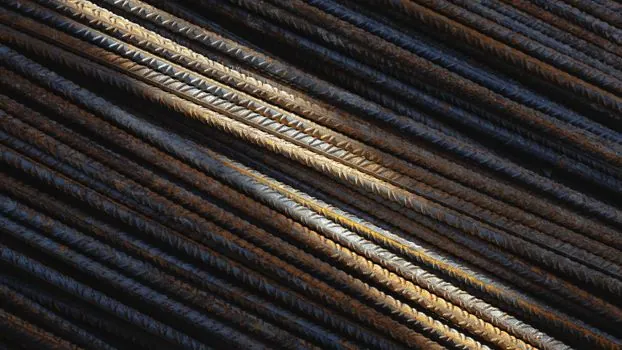
Mechanical coupler systems, including standard, transition, and position couplers used on bridges, tunnels, and high-rise cores, demand bar-end straightness within 0.5° over the threading length, which translates to a residual bow under 2 mm/m on the stock feeding the threading equipment [S1].
Position couplers (for bars that cannot be rotated) are the most sensitive: any helical twist left in the bar after the straightener shows up as thread-runout at the coupler shoulder, and re-threading a 16 mm grade 60 bar costs 30–45 seconds of bench time that compounds across a 500-piece cage [S1].
Threading equipment paired with the straightener should be specified from the same vendor class so the cut, straighten, and thread stations share a common PLC bus; mismatched feed rates are the leading cause of thread overshoot in yards running both rebar coupler and bent-bar assemblies.
Welding splices vs. mechanical splices: what the straightener must deliver
Welded splices outperform lap splices on strength and bar congestion, but the AWS Reinforcing Steel Welding Code ties preheat and interpass temperatures to bar size and carbon equivalent, so a yard that switches from lap to weld must keep the straightened bar free of surface work-hardening that would skew the carbon-equivalent reading [S2].
Thermit welding (TW) is a third option for long splices in rail and bridge work, with the same bar-end straightness requirement as coupler threading, meaning the straightener's cut-and-straight station is the common upstream gate for every splice type on the bench.
For sites that want zero on-site welding, mechanical splices (standard, transition, position couplers) sidestep the AWS preheat tables entirely, at the cost of the threading equipment footprint, so the straightener's throughput ceiling is often the deciding factor between a weld-first and a coupler-first detailing strategy [S1][S2].
Selection criteria compared: light, mid, heavy class
Light-class straighteners (1.5–3.0 kW, 6–12 mm, 30–50 m/min) suit prefab yards cutting grade 40/60 stock for slab reinforcement and small couplers, with daily output capped around 15–20 t/shift per machine. [S1]
Heavy-class frames (5.5–7.5 kW and up, 16–25 mm, 15–25 m/min) are specified for piers, dams, and heavy industrial foundations, often handling grade 75/80 billet and frequently paired with steel rebar stock supplied against EN 1090-2 Execution Class 2 or higher, where traceability of the straightening process is part of the quality file [S3][S4].
What the straightener spec sheet should always include
Ask for: bar diameter range in millimetres, mandrel rotation speed in m/min, drive motor power in kW, straightness tolerance in mm/m (target ≤2), cut-end squareness in degrees (target ≤1), and material grade coverage explicitly listing A615 grades 40–80 plus any EN 10080 B500A/B500B stock the yard runs [S2][S3][S4].
Confirm: tooling changeover time between diameter sizes (target under 5 minutes), PLC recipe storage for at least 20 bar profiles, and integration ports for the threading equipment downstream so cut length and thread count can be tied to a single bar ticket [S1].
Reject any bid that quotes only "suitable for 6–32 mm rebar" without a mandrel-speed curve, a motor power figure at the heavy end, and a documented straightness test on grade 60 stock, since that single missing data point is the most common cause of an undersized machine landing on a heavy-cage site. For broader tooling context beyond the straightener itself, see the construction tools reference and the rebar base article, both of which frame the straightener within the full cut-bend-thread-couple workflow that defines a modern rebar yard. Related procurement logic for the bending side of that same line is covered in Truck-mounted crane selection for road construction: capacity, boom type, outrigger gates, which shares the same motor-power and tolerance-discipline gates when mobile reinforcement handling enters the scope.