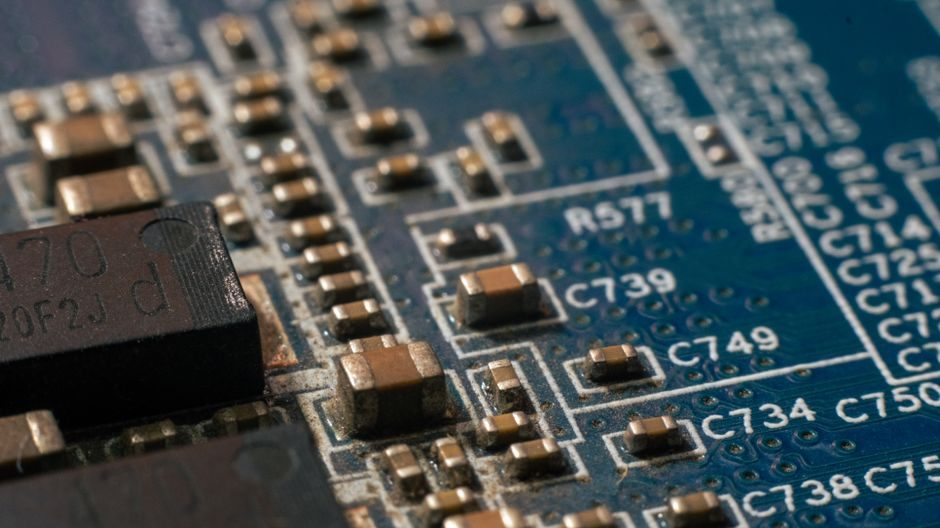
Overhead conveyors used inside semiconductor front-end and back-end fabs in 2026 are dominated by enclosed-track electrified monorail (EMS) and power-and-free designs rated for ISO Class 5 cleanrooms, with payload bands typically clustered between 10 kg and 250 kg per carrier and chain speeds held below 15 m/min to control particulate and ESD events [S2][S3].
The application scope is narrow: wafer cassette transfer between lithography, etch, CVD/PVD and inspection tools; PCB and component handoff in SMT back-end lines; mask and reticle transport in dedicated bays; and cleanroom-rated overhead chain conveyors in photolithography sub-fabs. A general industrial overhead conveyor, such as a shot-blast monorail for metal finishing, lacks the enclosure, lubrication containment and surface-finish controls demanded by a 300 mm wafer fab [S1].
Why a Standard Overhead Conveyor Fails in a Wafer Fab
A bare steel or open-pin overhead chain sheds particles at a rate that violates ISO 14644-1 Class 5 cleanliness once chain speed passes roughly 5 m/min, because unlubricated pin joints generate metallic and grease aerosols that land on wafer surfaces [S2].
Semiconductor-grade overhead conveyors resolve this with enclosed track (C-track or enclosed I-beam), self-lubricating sintered-bronze or polymer bushings, stainless or nickel-plated chain links, and drip-free lubrication cartridges that service the chain without opening the fab envelope. Typical payload ceilings in this segment run 10-50 kg per carrier for FOUP/reticle handling and 100-250 kg for back-end PCB magazine transfer; chain pitch sits at 76.2 mm (3 in) or 101.6 mm (4 in) on enclosed-track systems, and 50.8 mm (2 in) on heavier power-and-free builds [S3][S4].
Selection Criteria That Actually Decide the Build
Five gates filter every candidate, and the first three typically eliminate most general-purpose overhead bridge crane and industrial conveyor offerings before cost is even discussed. [S1]
Gate 1 - Cleanroom class. ISO 14644-1 Class 5 (formerly Class 100) is the common fab envelope, and Class 3-4 is mandatory near EUV pellicle and reticle stockers; the conveyor's outgassing, particle-add and ESD data must be on the data sheet, not in marketing copy [S2].
Gate 2 - ESD control. Chain and carrier resistance must sit between 1x10^6 and 1x10^9 ohm to ground per ANSI/ESD S20.20; values below 1x10^6 ohm short the carrier, values above 1x10^9 ohm let static accumulate on the load.
Gate 3 - Vibration and EMI. Carrier vibration at the load interface should be measured below 0.5 g peak in the 1-200 Hz band, and the inverter must filter common-mode EMI so it does not couple into metrology tools; servomotor-driven EMS systems with sinusoidal filters and regenerative DC buses meet this, while older VFD-driven units often do not [S2][S4].
Gate 4 - Payload and pitch. Match chain pitch to carrier weight: 50.8 mm pitch tops out near 30 kg per trolley, 76.2 mm pitch reaches 100 kg, and 101.6 mm pitch supports 250 kg or more. Over-rated pitch inflates cost; under-rated pitch burns the chain within months.
Gate 5 - Track layout. Closed-loop lengths above 80-100 m and multiple branch-offs call for power-and-free (X-348, X-458 or X-678 drop-forged chain) with switching dogs; straight accumulation runs under 60 m are cheaper on enclosed-track EMS with friction-driven tow [S3].
Three Design Families Compared on the Real Decision Criteria

The three credible design families for 2026 fab builds line up against four decision criteria - cleanroom rating, payload, layout flexibility and total installed cost - and the differences are large enough to drive a single design choice per line. [S2]
Enclosed-track electrified monorail (EMS). Best for straight or single-loop Class 5 lines under 60 m, 10-100 kg carriers, and any cell that needs 24 V bus power for tooling on the carrier; cost band sits near US$480-680 per metre FOB for Asian-built units, with European equivalents from Caldan running 2-3x higher for tighter tolerances [S3][S4].
Power-and-free (X-drop chain). Required for any Class 5 line with branching, accumulation zones above 80 m, or carriers above 100 kg; payloads to 250-500 kg are routine, but the chain is open-pin, so cleanroom use demands full enclosure and a drip-lube retrofit; cost is roughly 1.5-2x a comparable enclosed-track run [S2].
Cleanroom-rated monorail with magnetic levitation or air-bearing carrier. Used only where vibration must drop below 0.1 g for metrology or EUV pellicle handoff; carrier weight is limited to about 30 kg, and unit cost is several multiples of an equivalent EMS line, so it is reserved for the narrowest spec windows [S4].
Suppliers, Sourcing Reality and 2026 Cost Bands
The 2026 supplier map splits cleanly into three tiers. Tier 1 (Eisenmann, Caldan, Daifuku, Murata) sells engineered cleanroom-rated EMS and power-and-free lines with full vibration, ESD and outgassing documentation; lead time is 6-9 months and pricing is project-based [S2][S4].
Tier 2 (Chinese system integrators on Made-in-China, including Mujia Automation Technology) ships enclosed-track EMS at US$480-680 per metre MOQ 1 m, with 30-60 day lead times, but the cleanroom documentation is buyer-managed; the engineering team must add ISO 14644-1 test reports, lubrication containment drawings and ANSI/ESD S20.20 compliance evidence on the integrator's behalf [S3].
Tier 3 covers general conveyor chain and chain conveyor vendors who will happily quote an overhead line but do not supply the cleanroom package; for fabs, they are a parts source, not a system source. For broader sourcing patterns, the Chain Conveyor Suppliers 2026 cluster map lays out how these tiers overlap on DirectIndustry and Alibaba, and the Mesh Belt Conveyor Sizing 4 hard gates guide covers the floor-conveyor alternative when overhead routing is blocked by a tool layout.
Failure Modes and Constraints Buyers Underestimate
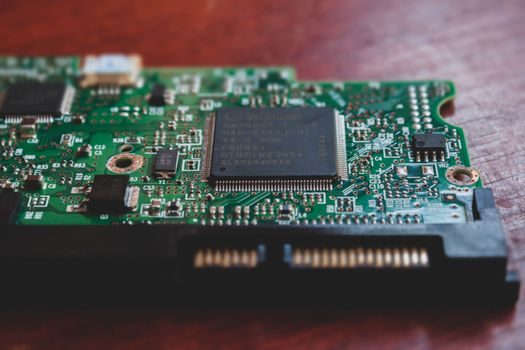
Three failure modes kill more fab overhead lines than any spec gap. First, lubricant drift: even "drip-free" cartridges leak under thermal cycling, and the oil films on the track pull particles into the cleanroom envelope within 200-400 hours of operation if not paired with sealed track covers. [S3]
Second, ESD ground-loop failure: a carrier that grounds through the chain and a parallel ground strap builds a ground loop that injects noise into nearby metrology; the fix is a single-point ground via the carrier's wear-strip, with chain and track isolated above 1x10^6 ohm.
Third, chain stretch on power-and-free: X-348 and X-458 chain stretches 0.5-1.0% over 50,000 cycles, which is fine for an automotive paint shop [S2] but unacceptable in a fab where carrier position must hold to within +/-2 mm for FOUP handoff to a tool's load port. Specify a tensioner and a stretch-measurement schedule at every 25,000 cycles, or the line will start dropping carriers at the switch.
Standards, Data Sheets and Verifiable Buyer Signals
The data sheet that matters is the supplier's particle-add test report, not their brochure: an ISO 14644-1 Class 5 line must demonstrate fewer than 29 particles of size 0.3 micron per cubic metre at the carrier at rated chain speed. ANSI/ESD S20.20 covers the resistance band, and SEMI E15, E17 and E84 cover FOUP/load-port hand-off geometry; without those, the conveyor cannot hand a cassette to a tool's load lock [S2][S4].
Verifiable 2026 buyer signals to track: Tier 1 suppliers quoting 6-9 month lead times through Q3 2026, Tier 2 Chinese integrators closing gap on cleanroom documentation, and rising orders for 101.6 mm pitch power-and-free as 300 mm back-end capacity expands. The Rare Earth Oxide Prices Climb Into July 2026 tracker is the upstream signal for neodymium servo and motor pricing, and the Spherical Plain Bearing Selection for Data Center Mechanical Loads guide covers the bearing choice on track curves and switch dogs, where the wrong liner material is the most common 90-day failure point.