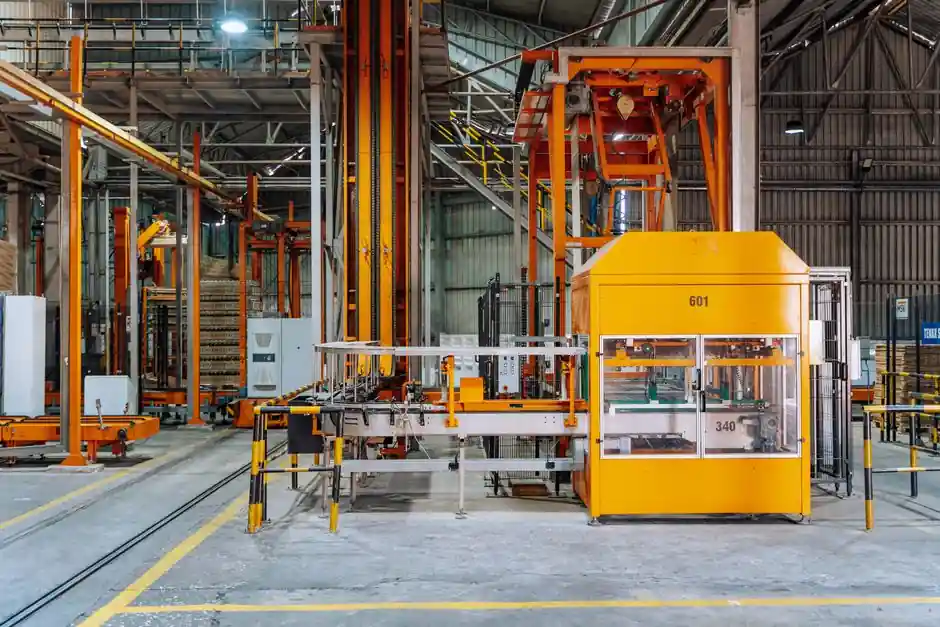
Enclosed-track overhead conveyors typically rate 180-250 lb per trolley, with Unibilt-style systems specified at 250 lb (115 kg) per carrier as the modular baseline [S5][S8].
Heavy-duty enclosed-track designs push that ceiling higher: dual-pendant configurations reach 440 lb per station (220 lb per pendant), and select higher-speed enclosed tracks accommodate up to 300 lb per trolley [S3][S8]. I-beam monorail systems extend the continuous-duty range from 250 lb up to 2,500 lb per carrier, with custom-engineered runs moving heavier unit loads on demand [S4][S6].
Enclosed-Track Ratings: Where the Light-Duty Ceiling Sits
Enclosed-track conveyors are the default for assembly, paint lines, and clean-side manufacturing, with the Unibilt modular product line capping individual load capacity at 250 lb (115 kg) per trolley [S5]. Vendor data shows typical operating envelopes of 180-220 lb per trolley at standard chain speeds, with 300 lb per trolley achievable on slower or reinforced configurations [S8]. For higher unit loads within the same track geometry, carriers can be paired through a load bar so two trolleys share a single fixture, effectively doubling the per-station rating while staying inside the track's distributed load limit [S5]. The 220 lb-per-pendant / 440 lb-per-station figure shows up consistently in the heavy-duty enclosed-track product class, making it the practical dual-carrier ceiling before specifiers move to I-beam rail [S3].
I-Beam Monorail: The 250-2,500 lb Continuous-Duty Band
I-beam monorail overhead conveyors, built on 3 in, 4 in, or 6 in high-carbon I-beam rails, are the workhorse for heavier industrial duty [S5]. The published selection band for continuous powered lines runs from 250 lb on the low end up to 2,500 lb per carrier, with custom-engineered systems pushing beyond that for automotive skids, engine blocks, and large fabricated assemblies [S4][S6]. Open-track design also makes I-beam the right pick for corrosive washers, dip-coating baths, and high-temperature ovens where enclosed track would foul or degrade [S4]. For facilities moving loads that swing, accelerate, or accumulate, the overhead conveyor format is a structural choice, not a soft preference: track section, trolley pitch, and drive horsepower all scale with per-carrier payload.
Power-and-Free and Buffering Systems: Stopping Without Losing Capacity
Power-and-free conveyors use two tracks (a powered chain in the upper rail and a free carrying track below) so individual loads can stop, buffer, and re-enter the line without halting upstream flow. The carrying rail is typically sized to the same per-trolley rating as the equivalent I-beam or enclosed-track system, but the free trolley's stop-and-start duty makes it the right call when parts need to queue between workstations, accumulate before an oven, or dispatch on signal rather than continuously [S4][S6]. Each load-carrying trolley set can stop and start independently and move at different speeds, which is the structural advantage synchronous overhead chains cannot offer [S2].
Selection Criteria: Matching Trolley Rating to Load Profile
The right trolley rating is set by the heaviest unit load, not the average, and three numbers govern the call. First, per-trolley capacity: light parts under 50 lb suit simple hand-push enclosed track; 50-250 lb is the sweet spot for powered enclosed track; 250-2,500 lb demands I-beam monorail; above that, custom-engineered monorail or power-and-free on structural steel [S4][S6]. Second, environment: paint booths, caustic washers, and ovens above ambient paint-line temperatures favor enclosed track (or inverted enclosed track to keep contaminants off the product); dip-coating baths, foundries, and outdoor exposure favor I-beam with corrosion-resistant trolley bearings [S4][S5]. Third, accumulation duty: if loads must stop without stopping the line, only power-and-free delivers independent trolley control inside the same envelope [S2][S6]. For comparison, an overhead conveyor at 220 lb per trolley on a standard chain typically runs slower than the same carrier at 100 lb, because chain pull and trolley wear scale with payload [S8].
Where Per-Trolley Ratings Break Down

Manufacturer ratings assume evenly distributed load, straight or gently curved track, and ambient temperature. Three conditions routinely derate those numbers. First, dynamic loading: a swinging or unbalanced load multiplies effective trolley force, and pendants designed for a static 220 lb can be cut to a fraction of that rating when the part pivots in motion. Second, curve geometry: tight vertical or horizontal curves add chain pull, which on long runs can drive a system into its drive-unit limit before any single trolley hits its nameplate. Third, environment: oven and paint-oven zones expose the chain and trolley bearings to temperatures that push lubricants past their working range, so a 250 lb ambient rating does not transfer cleanly to a 400 degF drying booth [S3][S4]. For facilities where any of these apply, spec the next trolley class up, or move from enclosed track to I-beam before the rated number on paper becomes the failure mode in service.
Standards and Sourcing Notes
Overhead conveyor ratings are vendor-published rather than standardized under a single IEC or ISO conveyor-load number; specifiers typically cross-check the manufacturer's per-trolley figure against the track supplier's distributed load limit (lb/ft) and the drive unit's allowable chain pull. Track-profile choices (3 in, 4 in, 6 in I-beam versus enclosed-track Unibilt-style rail) are the dominant structural decision, since changing track section mid-project is the most expensive way to add per-trolley capacity. For load-class and application context, see also the Push Trolley vs Motor-Driven Overhead Conveyor: Spec Cutoff reference, which pairs the trolley-rating bands above with the hand-push versus powered break point. [S2]