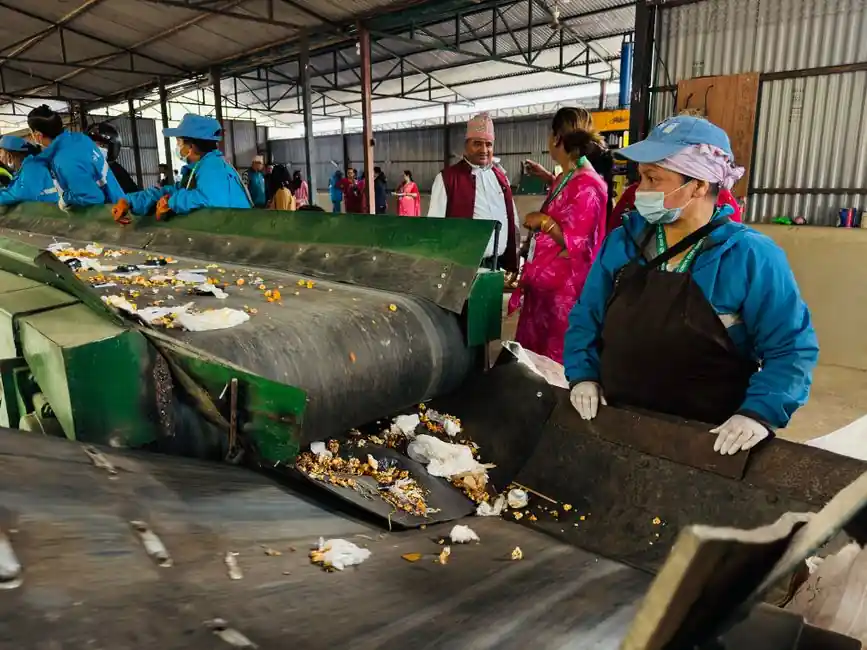
EP630/4 is a textile conveyor-belt designation under the DIN 22102 family, where EP identifies a polyester warp/nylon weft (polyamide) fabric carcass, 630 is the minimum longitudinal breaking strength in kN/m, and 4 is the number of fabric plies [S2]. In production ordering the same belt shows up as DIN 22102 1000 EP 630/4 6/2 Y, with 1000 being belt width in mm, 6/2 the top/bottom cover thickness in mm, and Y the rubber-cover grade [S2].
EP630/4 has effectively become the default spec for medium-duty bulk handling because it matches the most common installation envelope on site: most conveyor lines worldwide run under 200 m with moderate lift, and the 4-ply carcass requires only a 360 to 600 mm drive-pulley diameter, which is the most widely available drum size in service today [S1].
Anatomy of the EP630/4 Designation
EP630/4 is read in three parts: the EP prefix, the strength figure, and the ply count. The EP prefix is shorthand for a polyester (polyethylene terephthalate) warp combined with a polyamide (nylon) weft; in regions where ISO 14890 is more common this is written PN, with the letters standing for Polyester and Nylon respectively [S2]. The 630 figure is the belt's minimum longitudinal breaking strength of 630 kN/m, a per-metre-of-width tensile value that the carcass must equal or exceed under standard test conditions [S2].
The 4 after the slash declares four fabric plies, and for EP630/4 that breaks down to roughly 157 kN/m per ply (the source article rounds to EP150 or EP160 per layer) [S1]. A complete ordering string ties width, covers, and rubber grade to the carcass: DIN 22102 AB 1000 EP 630/4 6/2 Y, where AB is a manufacturer code, 6/2 is the top/bottom cover thickness in mm, and Y is the rubber-cover grade per the DIN 22102 table [S2]. Belt nomenclature differs in the USA, where a separate set of RMA conventions applies rather than DIN 22102 [S2].
Where EP630/4 Sits in the EP Family
EP630/4 sits in the middle of the EP multiply range. Below it sit EP 250/2, EP 315/2, EP 315/3, EP 400/3, EP 500/3 with carcass thicknesses from 2.2 mm up to roughly 3.6 mm, and above it sit EP 800/4, EP 800/5, EP 1000/4, EP 1000/5, EP 1200/6, EP 1250/4, EP 1600/5, and EP 2000/5 with carcass thicknesses running from 5.2 mm up to 9.0 mm [S3]. Within the family the typical cover thickness pattern for EP 630/4 is 3+1.5 / 5+1.5 / 6+2 / 8+3 / 10+3 mm top-and-bottom, with a 4.8 mm carcass and total belt thickness between 9.3 and 17.8 mm depending on the cover build [S3].
Typical mass for EP 630/4 in a 6+2 cover build is 15.4 mm total thickness, against 13.6 mm for the 5+1.5 build and 19.0 mm for the heavier 8+3 build [S3]. EP630/4 is sold both as a stock 6+2 Y grade for general conveying and as a 6+3 RS abrasion-resistant variant for harsher service, where the RS construction pairs the EP carcass with a tougher cover compound aimed at high-wear applications [S4][S5].
DIN 22102 Cover Grades Y, X, W, and Z

The trailing letter in an EP designation is a cover-grade code, and it changes the rubber compound, not the carcass. The DIN-based table is structured as tensile-strength-minimum / elongation-minimum / abrasion-maximum: Z 15 N/mm², 350 percent, 250 mm³ for belts up to type EP 1000/4 under low stress in temperate climates; Y 20 N/mm², 400 percent, 150 mm³ for belts from EP 500/3 under high stress in temperate climates; X 25 N/mm², 450 percent, 120 mm³ for EP 500/3 and above in arid, humid, or alternating climates; and W 18 N/mm², 400 percent, 90 mm³ for EP 500/3 and above under very high stress [S3].
In practice a Y-grade cover is the most common spec for EP 630/4 in general-purpose service, while X or W grades are pulled in for hot, abrasive, or sharp-edged materials, and the cover selection is the first knob a buyer turns after the carcass is fixed [S3][S5]. Most countries follow DIN 22102 as the dominant grade system, with RMA grades as the main alternative in the United States and a few other regions [S9]. For a related engineering comparison of belt types versus working loads, see this conveyor belt selection reference for load-distance matches (referenced here for cross-domain drive-sizing context, not for EP rating).
Drive Pulley Diameter, Troughing, and Mechanical Envelope
The 4-ply EP630 carcass pairs with a recommended drive-pulley diameter of 360 to 600 mm, which matches the most common installed pulley fleet at short-to-medium transfer points [S1]. Troughing capability of EP-insert belts is up to 36 degrees, with low elongation under load and high dynamic-stress resistance, which is why the same carcass is reused across mining, coal, steel, metallurgy, and chemical service [S3].
Pulley diameter also has a hard relationship to total belt thickness: belts going onto pulleys under 250 mm should stay at 12 mm total thickness or below, while pulleys above 400 mm can accept up to 25 mm depending on the ply count and belt speed [S8]. For a perspective on how a separate belt type is matched to its drive system, see this discussion of timing belt selection for automotive production lines (cross-referenced only as a parallel spec-versus-drive exercise).
When EP630/4 Is the Right Choice and When It Is Not
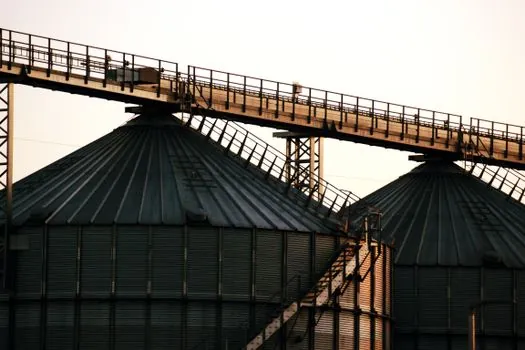
EP630/4 fits medium-distance conveying under 200 m, moderate lift, and continuous bulk-material service at standard ambient temperatures, where its 630 kN/m breaking strength has a comfortable margin against the calculated effective tension [S1]. The same carcass is used in abrasion-resistant builds for high-wear service: the RS variant is specified when rip resistance has to be more than four times that of a similar tensile-strength conventional multiply belt [S4].
EP630/4 is the wrong choice for very long overland conveyors, where steel-cord carcasses (St 1600, St 2000, and up to St 4500 per DIN 22131) carry the load more efficiently with lower elongation, and for very short, low-tension transfers where a 2-ply EP 250/2 or EP 315/2 is more economical [S2][S3]. Selection should be driven by the calculated pulling force, which scales with conveyed tonnage per hour, conveying angle, material lump size, and haul distance, not by habit [S1].
Comparative Spec Table Across the EP Multiply Range
The table below lines up the most common EP multiply constructions against the three criteria a buyer needs to fix first: minimum breaking strength, carcass thickness, and the heaviest standard cover build. Values are drawn directly from the TECNIFLEX / Screenspares reference table for 8+3 cover builds unless noted [S3].
EP 315/3: 315 kN/m minimum breaking strength, 3.0 mm carcass, up to 16.8 mm total belt thickness (8+3 build) [S3]. EP 400/3: 400 kN/m, 3.3 mm carcass, up to 17.2 mm total (8+3 build) [S3]. EP 500/3: 500 kN/m, 3.6 mm carcass, up to 17.5 mm total (8+3 build) [S3]. EP 500/4: 500 kN/m, 4.4 mm carcass, up to 18.5 mm total (8+2 build) [S3]. EP 630/4: 630 kN/m, 4.8 mm carcass, up to 19.0 mm total (8+3 build) [S3]. EP 800/4: 800 kN/m, 5.2 mm carcass, up to 19.4 mm total (8+3 build) [S3]. EP 1000/4: 1000 kN/m, 5.6 mm carcass, up to 19.9 mm total (8+3 build) [S3].
EP 800/5: 800 kN/m, 6.0 mm carcass, up to 20.4 mm total (8+3 build) [S3]. EP 1250/4: 1250 kN/m, 6.4 mm carcass, up to 20.9 mm total (8+3 build) [S3]. EP 1000/5: 1000 kN/m, 6.5 mm carcass, up to 21.0 mm total (8+3 build) [S3]. EP 1200/6: 1200 kN/m, 7.8 mm carcass, up to 22.6 mm total (8+3 build) [S3]. EP 1600/5: 1600 kN/m, 8.0 mm carcass, up to 22.8 mm total (8+3 build) [S3]. EP 2000/5: 2000 kN/m, 9.0 mm carcass, up to 24.0 mm total (8+3 build) [S3].
The pattern: the ply count and the per-ply strength track together to set the kN/m figure, and the cover selection adds the rest of the thickness, so EP 500/4 is structurally heavier per metre of strength than EP 800/4 in a thin-cover build, but with thick covers the difference shrinks fast [S3]. For users comparing fabric multiply belts to other flat power-transmission options, this flat belt engineering overview is a useful structural reference. For heavier-duty steel-cord alternatives used in long-haul conveyors, see this conveyor system belt specification guide.
Standards, Compliance, and Sourcing Notes
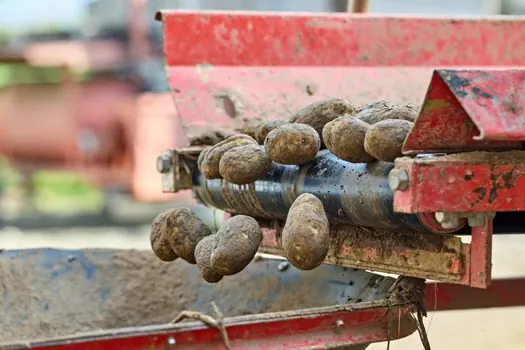
EP630/4 is governed by DIN 22102 for textile multiply belts in the EU/Asia markets, while steel-cord equivalents fall under DIN 22131, and in the USA the relevant framework is the RMA (Rubber Manufacturers Association) system rather than DIN 22102 [S2][S9]. Cover grade systems differ between DIN 22102 (Y, X, W, Z) and RMA (Grade 1, 2, etc.), so a US-spec sheet for the same belt will not use the same suffix letter as a European one [S9].
Working tension in service should be derated from the 630 kN/m minimum breaking strength by a safety factor typical of conveyor design, which is why EP630/4 is paired with 360 to 600 mm drive pulleys and not the smallest available drum [S1]. ISO 14890 is referenced in some regions as a parallel text for textile carcass constructions, and EP630/4 carcasses from audited manufacturers are typically produced under an ISO 9001 quality system with CE/MA-style approvals for underground coal service where applicable [S5]. For users cross-referencing EP ratings against related mechanical power-transmission stock, this ribbed belt specification reference covers the V-ribbed side of the same family, and this chain-belt specification reference covers the metal-link alternative.
Installation, Storage, and Field Maintenance
EP630/4 must be installed per the splice drawing and run under no-load for a defined bedding-in period before production tonnage is loaded, and any tracking deviation during that trial run indicates a mistruth that has to be corrected before commissioning [S1]. Storage when not in service should be in a ventilated, dry area, and stored rolls should be rotated periodically to prevent flat-spotting and cover deformation [S1].
Inspection intervals in service should follow the OEM schedule, and any worn area exceeding 70 percent of original cover thickness should trigger a replacement decision rather than a patch, because an EP 630/4 with a thinned cover loses its abrasion allowance and the underlying plies become the next failure surface [S1]. For an adjacent packaging-line comparison that frames belt-driven equipment decisions in a different service environment, see this strapping bands industrial packaging reference (cross-referenced only as an analogue for industrial selection checklists).
Trackable signals to watch over the next procurement cycle: published revisions of DIN 22102 cover-grade tables, any shift in the per-ply strength value of EP carcasses from the major EU/Asia manufacturers, and changes to the minimum drive-pulley diameter table as 4-ply carcasses are pushed into longer-haul service.