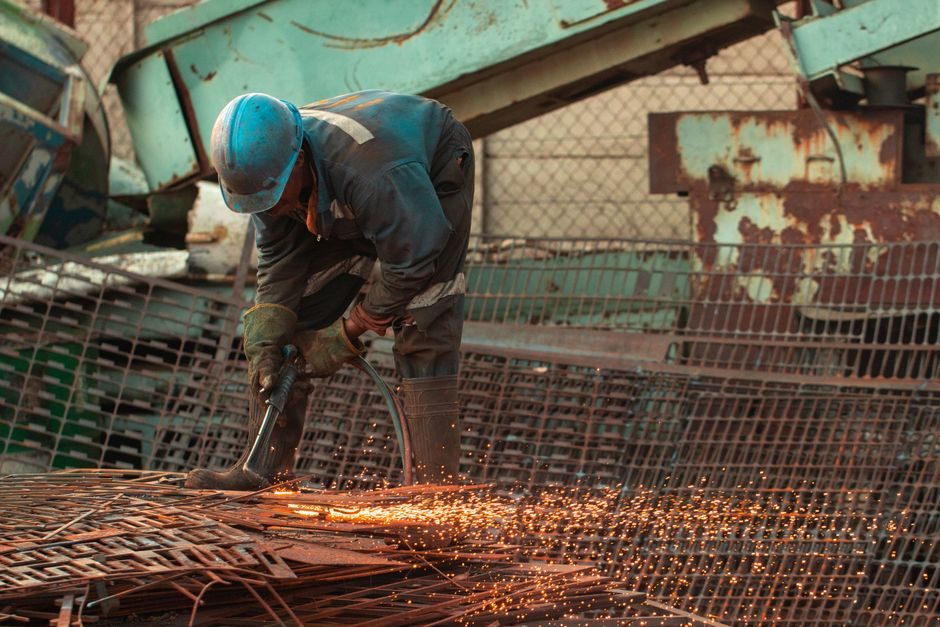
Oxy-fuel cutting remains the lowest-cost-per-metre process for mild steel plate above ~25 mm, and stays the default for plate beyond 50 mm where plasma kerf and bevel quality degrade [S5]. The cutting torch — the operator's primary tool — must be matched to plate thickness, fuel gas, and the oxygen delivery pressure available on the floor.
An oxygen gas cutting torch (割炬) is defined as the principal hand-held or machine-mounted tool for gas cutting; it accepts interchangeable nozzles, regulates the preheat flame gas flow, and controls the cutting-oxygen stream. In 2026 the buying decision is dominated by three variables: torch duty (hand-held vs machine-mounted), fuel-gas chemistry, and CNC integration depth.
Hand torch vs machine torch: duty and duty cycle
Hand-held oxy-fuel torches are still specified for site work, demolition, and one-off cuts where the cost of a gantry cannot be justified. The classic two-piece design uses a cutting attachment screwed onto a fuel-gas handle, with the nozzle size selected from the nozzle chart (typically 0 (≤6 mm), 1 (6–25 mm), 2 (25–50 mm), 3 (50–100 mm), 4 (100–175 mm), 5 (175–300 mm) for acetylene). Machine torches, by contrast, are solenoid-valved blocks with two high-purity oxygen inlets (preheat O₂ and cutting O₂) and a low-voltage ignition interface to the CNC height control. [S1]
On FICEP's Kronos HP and SP gantry systems, the oxy-fuel option scales up to four torches per gantry, sharing a single CNC and height-control rack so a single operator can cut four part features in one pass [S1]. ESAB's Telerex TXB panel line for shipyard blocks extends machine-torch travel to 26,000 mm in Y at cutting speeds from 50 to 19,000 mm/min — illustrating that machine-torch selection is not about the torch alone, but about the gantry kinematics and the height-control loop that keeps standoff constant across that travel [S2]. Buyers should size the torch to the machine's maximum traverse speed, not the other way round: a slow machine cannot justify a high-cycle solenoid torch, and a 19 m/min machine starved by a hand-grade valve block will lose cut quality at the corners.
Fuel-gas selection: acetylene, propane, propylene, MAPP, natural gas
Per TWI's process reference, oxy-fuel cutting uses oxygen with one of five common fuel gases — acetylene, propane, MAPP, propylene, or natural gas — and the choice is set by flame temperature, heat content, and availability [S5]. Acetylene delivers the highest flame temperature (~3,160 °C) and the fastest preheat, which is why it dominates thin-plate (≤150 mm) hand cutting. Propane, propylene, and MAPP run cooler but are favoured on mechanised lines because they tolerate higher oxygen delivery pressures and longer hoses without the acetylene-specific 1.5 bar working-pressure safety cap.
Natural gas is the lowest-cost option where a reticulated supply exists (typical in shipyards and steel service centres), but its lower flame temperature forces longer preheat times and reduces maximum cut speed on plate over 100 mm. In practice, 2026 specifications on heavy-plate gantries such as the Ficep Kronos default to propane or propylene for the four-torch configuration because of cylinder logistics and stable BTU delivery across an 8-hour shift [S1][S5].
Nozzle sizing and cutting oxygen pressure: a worked example
Nozzle size and cutting-oxygen pressure are the two coupled variables that determine cut quality. For a 50 mm mild-steel plate on acetylene, nozzle 2 with ~3.5 bar cutting-oxygen pressure is the textbook starting point; on propane the same thickness typically needs nozzle 3 to compensate for the lower flame temperature. Push oxygen pressure too low and you get dross drag and a heavy kerf; push it too high and the kerf widens, oxygen consumption rises, and the cut face goes concave. [S2]
For a 100 mm plate, expect cutting-oxygen consumption in the 25–35 m³/h range at ~5 bar, rising past 60 m³/h for plate above 200 mm. These figures are why a four-torch FICEP Kronos needs a dedicated oxygen manifold sized for simultaneous cutting — not just the duty of one torch [S1]. On the ESAB Telerex TXB, the CNC automatically compensates nozzle-to-plate standoff and oxygen flow per part program, so the buyer must verify that the chosen torch's solenoid response time is faster than the cornering ramp of the gantry [S2].
CNC integration: height control, gas console, nesting software
An oxy-fuel torch on a CNC machine is only as good as its height control and gas console. ERMAKSAN's Smart Plazma line packages Hypertherm's MicroEDGE Pro CNC with a Hypertherm automatic gas console and ERMAK THC automatic height control, showing the modern reference architecture for a mixed plasma/oxy-fuel cell [S3].
On the software side, Lantek Expert Cut is purpose-built for oxy-fuel sheet and heavy plate, with technology tables for acetylene, propane, and propylene, automatic lead-in / lead-out, and common-line cutting — features that hand-cut operations do not need but that a four-torch gantry relies on for kerf-on-kerf productivity [S4]. THERMACUT similarly publishes a dedicated oxy-fuel catalog separate from its plasma and laser lines, recognising that nozzle SKUs, gas consumables, and tip-cleaning cycles have a different service loop from plasma cartridges [S6].
When oxy-fuel wins, and when it loses
Oxy-fuel is the right answer for mild steel plate above ~25 mm thickness, for plate stacks that demand straight cuts without heat-affected hardening (subsequent machining or forming), and for outdoor or yard work where plasma arc stability is hard to maintain. It is also the only practical thermal process for plate above 100 mm where the cost-per-metre of laser and high-definition plasma becomes prohibitive. FICEP's gantry integration up to four torches targets exactly this plate-thickness window, typically 6 mm to 300 mm for the Kronos HP/SP [S1].
Oxy-fuel is the wrong answer for stainless, aluminium, copper, and other non-ferrous metals (the process requires iron oxidation to release cutting heat); for thin sheet under 6 mm where plasma or laser gives cleaner edges at higher speed; and for any application where the heat-affected zone must be minimised (such as parts going straight into precision machining). Buyers who try to substitute oxy-fuel for plasma on stainless simply burn the chromium out of the surface and get a hardened, crack-prone cut face. For the plasma side of the comparison, see the side-by-side spec cut in TIG Welder vs Plasma Cutter: 2026 Spec Cut for Fabrication Buyers.
Selection criteria compared: hand torch, single-torch machine, multi-torch gantry
Set against four decision criteria — maximum plate thickness, capital cost, duty cycle, and CNC integration depth — the three common configurations separate clearly. A hand torch (e.g. a medium-duty two-piece with acetylene capability) handles up to ~150 mm plate, costs well under one-tenth of a gantry, runs intermittently, and has zero CNC. A single-torch machine (ESAB-class panel line, one torch on a bridge) handles the same ~150 mm ceiling, costs in the low six figures, runs 8-hour shifts, and uses full CNC with height control [S2]. A multi-torch gantry (FICEP Kronos HP/SP with up to four oxy-fuel torches) covers 6–300 mm plate, costs significantly more, runs multi-shift, and integrates cutting, marking, and drilling in one pass [S1].
On consumable cost per metre of cut, the gap narrows: nozzle replacement, oxygen, and fuel gas are largely the same per metre; the gantry premium is recovered only when plate throughput exceeds roughly 200 m of cut per shift, which is the threshold at which four torches and common-line cutting pay back the extra capital. Below that throughput, a single-torch machine typically wins on ROI. For background on what an oxy-fuel cutter system looks like inside a fabrication cell, the encyclopedia entry covers the full process chain.
Sourcing and standards: what to verify before signing the PO
Specifying in 2026 should pin four things in writing: (1) the fuel gas and its minimum supply pressure, (2) the nozzle series and the OEM's tip-life curve at your typical plate thickness, (3) the cutting-oxygen consumption at the maximum plate thickness the cell will see, and (4) the height-control tolerance under CNC command. The cutting-machine integration on a multi-process cell — drilling, marking, oxy-fuel, and plasma sharing one gantry — is covered in the cutting machine reference, including the riser-cutting variant for foundries at riser cutting machine. [S3]
On consumables and spares, THERMACUT's 2026 catalog split (laser, plasma, oxy-fuel, Ex-TraBeams, Ex-TraFire, Ex-Track) reflects an industry reality: oxy-fuel consumables are commodity-grade and interchangeable across torch brands, but gas-console calibration and CNC interfaces are not, so buyers should lock the consumable spec separately from the machine spec [S6]. TWI's process page is the working reference for fuel-gas chemistry and the iron-oxidation requirement [S5]. For a fabricator also weighing site-prep equipment, the Sand Blasting Machine 2026 Buying Guide covers surface-prep spec on the same shop floor.
Two trackable signals for the next 90 days: (a) FICEP Kronos order books — a leading indicator of European heavy-plate fabrication demand, since the gantry is the price-per-metre benchmark for >50 mm plate [S1]; (b) Hypertherm / ESAB / THERMACUT quarterly consumable-shipment disclosures, which directly reveal whether oxy-fuel is gaining or losing share to high-definition plasma in the 20–40 mm plate window that has been the contested ground for the last three years [S2][S3][S6].