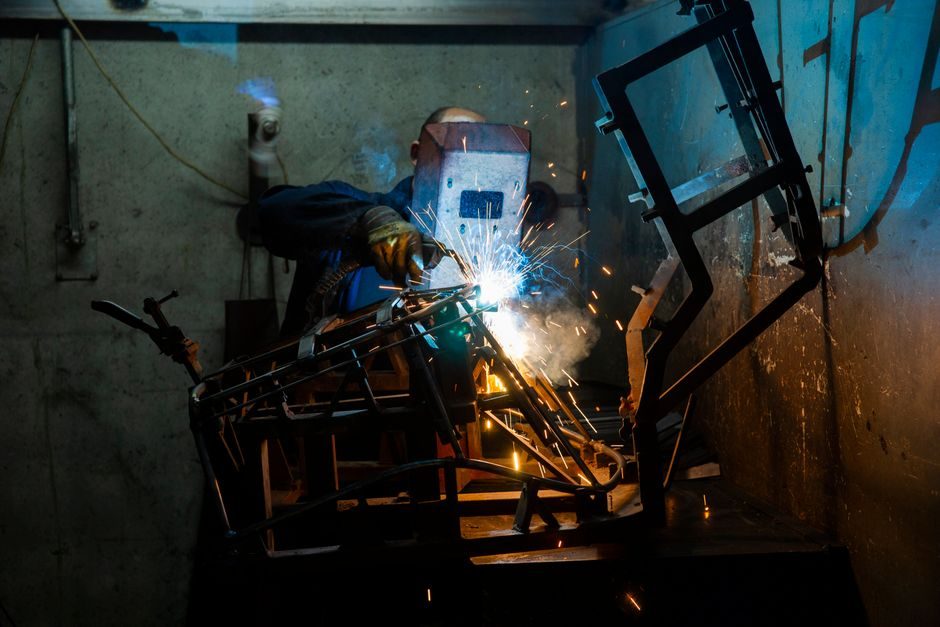
A TIG welder and a plasma cutter solve different problems on a shop floor, and a buyer who treats them as interchangeable ends up with the wrong tool. Inverter-based TIG units running AC/DC have dominated the hobby-and-light-fabrication segment for years, and Chinese OEM catalogues in 2026 still list AC/DC TIG and air plasma cutter as sibling SKUs on the same product line, with quoted FOB price bands of US$ 1.00–290.00 per piece at MOQ 20 [S3].
The two processes differ in physics, duty cycle, consumable cost and consumable category. A plasma cutter is a metal-removal tool; a TIG machine is a metal-joining tool. The 2026 supply market, however, packages them as a "combo" or multi-process inverter to hit price points below what two dedicated machines would cost, which is why the comparison matters for spec-driven buyers [S3][S5][S6].
Process Physics and Arc Behaviour
TIG (GTAW) uses a non-consumable tungsten electrode and an inert shielding gas (typically argon) to produce a stable, low-heat-input arc that melts the base metal; filler is added by hand for most joints. Plasma cutting uses a constricted arc forced through a small copper nozzle, raising arc temperature and momentum so the molten metal is blown out of the kerf. Plasma cuts, TIG joins — the two are complementary on a fab floor, not alternatives. [S1]
The same manufacturer (MIG-O-MAT) builds a longitudinal welding machine that accepts plasma keyhole, plasma and TIG welding heads interchangeably on a 4,200 mm welding length, with stated weld-thickness capability of 2–15 mm (0.1–0.6 in) [S1]. That OEM product explicitly frames TIG and plasma as three modes on one frame, which is the cleanest spec-level evidence that the two are process variants, not competing tools.
Power, Duty Cycle and Inverter Topology
Modern 200 A-class AC/DC TIG inverters, such as the Stahlwerk VECTOR Digital Professional TIG 200 AC/DC and the Kombi TIG 200 AC/DC units sold through European online channels in 2026, run on single-phase 230 V mains, weigh roughly 8–12 kg, and support HF start, pulse and AC frequency adjustment for aluminium [S2]. Air plasma cutters in the same catalogue tier typically deliver 20–50 A cutting current at 60 % duty cycle and can sever 6–12 mm mild steel while producing a clean cut up to about 6 mm.
Beijing Aland Welding and Taizhou Genteck both list TIG, MIG/MAG, MMA and air plasma cutter as parallel main products on their ISO 9001-certified production lines, with the inverter module, IGBT stack and front-panel MCU shared across the four product families [S5][S6]. That shared topology is the engineering reason combo units are cheap: the same 24 V DC bus, the same PFC front end and the same IGBT half-bridge drive 200 A of TIG current or 50 A of plasma current, only the output inductor and nozzle assembly differ.
Consumables, Shielding Gas and Running Cost
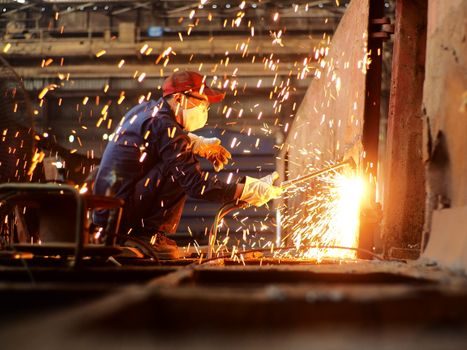
Plasma consumables — electrode, swirl ring, nozzle, retaining cap — are wear items; a 50 A mild-steel cut at 4 mm typically gives 40–80 pierces per electrode–nozzle set, depending on quality. TIG consumables are mostly the tungsten electrode (2 % lanthanated or 2 % ceriated for AC aluminium) and the gas nozzle; shielding gas is argon at 7–15 L/min flow on a 200 A torch, which is the dominant running cost, not the electrode. [S2]
Air plasma cutters consume shop compressed air at roughly 100–150 L/min at 5 bar, which is the hidden running cost in a fab without an existing compressor. The crossover running cost where two dedicated machines (one TIG on argon, one plasma on compressed air) beat a combo unit on consumable life is usually reached when the operator does more than ~2 hours/day of one process, because the dedicated torches and consumable sets are sized for their duty cycle rather than a compromise.
Material Thickness, Cut Quality and Weld Quality
A 200 A AC/DC TIG at 60 % duty cycle welds mild steel up to about 6 mm in a single pass and stainless or aluminium up to 4–5 mm without autogenous mode; thicker sections need multi-pass or pulsing. A 50 A air plasma cutter at 60 % duty cycle severs 12 mm mild steel and produces a dross-free cut on 6 mm plate, while a 70–100 A high-frequency plasma unit extends that to 25 mm and approaches oxy-fuel quality on thick carbon steel. [S3]
Cut quality and weld quality are not on the same axis. Plasma cut edges have a heat-affected zone (HAZ) of 0.5–2 mm, a kerf taper of 1–3° and a measurable dross line; this is acceptable for fabrication but not for weld prep on code work. For a related spec-level view of how duty cycle, amperage and process route shape total cost, the Arc Welding Machine 2026 price and cost guide breaks the levers down side by side.
Combo Units vs Two Dedicated Machines
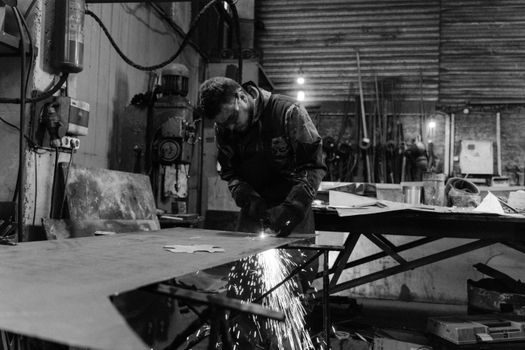
A combo unit is justified when the buyer is a hobby shop, a mobile repair van or a small job shop that does less than ~1 hour/day on either process. [S4]
Two dedicated machines are the right call for production fabs, structural steel shops and any work that pushes the duty cycle above 60 % on either process. The selection logic by use case is laid out in the TIG welder selection guide on process, duty cycle and material gates, which lines up inverter class, gas policy and torch cooling against job-mix. A side-by-side reference against stick welding sits in Arc Welder vs TIG Welder: 2026 spec cut for buyers who are deciding between stick and TIG as the primary joining process.
Standards, Certification and Safety Footnote
Both product families are commonly built to IEC 60974-1 (arc-welding equipment safety) and IEC 60974-10 (EMC), with ISO 9001 covering the OEM's quality system [S5]. Plasma units in a fab with paint or solvent booths need a Class A_div_2 or zone-classified installation per IEC 60079 series; TIG on aluminium with AC balance above 80 % reduces tungsten erosion and is the recommended practice for inverter AC/DC units. The MIG-O-MAT longitudinal welding machine datasheet shows that the same CE/EN framework covers plasma keyhole, plasma and TIG heads on a single frame [S1].
Plasma arc emits UV, IR and a high noise level above 100 dB at the torch — PPE for plasma cutting is heavier than for TIG (shade 5–11 glass versus shade 9–13 for TIG on 200 A). Fume extraction is mandatory in confined-space plasma work because hexavalent chromium and nickel fumes from stainless cutting are a recognised respiratory hazard.
Buying Decision Matrix
Decision criteria and the two options lined up against them: [S5]
<b>Primary job is joining carbon/stainless/aluminium up to 6 mm</b> — pick a dedicated 200 A AC/DC TIG inverter; do not pay for a plasma stage. <b>Primary job is cutting 6–25 mm plate</b> — pick a 70–100 A high-frequency plasma cutter; TIG is irrelevant. <b>Job shop doing 1 hour/day of each, mobile or field work</b> — pick a combo inverter with verified 60 % duty cycle on both modes. <b>Production fab pushing 60 %+ duty cycle on either process</b> — two dedicated machines, no exceptions.
Trackable signals for the next buying window: (1) IGBT and SiC inverter module pricing through 2026 Q3, which sets the floor for sub-US$ 300 combo units; (2) ISO 9001 re-cert audits at the Beijing Aland and Taizhou Genteck OEM lines, which dominate the export catalogue; (3) argon versus compressed-air cost ratio in the buyer's region, which is the largest swing factor on running cost between a TIG and a plasma cell on the same shop floor.
For component-level specifications, see marble cutter.