
Lab-grade oxygen detectors are specified against four hard numbers: nominal 20.9% O2 atmospheric baseline, low-oxygen alarm typically at 19.5%, high-oxygen alarm at 23.5%, and a response time under 30 seconds for breathing-zone monitors [S2][S3].
Unlike mining or oil and gas service, lab rooms rarely hit the dust, vibration, or Ex-zone constraints that dominate heavy-industry detector selection; the dominant variables are instead sensor accuracy, drift behaviour, and compatibility with clean-room or fume-hood atmospheres [S3].
Sensor Technology Comparison: Electrochemical vs Zirconium Dioxide vs Fiber-Optic
Three sensor families cover almost every lab O2 application, and each trades off against the others on measurable specs. Electrochemical cells — the most widely used — operate from roughly −40 °C to +45 °C, hold ±1–2% accuracy, and degrade as the detector head is consumed; typical service life is 1–3 years with 24% drift per year and a response under 50 seconds [S1]. Zirconium dioxide (ZrO2) cells tolerate much higher temperatures and show minimal drift, but require a reference gas and heated cell, which complicates miniature or battery-powered form factors [S3]. Fiber-optic (fluorescence-quenching) sensors avoid consumable chemistry entirely, which suits sealed GloveBox and incubator service where periodic calibration access is hard [S3].
Selection logic in practice: pick electrochemical for general bench and room monitoring where cost dominates; pick zirconia where temperature swings exceed 50 °C or where long calibration intervals matter; pick fiber-optic where the sample stream is sealed, sterile, or wet.
Alarm Thresholds, Setpoints, and What to Wire Into the Controller
Two-tier alarming — low at 19.5% O2 and high at 23.5% O2 — is the lab industry norm, because 19.5% is the OSHA-defined lower safe limit for human occupancy and 23.5% marks the enrichment level where organic-solvent fire risk rises sharply [S2]. A third, lower trip at 18% is commonly added to drive forced ventilation before personnel entry into confined lab spaces [S2].
Setpoint ladder for a typical lab room: T3 (warning) at 20.0% O2, T2 (evacuate) at 19.5% O2, T1 (engineering trip) at 18.0% O2, with high-side T3 at 23.5% and T2 at 25.0%. Audible and visual annunciation must be hardwired; the older ANSI/ISA-RP12.13.02 recommended practice, applied to flammable-gas systems, requires early warning of "both the presence and the general location of an accident accumulation" so a controller can drive ventilation or evacuation [S1].
Placement, Density, and Coverage Geometry in the Lab
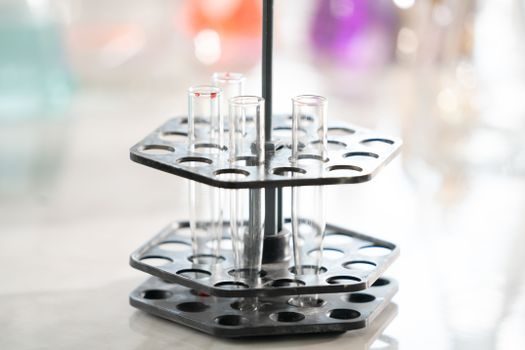
Mount the sensor head 1.5 m above floor (breathing zone) for personnel-hazard protection, and add a second head inside any fume-hood where cryogenic liquids or LN2 are decanted — nitrogen boil-off locally displaces O2 well before room-level sensors respond [S2][S3]. One detector per 25–40 m² is a working density for open bench labs; cold-room and incubator service use a dedicated sensor per chamber because the door cycle otherwise defeats room-level averaging.
Sensor placement must avoid direct airflow from HVAC supply diffusers; ANSI/ISA-RP12.13.02 (Section 6.2.1) calls for a fixed system "capable of monitoring those parts of a plant or other premises where flammable gas(es) accidentally accumulate" — the same logic, applied to O2 depletion, dictates placement at low points where dense nitrogen or argon will pool [S1].
Accuracy, Calibration, and Drift Discipline
Specify ±1% O2 full-scale accuracy as the minimum for breathing-zone lab service; ±0.5% is preferred for incubator and glove-box service where pO2 influences biological outcomes [S3]. Electrochemical cells drift roughly 2% per month in service, which forces a 30-to-90-day bump-test interval; zirconia and fiber-optic cells can hold calibration for 6–12 months [S1]. A two-gas calibration (20.9% ambient air span, nitrogen zero) is the routine field procedure; span-gas cylinders carry a finite shelf life — typically 12–24 months for certified ±1% mixtures.
For compliance-grade labs, log every bump-test result with date, cylinder lot, and reading; the same practice that ANSI/ISA-RP12.13.02 prescribes for flammable-gas detectors applies, and a written calibration record is the only defence during an incident investigation [S1].
Output Signal, Networking, and BMS Integration
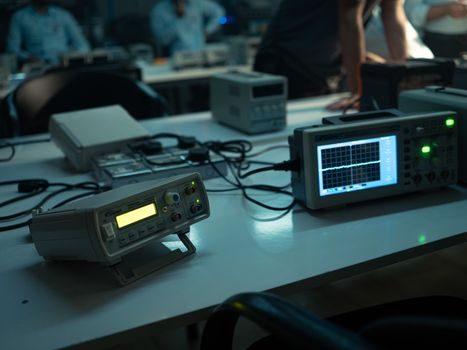
Lab-grade O2 transmitters typically expose 4–20 mA analog plus a relay output, with HART or Modbus RTU on higher-end units for BMS and LIMS integration [S3]. The 4–20 mA loop remains the dominant site wiring because it is intrinsically safe and survives long cable runs; HART overlays digital data on the same pair without disturbing the analog reading, which keeps a BMS feed alive even if the digital side drops out.
Order the transmitter with at least two programmable relays (low and high alarm) plus one fault relay; tie low-alarm relay into the HVAC increase-airflow contactor, and tie high-alarm relay into the gas-shutoff solenoid for H2 or other fuel-gas feeds in the same room. For multi-room labs, a 4-channel or 8-channel controller is more cost-effective than a stack of single-channel readouts, and matches the 8-transmitter architectures common in research-facility gas-cabinet design [S1].
Common Failure Modes and Specification Pitfalls
For a broader view of how sensor choice and compliance requirements differ in non-lab environments, the construction-site O2 detector spec map walks through the same selection logic under dust and confined-space constraints, while the O2 detector spec map for mining covers intrinsically safe head selection for underground service.
What a Lab O2 Detector Specification Should Contain
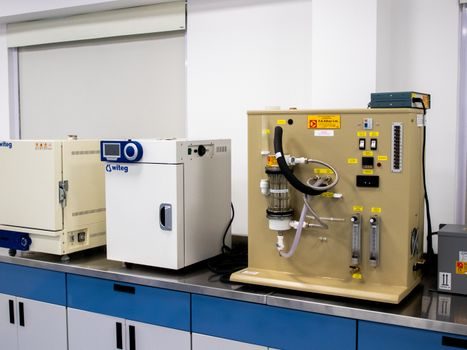
A short, complete lab O2 spec reads: sensor type (electrochemical, zirconia, or fiber-optic), range 0–25% O2 minimum, accuracy ±1% FS, response T90 < 30 s, operating temperature 0–45 °C, output 4–20 mA + HART, two alarm relays at 19.5% and 23.5%, IP65 enclosure, ATEX/IECEx certification for any lab where flammable vapours are present, and bump-test interval not exceeding 90 days [S1][S2][S3].
Track two signals on the next spec cycle: first, whether the IEC 62990 series for gas detection performance requirements is being cited in lab procurement documents instead of the older ANSI/ISA-RP12.13.02 flammable-gas practice — the newer standard explicitly addresses O2 deficiency and enrichment, which the older recommended practice did not [S1].
For component-level specifications, see dissolved oxygen meter, and dust detector.