
For most industrial buys the spec shortlist collapses to three figures: full-scale range, sensor principle, and alarm setpoints at 19.5% (deficiency) and 23.5% (enrichment) [S3]. The third number often matters more than accuracy, because the safety case lives in the alarm, not the reading.
Two technology families dominate. Zirconia (ZrO2) in-situ probes run hot, directly in the flue or vent, with no sample conditioning and a 0-10 ppm to 0-100 vol% O2 capability envelope on units like the Yokogawa OX400 [S2]. Electrochemical cells power portable 0-30% vol safety detectors sized roughly 1.7" D x 2.3" W x 4.3" H at about 8 oz, certified to a NIST-traceable calibration certificate [S4]. Mismatch is the usual failure: putting a 0-30% safety detector on a 0-10 ppm purity loop, or bolting an in-situ zirconia probe into a room-air safety role.
Match Sensor Family to Application Envelope
Electrochemical oxygen sensors target the 0-25/0-30% vol range used for atmospheric safety, where ambient air sits near 20.9% O2 and alarm thresholds anchor at 19.5% low and 23.5% high [S3]. They output a linear current versus partial pressure, run at room temperature, and pair naturally with portable form factors because no heater is needed. Spec a portable when the duty is mobile worker protection: tank entry, manhole descent, pipeline purge verification.
Zirconia oxygen analyzers, by contrast, need a heated cell (typically 700-800 deg C) and exploit the Nernst voltage across a stabilized ZrO2 electrolyte to deliver ppm-class resolution. The Yokogawa ZR22G/ZR802G series, AV550G 8-channel multiplexer, ZR202 integral transmitter, and OX400 low-concentration probe cover the combustion-control and inert-gas-purity segments from 0-10 ppm up to 0-100 vol% O2 without extractive sampling [S2]. For boiler trim, fired-heater optimization, ethylene cracker vent headers, and refinery flare headers, in-situ zirconia is the default, because response time is sub-second to a few seconds and the cell sits in the actual process stream.
For more on how sensor types and process duties are organized in industrial catalogs, see the oxygen detector reference page. Tunable diode laser (TDLS) is the third branch: the Yokogawa TDLS8000 eliminates sample extraction entirely, which is the right answer when the gas is wet, dirty, or corrosive, but TDL does not do percent-level safety monitoring, so do not confuse it with a portable.
Set the Range Before You Set the Brand
Range choice is a hard constraint, not a preference. The OX400 spans 0-10 ppm to 0-100 vol% O2 on a single probe family, which makes it the right starting point for trace O2 in nitrogen or argon header blanketing [S2]. Atmospheric safety detectors are essentially always 0-25% or 0-30% vol, with the latter giving 5% headroom for the 23.5% enrichment alarm [S3][S4]. Combustion-control analyzers commonly use 0-5% or 0-10% O2 for trim, then a wider 0-25% for startup and post-purge verification.
A practical rule: pick the narrowest range whose upper limit exceeds the highest credible O2 concentration the loop will see. Narrower range = better resolution at the operating point. A 0-10 ppm full-scale probe running at 50 ppb is more useful than a 0-100 vol% probe stuck on the same line. The trade is dynamic range; a dual-range zirconia (e.g. OX400) handles both 0-10 ppm and 0-100 vol% in one unit [S2].
Alarm Setpoints and Calibration Cadence
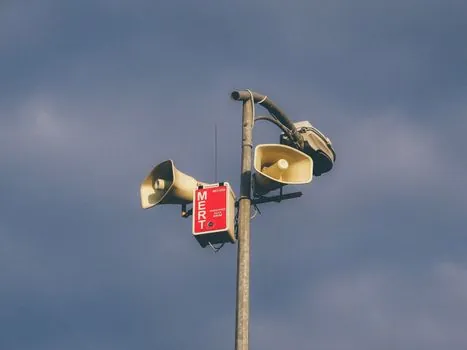
For atmospheric safety the two-alarm logic is fixed by practice: low alarm at 19.5% O2, high alarm at 23.5% O2, both with audible (>90 dB typical), visual (strobe), and vibration cues [S3][S4]. The detector should also support a TWA/STEL readout if workers do multi-hour entries, and a data logger for incident review. Calibration interval is the second-most common failure point: electrochemical cells drift 2-5% of span per month in field use, and a 90-day bump-test cadence is a common minimum, with full NIST-traceable span check annually [S4].
For process zirconia, calibration is different. The ZR22G line supports self-diagnosis of sensor deterioration without calibration gas, by tracking cell impedance and Nernst slope drift, and allows heater-assembly replacement on site rather than full probe changeout [S2]. That cuts annual maintenance cost substantially, but the trade is that you still need a reference gas (typically 0.5-2% O2 span gas in N2) for the annual verification. Plan a calibration-gas budget sized to the probe count, not the analyzer count, because each ZR22 detector consumes its own gas during the verification cycle.
Fixed Versus Portable: Who Should Pick Which
Fixed mounted systems are right for: continuous process measurement (boiler trim, ethylene production, refinery fired heaters), area monitoring in plant rooms where cabling can be run, and integrated safety instrumented functions tied to a PLC or DCS. A fixed system tolerates a 24 VDC loop, a 4-20 mA or HART output, and a periodic calibration visit. [S2]
Portable detectors are right for: confined-space entry where workers carry the device, mobile inspections, and any duty without reliable power. The trade is battery life (typically 24-72 hours per charge on units like the Forensics 0-30% O2 pocket detector), single-point coverage, and the requirement that each worker carries a calibrated unit [S3][S4]. Do NOT pick a portable as a substitute for a fixed area monitor; one worker leaving the space removes all coverage.
For process gas purity and trace O2 in a header, the in-situ zirconia is also a "fixed" device but with very different installation constraints: it needs a probe stack port, a heater power supply, and a fly-ash or particulate filter on dirty services [S2]. TDL is the alternative when the gas is too dirty for direct zirconia contact.
Selection Criteria in One Pass
Four variables decide the model code: (1) range, with 0-30% vol for safety, 0-10 ppm for purity, and 0-5/0-10% for combustion trim; (2) sensor type, electrochemical for safety and ambient, zirconia for hot in-situ ppm-to-percent, TDL for dirty or corrosive gas; (3) form factor, portable pocket-sized for mobile workers, fixed probe for continuous process; (4) output and integration, from local 3-color LED plus USB-rechargeable (portable) to 4-20 mA, HART, and digital comms with multi-channel multiplexer (process) [S2][S3][S4]. A related instrumentation class for the dissolved-O2 side of the same measurement family is covered at the dissolved oxygen meter reference.
Limits, Failure Modes, and What to Watch Out For
Zirconia probe life is dominated by heater cycles and sulfur or halide poisoning of the cell. Fly-ash loading on a combustion service will drift the reading and requires the OEM particulate filter kit; without it, expect cell contamination in 3-6 months on a coal-fired or biomass service [S2]. Electrochemical cells have a 2-3 year shelf life whether used or not, and once exhausted the cell must be replaced; the analyzer survives, the sensor does not. The Forensics unit ships with a NIST-traceable calibration certificate as standard, but field bump-testing still has to happen on the user's schedule [S4].
Pressure compensation is a quiet failure mode. The Yokogawa ZR202 integral type accepts pressure input for compensation; older ZR22 remote units may need an external pressure transmitter for tight accuracy [S2]. Electrochemical cells are less sensitive because they typically vent to atmosphere, but a sealed confined space with pressurization can still bias the reading.
Standards, Certification, and Sourcing Anchors
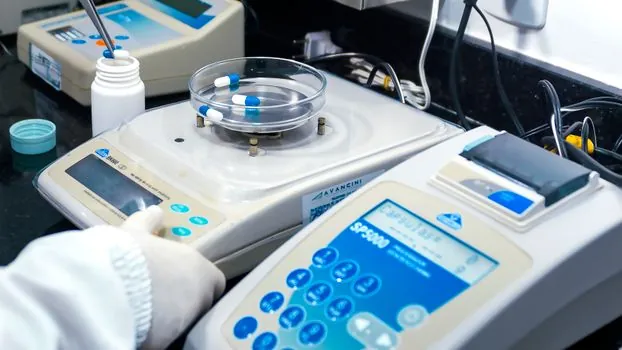
Confined-space O2 monitoring in the US is anchored to OSHA 29 CFR 1910.146 permit-required confined spaces, with 19.5% low and 23.5% high as the de facto alarm thresholds for entry, and to NIST-traceable calibration for the bump-test gas [S3]. Process zirconia analyzers on fired equipment sit under combustion-control codes and are typically specified with ATEX/IECEx for hazardous-area plants, though the exact category is set by the zone classification rather than the analyzer itself. The Yokogawa ZR22G and OX400 carry the certification packages common to refinery and ethylene service, and the AV550G handles up to eight ZR22 probes from a single converter for multi-boiler or multi-furnace plants [S2]. The portable Forensics detector carries explosion-proof construction and ships with a dust/explosion-proof enclosure rating plus sound/light/vibration alarms in a 0-30% O2 range [S4].
For sourcing, treat three numbers as binding: range, sensor type, and alarm/output count. A buyer specifying 0-30% vol, electrochemical, USB-rechargeable, with sound/light/vibration and NIST certificate gets a clear portable like the Forensics SKU [S4]. A buyer specifying 0-10 ppm to 0-100 vol%, zirconia, in-situ, with HART, gets a Yokogawa OX400 or ZR22G family configuration [S2]. Anything between those two anchors, or with a multi-probe multiplexer, lives in the ZR202/AV550G tier [S2]. For plants that need an integrated parts list that also covers mechanical build items, the broader construction machinery and equipment reference catalogs the structural side of process skids, while this detector class covers the sensing layer.
Trackable signals for the next buying cycle: (1) the OX400 ppm-class zirconia line is the one to watch for trace-O2 purity applications where extractive analyzers used to be the only option [S2]; (2) portable 0-30% vol detectors with rechargeable USB and three-alarm output are now the entry-level price point, replacing older disposable-battery units [S4]; (3) multi-channel ZR22/AV550G configurations let one converter replace eight single-loop analyzers, which is the lever to pull on a multi-boiler plant retrofit [S2].
For related coverage, see Pipe Clamp Types and Classifications: A 2026 Field Selection Reference.
