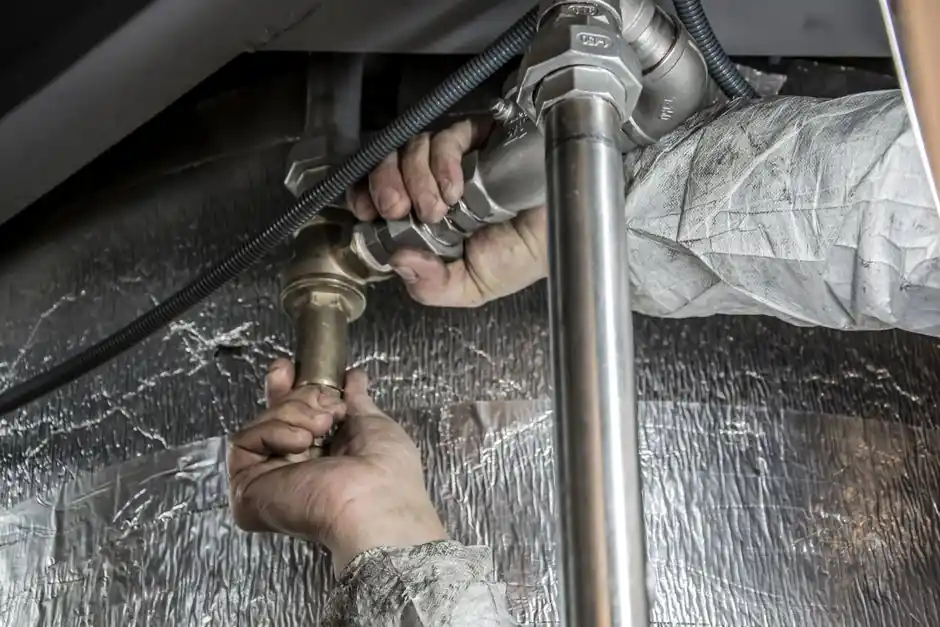
Pipe clamps split cleanly into four mechanical families, each with a defined load class, lining option, and material pairing [S1][S2]. The four are standard (two-screw) clamps, traditional clamps (saddle, U-bolt, split band), plastic quick-release clips, and heavy-duty bolted clamps rated for high safe working loads on process and district-heating pipework [S1][S2].
Two parallel classification systems exist in the trade: support-and-fix clamps that anchor pipe runs to structures, and alignment (welder's) clamps that hold pipe ends coaxial for tack welding. The support family is what most procurement and MRO buyers call pipe clamps; the alignment family is a separate tool category that lives on the welding floor.
Standard Two-Screw Clamps: Default Choice for Metal and Plastic Plumbing
Standard pipe clamps are two-piece steel shells secured with one screw on each side of the clamp, with single-screw variants available for faster install [S1]. Single-screw versions often ship with a rubber lining that isolates vibration and damps sound, which is the practical reason they dominate domestic hot-water and HVAC risers [S1].
Walraven's product line confirms the family logic: a two-screw steel clamp is the default for straight-forward metal or plastic pipe runs, while single-screw quick-locking designs add captive locking nuts, anti-loss washers, and field-serviceable screws for faster mechanical-room work [S2]. The two-screw form is the workhorse; the single-screw is the time-saver.
Traditional Clamps: Saddle, U-Bolt, and Split-Band for Steel and Copper
Traditional clamps cover three sub-types: saddle clamps (half-saddle transferring weight to a base), U-bolts (lifting steel or copper off a beam), and split bands with no internal lining [S1][S2]. They are best specified where vibration isolation, acoustic damping, or thermal-expansion compensation is not required [S1][S2].
Fluid Tech Piping's taxonomy extends the family with C-clamps (C-shaped band for light cable-tray and pipe runs) and Euro clamps, which are two-piece metal shells with rubber or polyurethane lining used in chemical-plant and shipboard duty [S5]. Rubber-lined U-bolts are the common variant for fire-protection and gas lines where slip resistance matters more than acoustic isolation [S5].
Plastic and Quick-Release Clamps: Copper, Plastic Pipe, and Corrosive Atmosphere
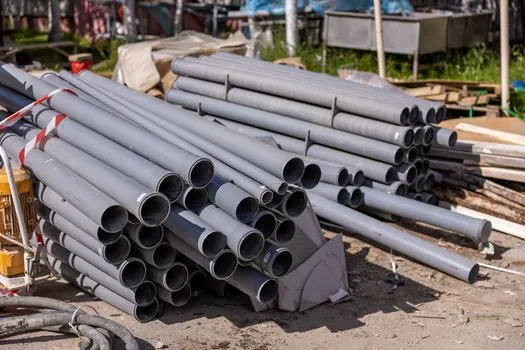
Plastic clamps and clips are specified for thin-wall copper, PEX, PP-R, and other plastic pressure pipe because a metal jaw can crack or oval the pipe wall if over-torqued [S1]. The arm closes over the pipe without threaded fasteners, which is why the family doubles as the quick-release option on the shelf [S1].
For sanitary, heating, electrical, and corrosive-environment work, plastic is now specified as the default, not the fallback, because installation time per clamp drops sharply when the arm snaps shut by hand rather than being torqued [S2]. Stainless-steel cable ties (with a 350 lb tensile rating on the strap-and-buckle pattern) and zinc-plated steel P-clamps with rubber cushions fill the lightweight-support gap between plastic clips and full traditional saddles [S1].
Heavy-Duty and Seismic Clamps: Process, District Heating, and High-Risk Sites
Heavy-duty clamps are two-part steel shells with locking bolts, used indoors and outdoors for high safe working load pipework such as district heating, chiller risers, and large-bore process headers [S1][S2]. The safe working load is the selection lever, not diameter; many heavy-duty bodies are supplied both lined and unlined, which lets the specifier trade acoustic isolation against raw holding force [S1][S2].
Seismic clamps add displacement limiters and high-strength steel construction to restrict swing range in earthquake zones, while insulated clamps use non-metallic or heat-resistant materials for steam lines and anti-static environments [S5]. Where pump and compressor vibration can travel into the building structure, vibration-isolation hangers with rubber or spring elements are specified together with the clamp, not in place of it [S5].
Welder's Alignment Clamps: Bridge, Cage, Chain, and Internal Systems
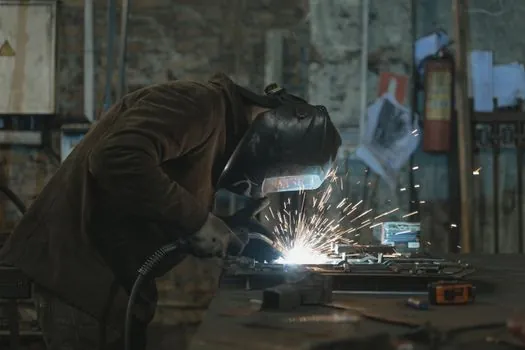
Bridge clamps are the most common alignment tool for pipe diameters up to 14 in (DN 350). They sit over the joint and are tightened from both sides, with centering immediate once the bolts are torqued [S3]. GBC's Gold Bridge series covers 1 in to 14 in across five models (GBC3 through GBC14) in forged steel, and the Black Bridge series covers 1 in to 12 in (25.4-304.8 mm) across three models (BBC2, BBC6, BBC12) with stainless locking feet for stainless, duplex, super duplex, and titanium work [S3].
Cage clamps suit fixed-diameter work with heavy welding loads; chain clamps cover large diameters and actively reform ovality; internal expansion systems align from the bore for flanges, elbows, and complex geometries where internal fluid profile matters [S3]. External clamps are faster to apply and more versatile; internal systems are the right answer when Hi-Lo misalignment would cause turbulence, fouling, or radiographic rejection in oil-and-gas and cross-country pipeline work [S3]. For process-pipe support adjacent to weld cells, the expansion joint installation guide covers the thermal-movement side of the same pipe run.
Selection Criteria: Diameter, Material, Lining, Load, and Movement
Five criteria drive a clean spec. First, pipe diameter and material: plastic and thin-wall copper want plastic or rubber-lined clamps; carbon steel, stainless, and copper at standard wall thickness accept traditional and standard two-screw steel clamps [S1][S2]. Second, lining: rubber or polyurethane for vibration and noise, EPDM or similar for temperature resistance, none where the pipe is rigid and acoustic isolation is irrelevant [S1][S5].
Third, safe working load: plastic for light loads and quick install, standard two-screw for routine plumbing, heavy-duty for high-load process and district heating [S2]. Fourth, movement: rigid clamps and hangers for static drainage, spring hangers for thermal expansion, slide hangers for long straight runs, seismic clamps for swing control [S5]. Fifth, environment: stainless steel or non-metallic for corrosive and flammable service, with reference to ASME B31.1 (power piping) and NFPA 13 (fire protection) for the compliance check on the finished pipe-support assembly [S5]. For adjacent equipment spec work on rotating machinery lines, the locking assembly selection guide is the natural cross-reference.
Comparison Table: Four Clamp Families Against Five Selection Criteria
The trade-off matrix below lines the main clamp families up against the five selection criteria used in procurement. It is meant to be quoted by specifiers, not paraphrased. [S2]
Limitations, Misuses, and Common Field Failures
The most common field failure is using a standard two-screw steel clamp directly on plastic pipe; the metal jaw cracks or ovalizes the wall under torque [S1]. The second is omitting thermal-expansion allowance on long hot runs: a rigid clamp on a steam header will shear its anchor or buckle the pipe within a few thermal cycles, which is why spring and slide hangers exist alongside the clamp body [S5].
On the alignment side, the dominant defect is Hi-Lo misalignment, where one pipe wall protrudes past the other; in oil-and-gas and cross-country pipeline work, joints under 100% radiographic or ultrasonic inspection are automatically rejected for excessive Hi-Lo, and that rejection starts at the clamp choice, not the welder [S3]. For process instrumentation near the same pipe rack, toxic gas detector sensor specs are part of the same hazard inventory.
Standards, Sourcing, and Spec Anchors
Two standard families govern pipe-support hardware in current practice: ASME B31.1 for power-piping support and layout, and NFPA 13 for fire-protection sprinkler bracing [S5]. District-heating and high-load process work typically references MSS-SP-58 and MSS-SP-69 for hanger and support selection, though the original sources here do not quote them; specifiers should confirm the current revision against their project specification.
For procurement, the lighting equipment and electric lamps category is unrelated, but the construction machinery and equipment family covers the install tooling and access platforms used to fit heavy-duty and seismic clamps at height. The verifiable next node to track is the revision status of MSS-SP-58 and MSS-SP-69 in the 2026-2027 MSS catalog, and any update to ASME B31.1 seismic-bracing language for high-seismic-zone pipe racks.