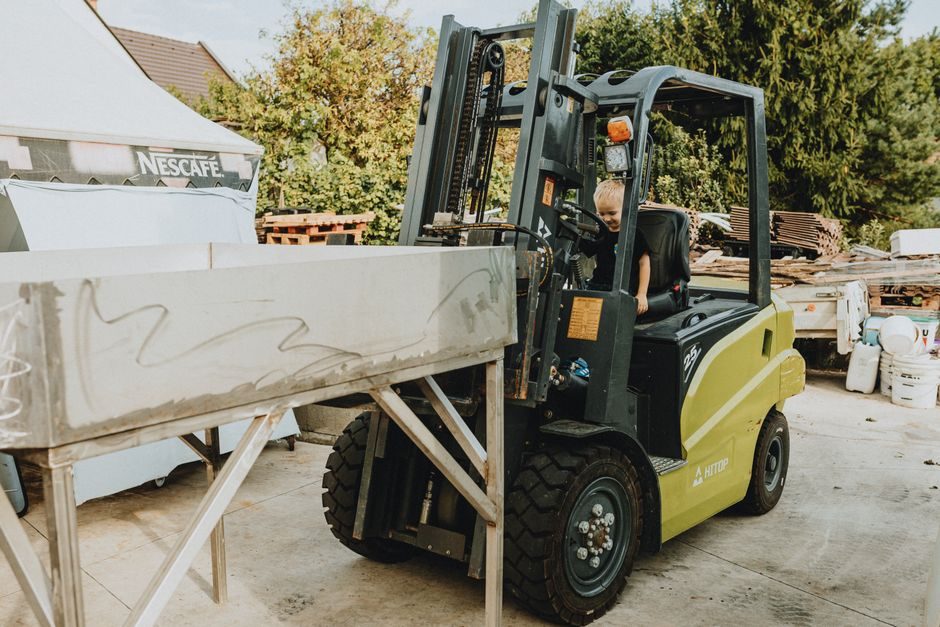
Selective pallet racking typically reaches 90% selectivity with single-deep load access on both faces, and 75-85% space utilisation when aisle width is matched to the operating forklift class — figures that anchor any warehouse-storage ROI model [S3].
For a 10 m clear-height greenfield in 2026, the realistic upper bound for a standard selective system is roughly 6 pallet positions vertically with a counterbalanced or reach truck, and 7-8 positions only where a narrow-aisle truck or pallet stacker is justified by throughput.
What the system is — and what it is not
Selective racking is a cold-formed or hot-rolled steel frame configured as upright frames plus stepped beams; UPRIGHTS carry the vertical load and BOLT-IN ANCHORS tie them to the floor at the design seismic coefficient. It is NOT a drive-in, push-back, pallet-flow or cantilever system, and confusing the typology is the single most common procurement error in 2026 bid sheets [S3].
The system depends on standard ISO GMA plastic pallet footprints of 1200 × 1000 mm (Europe) or 1219 × 1016 mm (North America) for beam spacing geometry; oversized or undersised pallets defeat the design's pallet-per-position count and invalidate the rack supplier's load tables.
Load, span and material gates
Beam capacity in mainstream 2026 product lines runs 1000-4500 kg per pair at 2700 mm beam length, with deflection limited to L/180 under full UDL — a figure that is normally stamped on the manufacturer's data plate and required by EN 15635 / ANSI MH16.1 inspection regimes. Column capacities scale with section depth: 80 × 70 × 2.0 mm profiles handle roughly 8-12 tonnes per frame, while 120 × 95 × 3.0 mm profiles reach 18-24 tonnes per frame at standard 4 m upright heights [S3].
Steel grade matters: pre-galvanised strip to EN 10142 DX51D+Z is the entry tier; powder-coat over hot-rolled to EN 10025 S275JR dominates the 2026 European mid-market. Seismic-rated installations move to S355JR with documented yield-strength certificates — a requirement that is increasingly audited at the point of dispatch rather than at site delivery.
Decision criteria: selective vs the alternatives
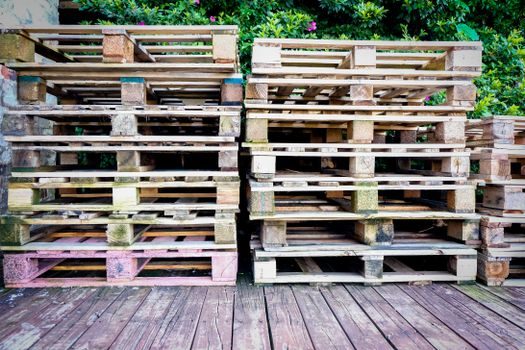
When SKU count is high (typically 800+ SKUs per 1000 m²) and order-pick frequency dominates over pallet-in/pallet-out bulk moves, selective racking wins on selectivity despite lower density. A standard 4-deep comparison shows: selective at 90% selectivity / 35% volumetric efficiency, drive-in at 60% / 60%, and push-back at 85% / 55% [S3].
Against a storage rack alternative like cantilever, selective loses for long goods (timber, pipe, extrusions) and wins for unitised pallet loads. Drive-through or flow-rack alternatives should be evaluated only when FIFO rotation or pallet-density economics beat selectivity by 1.3× or more.
Damage modes, inspection and the real cost line
Upright deflection and beam-end connector deformation are the two failure modes that drive unplanned downtime in selective systems; both are accelerated by forklift impact, which is why a properly dimensioned pallet rack layout must be paired with the correct truck class. Counterbalanced forklifts on selective systems should run a 3.0-3.5 m aisle, reach trucks 2.6-2.9 m, and turret/VNA trucks 1.6-1.9 m — outside these bands impact frequency rises sharply [S3].
EN 15635 mandates a documented inspection every 12 months at minimum, with a competent person audit; rack damage that drops any component below 90% of original cross-section should trigger immediate load-down or bay isolation. The 2026 visible trend is pallet-stop and end-of-aisle guard retrofitting as a procurement condition rather than an option.
Limits and failure cases to reject the system
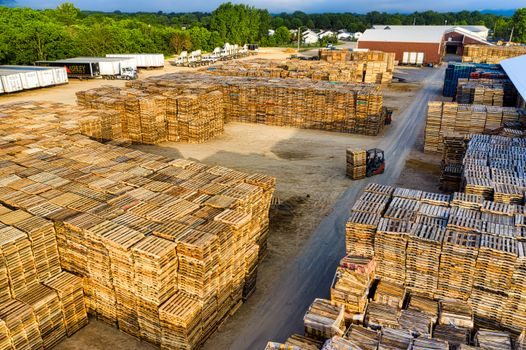
Selective racking is the wrong call when: (a) SKU count is below 200 and pallet velocity is high — a block-stacked floor saves capex; (b) floor flatness exceeds 5 mm over 2 m, since un-anchored frames walk under truck braking; (c) ambient temperature cycles exceed -20 °C / +40 °C without grade selection, because standard Z-coatings fail in chloride-laden cold stores; (d) the seismic design coefficient at site is above 0.30 g without engineered bracing. [S1]
Installation lead time for a 1000-pallet-position selective system in mainland China export channels in 2026 sits at 25-40 working days ex-works, and European tariffs on Chinese hot-rolled stock remain the swing variable — buyers should pin price to EN/ASTM grade certificates rather than trade-term alone. For unit-load operations needing higher density, manual pallet jack compatibility and beam pitch should be re-validated against the alternative system's spec sheet, not assumed.
Procurement and standards gate
The 2026 specification floor for selective pallet rack remains EN 15635 (operation), EN 15512 (design) and FEM 10.2.07 (seismic) in Europe, with ANSI MH16.1 / AISI S155 governing North American bids. Powder-coat RAL 5015 blue remains the visual default on Asian export lines, but RAL 7035 light grey has gained share in 2026 European retrofits because of cleaner damage-photographing for inspections. [S2]
Two trackable signals to monitor over the next 12 months: (1) the FEM 10.2.07 seismic coefficient tables being revisited for multi-tier catwalk systems; (2) the rising baseline use of laser-scan damage mapping replacing manual inspection under EN 15635 — see AGV Robot Installation: Site Prep, Navigation Layout and Commissioning for the same laser-scan trend crossing the AGV integration boundary.