An AGV robot fleet's 10-year cost is driven by 8 separable line items — unit, integration, batteries, fleet software, energy, service, downtime, and residual value — and the running-cost block (energy + service + downtime) routinely exceeds 60% of lifecycle spend on a single-shift operation [S2][S3].
Total Cost of Ownership (TCO) is a procurement framework that combines initial acquisition with operating and indirect costs over a product's life; the framework was formalised in fleet and capital-equipment studies and is now standard for AGV, AMR, articulated robot, and collaborative robot buying decisions [S1][S2][S3].
Line-by-Line TCO Model for an AGV Unit
The Busch UK TCO breakdown for industrial vacuum equipment shows the same eight-line structure that applies to AGVs: initial purchase, installation, energy, maintenance, downtime, consumables, training, and decommissioning — and Busch states that the initial purchase price is only a fraction of total lifetime expense [S2]. That same fraction logic holds for AGVs because the unit is only the carrier; the WMS/MES integration, battery chemistry, navigation stack, and service contract are all priced separately.
A-dec's equipment-side TCO discussion reaches the same conclusion: reliability, maintenance, and longevity are the factors that separate superior from sub-par equipment, and unplanned downtime is what makes indirect costs dominate the lifetime bill [S3]. For an AGV the equivalent of "chair downtime" is a vehicle stranded in a picking aisle blocking two operators, so the same reliability premium applies on a per-shift basis.
What Each AGV Cost Line Typically Carries
Unit price (the vehicle) varies sharply with payload, navigation method, and battery: laser-SLAM and QR-code AGVs sit at the lower end, while natural-feature AMR robot units with on-board fleet logic sit at the upper end; the integration line (WMS/WCS/MES adapters, PLC handshakes, traffic manager, and the safety scanner commissioning) is frequently equal to 30-80% of unit price on a first deployment. [S1]
Batteries are a separate life-limited asset — lithium iron phosphate packs typically cycle 2,000-3,000 times to 80% capacity, so a two-shift operation will replace the battery once or twice within the vehicle's 10-year life; energy is dominated by kWh per shift, which scales with payload, travel distance, and opportunity-charge frequency, while the service contract line is split into preventive (annual, fixed) and corrective (per-event, variable) and the downtime line is best estimated in lost-pick cost per hour rather than as a percentage.
Decision Bands: When the Unit Price Stops Being the Main Lever

On a single-shift, low-payload AGV installation running 2,000 hours/year, energy and service together typically run 1.5-2.5× the annual depreciation of the unit, so procurement teams that negotiate hard on unit price but accept default service terms usually find that the saving is absorbed within 24-36 months of operation [S2][S3]. On 24/7 operations with opportunity charging, battery replacement rises to first or second place in the running-cost block, ahead of energy itself.
Residual value is the line most buyers under-model: a 10-year-old AGV with documented service history, working batteries, and the same firmware as the live fleet still has a market for spares-pooling, but a unit with a non-standard fleet manager or a dead battery line typically retires for scrap value of the steel and motors only — so the depreciation curve should be modelled against a 7- to 10-year terminal date, not the vendor's headline life [S1][S3].
Comparison: AGV vs AMR vs Manual Cart on the Same 10-Year Frame
On a 10-year frame, an AGV fleet (fixed-path, conveyor/roller-top, tow, or unit-load) shows the lowest unit price and the lowest flexibility, an AMR robot fleet (natural-feature SLAM, no floor tape) carries a 30-100% unit premium but saves the floor-marking integration line, and a manual cart operation carries near-zero capital but transfers the labour cost into an OPEX line that compounds with wage inflation [S1][S2]. The trade is therefore not unit vs unit but unit premium vs integration saving vs ongoing labour — and that is the only frame on which AGV TCO is comparable to AMR TCO.
The 10-year lifecycle is the minimum sensible frame because battery replacement, fleet-software refresh, and the first major navigation upgrade all fall inside it; a 3-year frame used in some vendor pitch decks is short enough to hide the battery line entirely and is not a real TCO exercise [S1][S2].
Who AGV TCO Is For — and Who It Is Not For

The 8-line AGV TCO model is built for greenfield distribution centres, 3PL cross-docks, automotive assembly feeders, and any plant where the same 5-20 aisles are traversed more than 8 hours a day with predictable payload; it is not built for low-volume job shops, seasonal warehouses with utilisation under 1,500 hours/year, or sites where the picking routes change weekly, because the integration line and the fleet-software subscription will not amortise [S1][S2].
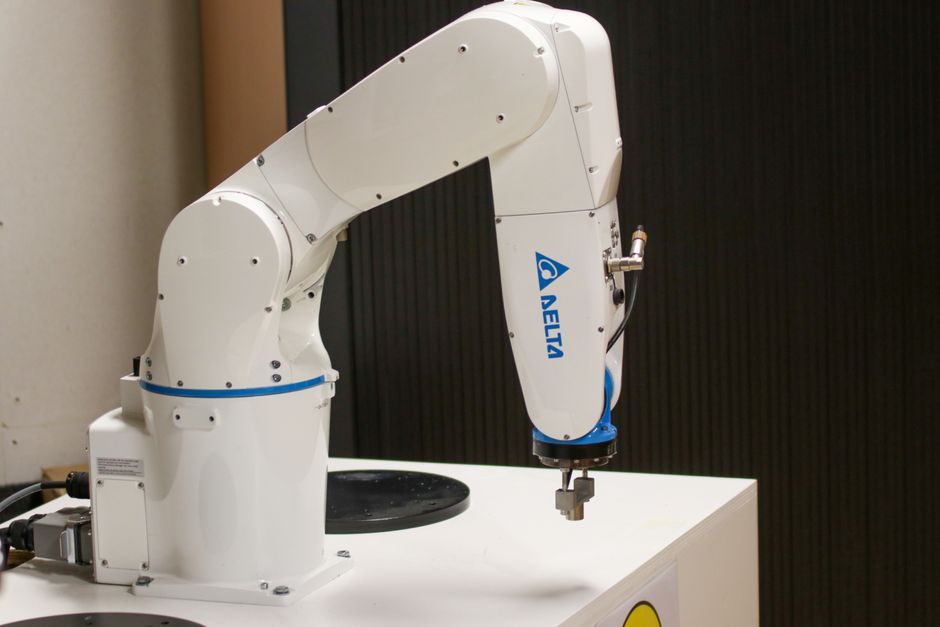
Buyers comparing an AGV against a SCARA robot on a fixed indexing line should not even attempt a TCO comparison on the same 8-line frame, because the SCARA cell is a fixed station and its integration line is bolted to one machine, not to a fleet manager; the comparison only makes sense at the line level, not the vehicle level.
Standards, Service Contracts, and Sourcing Signals to Track
Safety compliance is a sourcing gate, not a TCO line: AGVs in mixed-traffic European sites are typically specced to EN ISO 3691-4 (driverless industrial trucks) with the safety-rated laser scanners and emergency-stop circuits itemised inside the unit price; specifying the standard in the purchase contract prevents a retrofit bill being added to the integration line later [S2][S3]. Battery UN 38.3 transport certification and IEC 62619 (industrial lithium cells) are the matching documents for the battery line.
Two trackable signals for any AGV tender: (a) request the vendor's published MTBF and the mean time to repair for the safety scanner, drive wheel, and battery — the A-dec-style reliability argument applies here, since a 20-year AGV is rare but a 12-year AGV with one battery refresh is the realistic benchmark [S3]; (b) request the energy consumption in kWh per vehicle-hour at a stated payload, because the energy line is the one that gets contested during contract negotiations. Procurement teams that have access to the stacker-crane TCO breakdown for their sister AS/RS project will find that the energy and downtime lines behave almost identically to AGVs in cold-storage, which is the cross-check most spreadsheet models are missing.