
Specifying a paperless recorder in 2026 means choosing between three product families that share a display and digital storage but diverge sharply on channel count, accuracy and hazardous-area rating: fixed panel-mount modular units such as the Orbit Merret OMR 700 with 8 plug-in slots accepting up to 96 analogue channels [S4]; Ethernet-connected high-speed videographics recorders such as the Azbil ARF100/ARF200 with 100 ms high-speed acquisition and ±0.1 % precision [S1]; and intrinsically safe, battery-powered field loggers such as the Riels LEO-RECORD with IP65 housing and RS485 PC interface priced from €660 [S3].
Across the current vendor set the measured-accuracy band runs from ±0.1 % of reading on the Azbil ARF series and the ABB RVG200 [S1][S9] to ±0.3 % of measurement span on the Weldotherm RSG 35/40, with input counts ranging 4–20 points for compact panel units [S2] up to 96 channels in the modular OMR 700 [S4]. Storage media span SD cards, CompactFlash up to 512 MB on legacy units [S2], and USB sticks on current Ethernet/LAN models [S1][S8]. A useful internal reference for the underlying class of instrument is the paperless recorder encyclopedia entry.
Channel Count and Modular Architecture
Modular panel-mount recorders dominate channel-count growth in 2026: the Orbit Merret OMR 700 uses 8 plug-in slots with a maximum of 12 analogue inputs per module, scaling to 96 channels in a single 144 mm × 144 mm cut-out, and accepts mixed analogue, digital and output modules in the same backplane [S4]. By contrast the Weldotherm RSG 35 covers 4–12 measurement points and the RSG 40 caps at 20 points in a non-modular chassis with CompactFlash storage [S2].
For sub-12-channel applications the Azbil ARF100 supports up to 12 input points with 100 ms high-speed sampling and ±0.1 % precision, paired with a 12.1 in TFT colour display on the ARF200 variant [S1]. Engineers mapping a small skid or a single reactor should match the recorder to the I/O list rather than buy headroom: a 96-channel OMR 700 is over-specified for a 16-point thermal mapping job, while an 8-channel fixed unit will bottleneck a 64-point boiler audit.
Accuracy, Resolution and ADC Bit Depth
The published accuracy floor for current production paperless recorders sits at ±0.1 % of reading, claimed by both the Azbil ARF100/200 [S1] and the ABB ScreenMaster RVG200, which additionally specifies 24-bit ADC resolution and a measurement capability covering current, millivolt, resistance, temperature and voltage in a 1-channel configuration [S9]. Compact panel recorders such as the Weldotherm RSG series accept a wider ±0.3 % of measurement-area tolerance in exchange for lower cost and smaller panel cut-out [S2].
Resolution is not the same as accuracy: the ABB RVG200's 24-bit ADC delivers 16.8 million counts, useful for resolving sub-degree changes on type K or Pt100 inputs, but the published ±0.1 % is still the figure that governs calibration intervals and traceable measurement uncertainty. For a general instrument primer on a related measurement class, the pressure transmitter encyclopedia page covers similar accuracy and HART-isolation considerations that apply when a recorder also acts as a data aggregator for live 4-20 mA loops.
Hazardous Area, IP Rating and Field Power
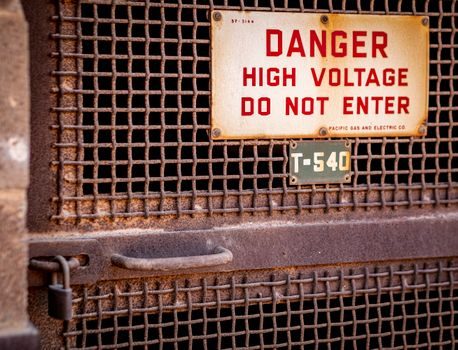
Where the recorder leaves the panel and goes into a hazardous or outdoor location, the spec set changes. The Riels LEO-RECORD is the clearest 2026 example of an intrinsically safe field logger: self-contained, battery-powered, IP65-sealed, and certified for pressure and temperature recording over extended intervals, with pressure measured and displayed at 1 Hz, configurable pressure units, and a non-volatile memory for data security [S3]. Options include wetted parts in Hastelloy, Inconel 718 or titanium for corrosive service, and a choice of compensated pressure and temperature ranges via the vendor's PC/PDA software [S3].
Panel-mount recorders typically assume a clean cabinet environment with DIN-rail or panel power; the Azbil ARF series is described as panel-mount, USB-equipped and Ethernet-capable for remote monitoring and e-mail alerts, not for Zone 1 exposure [S1]. The Orbit Merret OMR 700 carries an industrial panel-mount form factor and a touchscreen with LCD graphic display, but its data sheet does not claim an IS certification [S4]. Buyers running Ex Zone 1 or Zone 2 should treat panel-mount Ethernet units as cabinet instrumentation and route signals to them via barriers, or specify a field logger such as the LEO-RECORD for direct contact with the process.
Storage Media, Network and Software Stack
Storage and connectivity have fragmented rather than converged. The Weldotherm RSG 35/40 still writes to CompactFlash cards up to 512 MB [S2], which is a constraint on retention window and a procurement headache for plants that have moved off CF entirely. The Azbil ARF100/200 series moved to USB and SD/CF plus LAN for remote monitoring, e-mail alerts and automatic data transmission [S1]. The Omega paperless recorder product line advertises real-time multi-format display, digital transfer and an SD-card slot, alongside the discontinued "Temperature and Humidity Virtual Chart Recorder" and the 8-input portable thermometer/data logger that uses the same SD-card retention pattern [S8].
For multi-site rollouts the practical decision tree is: SD/USB stick for local retrieval on a single skid, Ethernet for SCADA or historian aggregation across a plant, and RS485 for field-logger clusters where cable runs are long and bandwidth is modest. The LEO-RECORD uses RS485 to a PC or PDA running the vendor's Logger 4.x software, with event-triggered plus interval logging to suppress redundant records when the process is steady [S3]. Engineers planning a similar dual-mode logger in a thermal mapping or steam header audit can compare the architecture against the cost-stack logic in the Steam Separator Selection 2026: Type, Sizing, and Spec Map reference.
Comparison: Three 2026 Product Classes Side by Side

On the four criteria that drive the buying decision, the three classes line up as follows using only the published 2026-vintage data: (1) Channel count — OMR 700 up to 96 channels [S4], Azbil ARF up to 12 [S1], RSG 35/40 up to 20 [S2], LEO-RECORD 1 measurement point internally plus RS485 daisy-chain [S3]; (2) Accuracy — Azbil ARF and ABB RVG200 at ±0.1 % [S1][S9], Weldotherm RSG at ±0.3 % of span [S2], LEO-RECORD accuracy is vendor-described as "high" without a published numeric in the spec sheet [S3]; (3) Hazardous-area rating — only the LEO-RECORD carries an IP65 sealed, battery-powered intrinsically safe design for direct field mounting [S3], the panel units assume a protected cabinet [S1][S2][S4]; (4) Storage — Azbil ARF USB/CF + Ethernet [S1], RSG CompactFlash up to 512 MB [S2], LEO-RECORD non-volatile internal memory plus RS485 download [S3], OMR 700 integrated data logger with USB and Ethernet on the chassis [S4]. ABB's RVG200 adds a 24-bit ADC as a fifth differentiator that none of the other 2026-vintage units in this set publish [S9].
The decision rule that follows: pick LEO-RECORD-class for Zone 1 and remote wellsites where no power is available; pick OMR 700-class when the I/O list exceeds 20 points or mixes analogue and digital inputs on a single backplane; pick ARF/RSG/RVG200-class for clean-panel SCADA gateways with Ethernet or e-mail alarm needs and accuracy below ±0.2 %. For applications that involve both process temperature and rotating equipment, the broader procurement logic laid out in the Roller Chain Buying Guide 2026: Pitch, Lubrication and Specification Gates — buy to spec, not to brand — applies in exactly the same way to recorder selection.
Limitations, Sourcing Risks and What Vendors Do Not Publish
Several spec gaps are worth flagging. The Riels LEO-RECORD datasheet describes accuracy only as "high" and does not publish a numeric percentage, which forces a vendor RFI for any traceable measurement chain [S3]. The Weldotherm RSG series is described as multilingual and stores to CompactFlash up to 512 MB, but the product page does not list the ADC bit depth or the sample rate per channel [S2]. The ABB RVG200 listing is a single channel configuration only; multi-channel RVG200 variants exist under different order codes and buyers must match RVG200A6A6Y0Y0A against the I/O list before specifying [S9].
Sourcing risk is real for 2026 buyers: the ABB RVG200 unit shown on the RS distribution listing was listed as "temporarily out of stock" with the next shipment dated 10 July 2026 at RMB 39,646.42 ex-VAT, RMB 44,800.45 inc-VAT [S9]. Lead time on a single channel is therefore not negligible, and multi-channel configurations need to be quoted separately. CompactFlash media for the Weldotherm RSG is increasingly an obsolescence item on industrial MRO lists and should be ordered with spares at the same time as the recorder [S2]. For an adjacent view of how these sourcing constraints cascade through a project, the Electrolyzer Market 2026: Technology Mix, Cost Stack and Spec Segments reference describes the same multi-quarter delivery pattern that is now standard in industrial instrumentation.
Trackable Next Signals

Two signals are worth watching through the second half of 2026: the RVG200 lead-time normalisation after the 10 July 2026 shipment date — the next data point will be the August distributor restock note and any published multi-channel variant datasheet [S9]; and the migration of the CompactFlash-based Weldotherm RSG platform to SD or USB-only storage, which will close the CF spares risk for plants that have standardised on the RSG family [S2]. The next reference refresh on the paperless recorder encyclopedia entry should be triggered when either the OMR 700 datasheet is updated to disclose IS certification status [S4] or the Azbil ARF series publishes a successor with Ethernet-APL or similar two-wire intrinsically safe digital backbone [S1].
For component-level specifications, see linear guide.