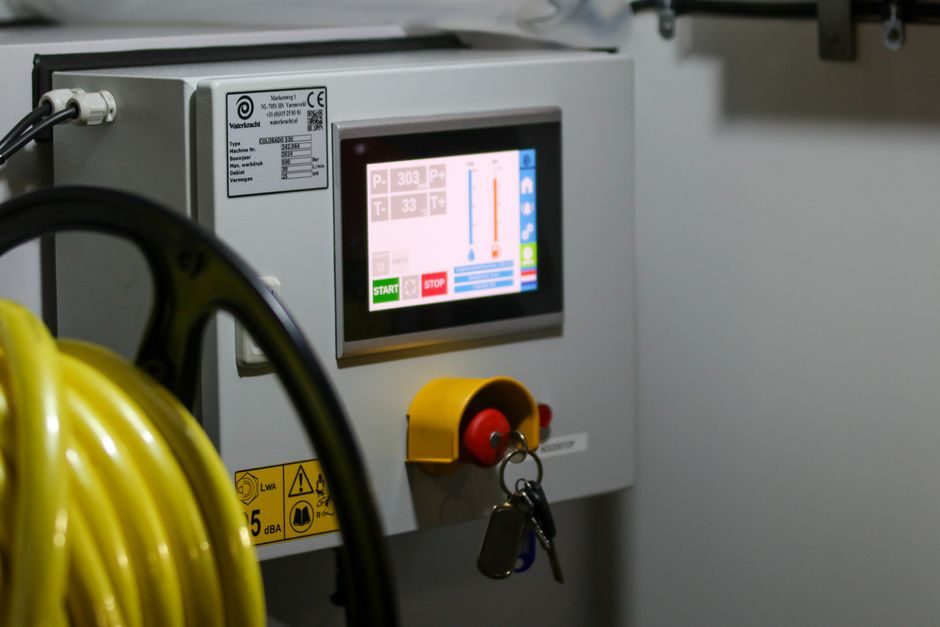
Buyers in 2026 select PID controllers from three distinct hardware tiers — compact 1/16-DIN and 1/8-DIN process controllers, multi-loop panel-mount controllers with PLC scan engines, and pure-software PID objects that run inside a PID controller hosted on an MCU, FPGA or industrial PC — and each tier carries a different I/O count, sampling rate and protocol surface.
MathWorks' Control System Toolbox documents four PID architectures the buyer's spec must call out: 1-DOF PID, 2-DOF PID, PI-only for integrating plants, and PD-only for motion-shaping loops, with `pidtune` command-line tuning and the PID Tuner app covering both model-based and measured-response data paths [S1]. For shoppers comparing an off-the-shelf controller against embedded firmware, the deciding metric is rarely algorithm sophistication; it is input count, update rate, and whether the unit can hand off setpoints to a higher-level motion controller without a translator gateway.
Spec Gates Every Purchase Order Must Clear
Four hard spec gates separate a usable controller from a shelf-warmer on a 2026 production floor: input type, output type, loop update time, and isolation rating [S1]. Input type is the first gate because the sensor side dictates the controller family — thermocouple (J, K, T, E, R, S, B, N), RTD (Pt100/Pt1000 2/3/4-wire), 0–10 V, 4–20 mA, pulse/frequency, and digital event inputs each need their own front-end conditioning and cold-junction compensation, with 4-wire RTD rejecting lead-resistance error that 2-wire cannot.
Output type is the second gate: relay (mechanical or solid-state, typically 2 A at 250 V AC), SSR drive voltage (often 12 V DC at 20 mA), 4–20 mA analog (16-bit DAC resolution on premium units, 12-bit on entry units), and transistor/open-collector for logic-level loads. Loop update time is the third gate, and MathWorks' tuning guidance treats 10 ms as a baseline target for thermal loops and sub-millisecond for motion-shaping loops using PD-only structures [S1]. Isolation rating — 2,000 V AC or higher between input, output, and power — is the fourth gate and is the single specification most often cut from low-cost Asian OEM units.
Algorithm and Tuning Surface: 1-DOF vs 2-DOF vs Cascade
MathWorks Control System Toolbox supports tuning of plain PID, 2-DOF PID, PI and PD forms, plus cascade arrangements where two PI loops are nested — the inner loop runs at 5–10× the outer loop's bandwidth and the `pidtune` command sets the inner loop bandwidth independently [S1]. For temperature control where setpoint tracking and steady-state load rejection both matter, 2-DOF PID adds a separate setpoint weight (commonly 0.2–0.5) that decouples the response to a step in setpoint from the response to a step in disturbance.
Anti-windup is the non-negotiable second-order spec on every controller that drives a saturating actuator such as a heater SSR or a current-loop valve [S1]. MathWorks documents four anti-windup strategies — back-calculation, clamping, conditional integration, and integrator-reset — with back-calculation requiring a tracking time constant typically set equal to the integral time Ti. For an overview of how anti-windup interacts with the broader selection criteria, the related piece on PID Controller Selection Criteria walks through the same decision tree in spec-sheet language.
Standalone, Panel-Mount and Embedded: A Criteria Comparison

Standalone 1/16-DIN and 1/8-DIN process controllers — Yokogawa UTAdvanced, Omron E5_C, Honeywell DC1040, ABB CM30 — typically deliver 1–2 loops, 100 ms sampling, universal inputs, and a 4-digit or 5-digit display. They price between 90 USD and 600 USD list, and are the dominant choice for OEM skid builders and furnace retrofits. [S1]
Panel-mount multi-loop units — Rockwell CompactLogix + PID, Siemens SIMATIC S7-1500 with FM/PLCSim PID blocks, Schneider M340 with EcoStruxure — slot into a backplane, share I/O over EtherNet/IP, PROFINET or Modbus TCP, and run PID inside the PLC scan at 5–20 ms deterministic cycle times. The price band is 400 USD to 3,000 USD per CPU plus I/O, and the deciding factor is usually the existing PLC standard on the plant floor.
Embedded software PID targets — MathWorks-generated C code on an STM32, FPGA-in-the-loop verification rigs, or hand-coded C on an ESP32 — have no display and no front panel, but offer sub-millisecond loops and unlimited channel count limited only by CPU [S1][S2]. The unit cost is effectively zero (open-source code, see e.g. the public `pid_controller` repos on GitHub for reference implementations [S3][S4]), but the engineering hours to certify the loop against IEC 61131-3 or similar plant standards are the real spend.
Inputs, Outputs and Fieldbus: The Wiring Side of the Spec
The wiring spec on a 2026 PID controller is the part most often under-engineered. Universal inputs that auto-detect thermocouple, RTD, V and mA on a single terminal pair are now standard on mid-tier units and remove the ordering-decision on input card variants. Output modules that combine a 4–20 mA re-transmission, a relay alarm, and an SSR drive on the same controller save a separate signal-splitter on a panel. [S2]
For supervisory integration the most common fieldbus options are Modbus RTU over RS-485 (cheap, near-universal, but 115.2 kbit/s ceiling), Modbus TCP and EtherNet/IP (1 Gbit/s, native on Rockwell and Schneider lines), and PROFINET (1 Gbit/s, native on Siemens). For controller-to-controller cascade, peer-to-peer Ethernet is preferred over a polled bus; MathWorks' cascade-tuning example uses two PI blocks communicating over a shared variable in the controller task [S1].
Buyers planning to retro-fit a 2026 controller into an existing line should also verify the controller's setpoint source can be driven by an external master such as a temperature controller or recipe server — a feature called "remote setpoint" or "cascade setpoint input" on most datasheets, and a frequent silent omission on entry-level units.
Application Fit: When a PID Is the Wrong Tool
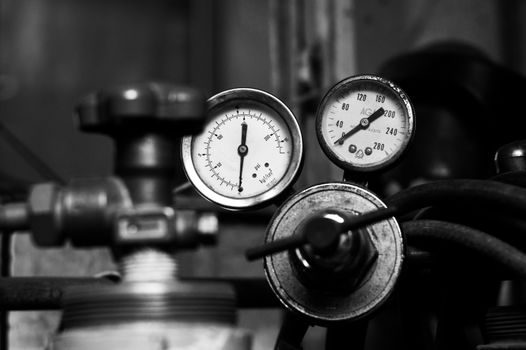
PID is the right tool for processes that are linear, single-input/single-output, and have dominant time constants an order of magnitude longer than the loop's dead time [S1]. It is the wrong tool for highly nonlinear plants (pH near equivalence, batch reactors with exotherm crossover), for multi-input/multi-output systems with strong coupling (distillation columns, MIMO heating/cooling), and for plants whose dynamics change by more than 3:1 across the operating envelope (a sign to consider gain scheduling or model-predictive control instead).
For a coordinate-motion axis where the spec is position-loop bandwidth above 100 Hz and the actuator is a servo valve or a stepper, the motion controller tier — not the process-PID tier — is the right shelf to shop. For machine-vision-driven sorting, the trigger and gating signal should be sourced from a vision controller whose cycle time is tied to the camera frame rate, with PID running in a subordinate loop only on the lighting or conveyor speed.
Sourcing Tiers, Lead Times and Quality Signals
The 2026 sourcing landscape splits into three tiers. Tier 1 (Yokogawa, Honeywell, Emerson, ABB, Omron, Siemens) carries a 5-year warranty, full IEC 61508 SIL-2/3 certification on the safety variants, and a 4–6 week lead time on ex-stock units. Tier 2 (Chinese OEMs selling under their own brand on Alibaba and Made-in-China, plus Delta, Kinco, XINJE) ships 1/16-DIN and 1/8-DIN units with 1-year warranty at 30–60 percent of Tier 1 list price, with a 2–3 week lead time and an increasing share of CE/UL listings. [S3]
Tier 3 (open-source firmware, dev-board PID shields, unbranded DIN-rail modules) is viable for non-safety R&D and lab use but should not be specified for production control loops without a full IEC 61131-3 conformance review. Reference firmware on the public `pid_controller` repositories on GitHub is fine for algorithm study [S3][S4], but the loop certification and CE/UL marking must be on the production hardware, not on the borrowed code.
For buyers weighing total cost of ownership over a 10-year plant life, the deciding metric is the mean time between failure (MTBF) figure on the controller's data sheet — Tier 1 units typically quote 100,000–200,000 hours MTBF, Tier 2 units quote 30,000–80,000 hours, and Tier 3 units rarely publish a figure. A 30,000-hour MTBF controller at half the purchase price costs more in lost-batch incidents than the saving is worth on a reactor line; on an oven line, the same trade can swing the other way.
Certification, Standards and Procurement Paperwork

For European process plants, ATEX 2014/34/EU zone classification is the gating paperwork for any controller that lives inside a hazardous-area panel. For U.S. projects, UL 508A on the panel and Class I Div 2 / Zone 2 ratings on the controller body are the typical spec line. For safety instrumented functions, IEC 61508 SIL-1/2/3 on the controller variant is non-negotiable and is the single most expensive certification on the datasheet. [S4]
For a controller that drives a heating element on a process skid, CE + UL + a manufacturer-issued EN 50495 functional-safety test report is the typical minimum bundle. Buyers should request the certificate PDF before issuing the PO; the absence of a publicly accessible certificate is a strong negative signal regardless of price.
For process-loop control (non-safety), the dominant performance spec is IEC 61131-3 conformity for the programming environment and ISA-88 batch-control conformance for S88-style recipes — the latter is what determines whether a controller can be dropped into a batch reactor cell without a translator middleware. Reference reading on the broader spec walkthrough is in the linked guide on PID Controller Selection Criteria.
Trackable 2026 signals for a follow-up review: (1) whether Tier 1 vendors extend their standard 5-year warranty on 1/16-DIN and 1/8-DIN process controllers to 7 years, as the 2025 procurement cycle hinted; (2) whether MathWorks or a Tier 1 vendor publishes a reference design pairing a CompactLogix-class PLC with an FPGA-in-the-loop PID verification rig, building on the File Exchange pattern in [S2]; (3) any revision of the IEC 61131-3 conformance test suite that explicitly covers 2-DOF PID and anti-windup structures [S1].