
A paperless recorder is selected by input count, signal type, and storage medium before any vendor is named: 8-channel handheld units such as the TES PROVA-830 sample 8 thermocouples at 1 Hz on internal 3400 mAh Li-ion with 2 GB SD storage for roughly 28 hours of continuous logging [S3]. Plant-grade panel-mount units start at 8 analog inputs per module and scale to 96 channels in a single chassis, as shown by the Orbit Merret OMR 700 modular recorder with 8 plug-in slots and 12 analog inputs per module [S6].
For 2026 spec work, four binding gates control the shortlist: (1) physical input type and count, (2) sampling rate vs signal bandwidth, (3) on-board storage and export format, and (4) hazardous-area or industrial-panel compliance. A fifth, often overlooked gate is the communication protocol layer — Ethernet, RS-422/485, USB, or proprietary — which decides whether the unit can sit on an existing plant network. See the baseline paperless recorder category for the generic duty envelope before reading the comparison below.
Input Type and Channel Count: The First Binding Gate
Universal input on a paperless recorder means TC (B/R/S/K/E/J/T/N types), RTD (Pt100/Pt1000), mV, V, and mA on the same terminals, with cold-junction compensation handled in firmware. The TES PROVA-830 accepts 11 thermocouple types and delivers basic accuracy of 0.1% ±1 °C on K-type, with isolated input protection rated at 350 Vp-p between any two inputs [S3]. Industrial panel-mount units such as the Yokogawa GX10 use a separate analog input module with M3 screw or clamp terminals, scaling the channel count by adding modules — the GX10 panel cutout is 137 mm × 137 mm and 282 mm per additional unit when side-by-side mounted [S1].
Channel density drives chassis choice. Low-channel duty (≤16) is served by compact panel-mount units; mid-duty (16-48) by modular 8-slot chassis; high-density (48-96+) requires stacked modules or external expansion. The Orbit Merret OMR 700 reaches 96 channels in one chassis via 8 slots × 12 analog inputs per module, with optional digital I/O in the same backplane [S6]. For duty that does not need modular expansion, a single 32-channel unit with SD card storage — like the Silver Automation 32-channel chartless recorder supporting PT100 RTD and 4-20 mA inputs — is the lower-cost alternative [S8]. Buyers writing a temperature recorder RFQ should treat "number of TC/RTD channels" as the non-negotiable line item; the rest is downstream.
Sampling Rate vs Signal Bandwidth: Match Before You Buy
Process and temperature duty needs only 1 Hz or slower; fast-transient duty — electric drives, power quality, drop tests — needs 20 kS/s to 250 MS/s per channel. HBM's GN31 series (GenHS input boards) is built for that envelope, advertising real-time multi-channel DAQ at 20 kS/s to 250 MS/s with dedicated power-analyzer cards (GN310B/GN311B) for three-phase power measurements on electric drives and grids [S5]. Specifying a 1 Hz process recorder for drive testing produces a flat-line trace; specifying a 100 MS/s transient recorder for a furnace profile wastes cost and storage.
A practical gate: confirm the recorder's maximum aggregate sample rate divided by the number of active channels. A unit rated "100 Hz, 32 channels" can usually scan all 32 at 100 Hz, but some designs time-division multiplex, so per-channel effective rate drops. The PROVA-830 publishes 8 inputs per 1 second — i.e. 0.125 Hz per channel aggregate — which is fine for thermal mapping and alarms, not for step-response profiling [S3]. For process lines, the temperature humidity recorder class adds humidity probes to the same input card; for pressure, gas, or steam, a pressure transmitter feeds the recorder's mA input — never the recorder itself senses pressure.
Storage, Export, and the SD Card Question
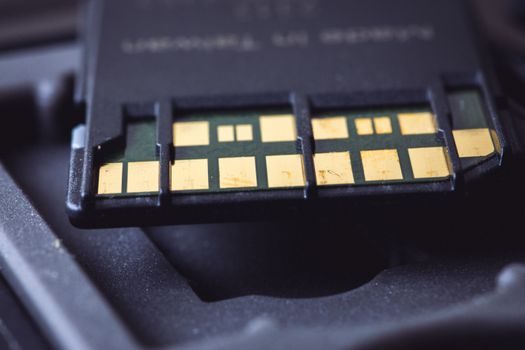
Storage media in 2026 split into three families: SD/SDHC cards (typically 2-32 GB, FAT32), USB flash drives for fast export, and internal SSD on high-end units. The PROVA-830 ships with a 2 GB SD card rated to hold 3.8 years of data at its default 1 Hz / 8-channel logging rate, and supports direct PC read of the card without proprietary software [S3]. Silver Automation's 32-channel design also uses SD-card storage as the primary archive, with USB as the secondary export path [S8].
Two non-obvious gates: (1) the file format must be CSV or open ASCII, not a proprietary binary — vendor lock-in on file format blocks third-party analysis; (2) battery-backed clock retention is mandatory for any audit-trail use, since loss of time-stamp integrity voids FDA 21 CFR Part 11 or similar GxP evidence. The PROVA-830 documents a built-in calendar clock and a programmable Hi-Lo alarm with timers, supporting the alarm/audit profile [S3]. For paint and coating drying-time recording, the TQC AB3600 records drying stages per the BK (Beck Koller) method and exports digitally, which replaces the traditional mechanical drying-time recorder entirely [S4].
Communication Protocols: Ethernet, RS-422/485, USB
Industrial panel-mount recorders expose three or more of the following: Ethernet (Modbus/TCP, HTTP/SCPI, proprietary), RS-422A/485 (Modbus/RTU, Yokogawa, owner protocols), RS-232 (legacy), and USB (host for export, device for config). The Yokogawa GX10 offers RS-422A/485 (/C3) or RS-232 (/C2), USB port (/UH), and Ethernet on the main unit, with a dedicated FAIL/STATUS terminal (/FL) for hard-wired alarm output [S1]. The OMR 700 adds USB, Ethernet, and panel-mount touchscreen with on-board data logger firmware [S6].
Select protocol by plant network reality: greenfield plants run Modbus/TCP over Ethernet; legacy DCS retrofits use RS-485 Modbus/RTU at 9600-115200 baud; standalone QA or environmental chambers are USB-only. Do not assume a "comms port" exists on a given SKU — it is usually an option code. A common selection error is specifying Ethernet when the cabinet has only 4-20 mA loops; in that case a flow meter or industrial valve signal feeds the recorder's mA input directly, with no fieldbus needed.
Hazardous Area, Panel Rating, and Mechanical Fit
General-purpose recorders carry an IP54 or IP65 front face for panel-mount, with a panel cutout in the 137 mm class (Yokogawa GX10: 137 +2/0 mm × 137 +2/0 mm) [S1]. The mechanical drawing also shows 175 mm minimum clearance behind the bezel and 282 mm length per unit in side-by-side mounting, with up to 3 units stacked vertically or horizontally [S1]. For hazardous-area plants, the unit itself is usually mounted in the safe area and the field wiring is protected by zener barriers or isolators; intrinsic-safety recorders are a separate product class and not in the 2026 DirectIndustry sample set above.
For multi-unit panel builds, use the side-by-side formula from the GX10 datasheet: 282 mm for one unit, 426 mm for two, 570 mm for three, with a tolerance band of +2/0 mm on the panel cutout itself [S1]. Drawing tolerance is ±3% (or ±0.3 mm below 10 mm) — small, but it matters when cutting stainless-steel panels. Compact chassis saves cabinet space, but reduces channel density; the trade-off is roughly 8 channels per 100 mm of panel width for modular 96-channel units vs 16 channels per 100 mm for a compact 16-channel recorder.
Side-by-Side Comparison of 2026 Models
The table below lines the duty envelopes against the four binding gates. All specs are vendor-published as of 2026-06 to 2026-08.
PROVA-830 (TES) [S3]: 8 TC inputs, 0.1% ±1 °C K-type accuracy, 1 Hz aggregate, 2 GB SD (~3.8-year storage), 3400 mAh Li-ion / 12 V DC adapter, USB export, portable. Best for: field thermal surveys, multi-point HVAC commissioning, alarm-only QA.
OMR 700 (Orbit Merret) [S6]: 96 channels via 8 slots × 12 analog in, modular plug-in cards, USB/Ethernet, panel-mount touchscreen, on-board data logger. Best for: plant DCS tie-in, large utility substation monitoring, batch-pharma batch records.
GX10 (Yokogawa) [S1]: modular, RS-422A/485 or RS-232, USB, Ethernet, 137 mm panel cutout, FAIL/STATUS terminal. Best for: control-room retrofit into existing Yokogawa or third-party DCS estates.
GN31 series (HBM) [S5]: 20 kS/s to 250 MS/s transient, GenHS input boards, GN310B/GN311B power-analyzer cards for 3-phase power, Ethernet, portable/bench. Best for: electric-drive testing, grid power-quality audits, drop and impact tests. Wrong for: slow process duty — the cost per channel is roughly 10× a process recorder.
AB3600 (TQC Sheen) [S4]: dedicated drying-time stages per Beck Koller method, digital, paperless output. Best for: paint and coating QC; not a general-purpose process recorder.
Smartplot (Accel Control) [S9]: universal input with LCD touch screen, color graphical display, 8-channel class baseline with options. Best for: small-batch Indian and export OEM panels where cost per channel is the dominant gate.
Who Should NOT Pick the Mainstream Modular Recorder
Three duty profiles break the "buy a 32- to 96-channel modular unit" default. First, portable field duty where the unit is moved between sites — pick a battery-powered 8-channel logger like the PROVA-830, not a panel-mount chassis; weight, drop rating, and battery life dominate channel count. Second, high-speed transient duty where the signal has rise times under 1 ms — a process recorder aliases the event, so a transient recorder like the HBM GN31 is the only correct answer [S5]. Third, dedicated QC duty with a published method (e.g. BK drying time) — a general-purpose recorder forces the operator to build the method in software, while a purpose-built unit like the AB3600 enforces it [S4].
A fourth, less obvious case: low-channel count with long retention. A 4-channel environmental chamber running for 5 years does not need a 32-channel chassis; a 4- or 8-channel paperless recorder with SD storage is mechanically simpler, electrically simpler, and easier to validate. The "more channels is better" instinct is a selection error in low-density duty — every unused channel is calibration overhead.
Spec-First Shortlist Logic
Run this four-step filter before contacting a vendor. Step 1 — fix input type and count: write down the number of TC, RTD, mA, and digital channels, with the worst-case future expansion. Step 2 — fix sample rate: 1 Hz for thermal, 10-100 Hz for pressure/flow, 1 kS/s+ for vibration, 20 kS/s+ for power. Step 3 — fix storage and export: SD capacity in hours of retention, file format (CSV preferred), and clock retention. Step 4 — fix comms: Ethernet/Modbus-TCP for greenfield, RS-485/Modbus-RTU for legacy, USB-only for stand-alone. The vendor shortlist then drops to two or three candidates — usually one Asian OEM (Meacon, Silver Automation, Accel) for cost-driven duty and one Japanese/European OEM (Yokogawa, Orbit Merret, HBM) for plant-DCS integration [S7][S8][S9].
Trackable signals for the next review: a vendor's 2026-08 update of SD-card capacity beyond 32 GB, any move to NVMe SSD in panel-mount recorders, and the first ATEX/IECEx-rated 8-channel portable paperless recorder from a major OEM. For broader plant-spec context beyond data acquisition, the SCADA software selection criteria 2026 spec-map covers the supervisory layer above the recorder, while shielded cable selection criteria covers the analog-input wiring between field sensor and recorder terminals.