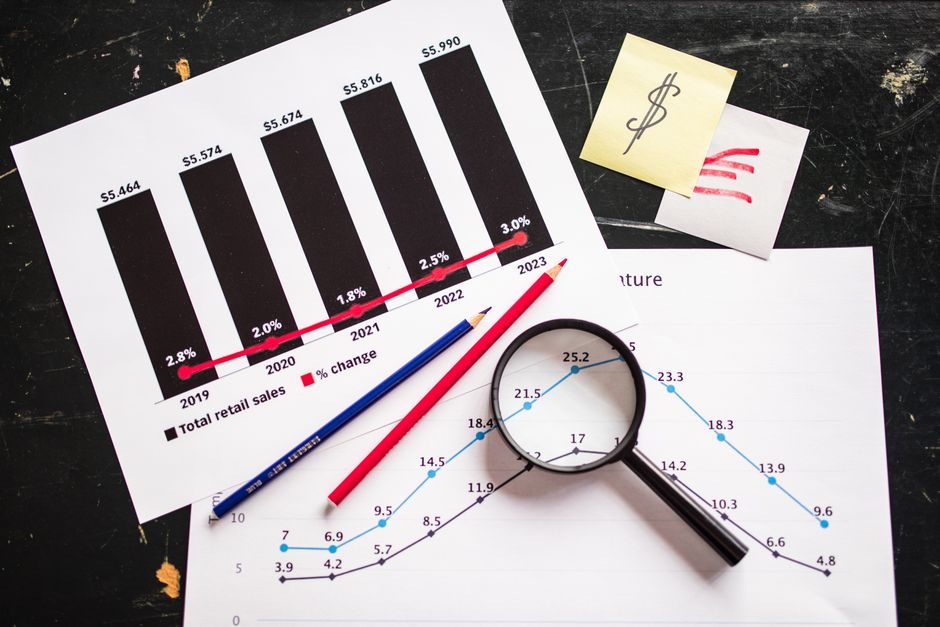
Global PCB (printed circuit board) revenue is projected to land in the USD 85-90 billion band in 2026, up from an estimated USD 78-82 billion in 2025, with most analyst houses modeling a 5-7% CAGR through 2030 on AI server, EV and high-end HDI demand [S1].
Volume leadership stays with multilayer boards (4-16 layer mainstream, 20+ layer in server backplanes), while HDI (high-density interconnect, typically 0.4 mm pitch and below with microvia/any-layer stackup) and rigid-flex capture the growth premium; substrate-like PCBs and IC substrates are now a separate multi-billion-dollar pocket inside the broader market [S2].
Segment Mix: Multilayer, HDI, Rigid-Flex and IC Substrate
Multilayer FR-4 (flame-retardant-4 epoxy-glass laminate) remains 60-65% of unit volume; 4-6 layer is the workhorse for industrial PLC controllers and consumer, 8-12 layer for telecom, 16+ layer for switches and AI accelerator cards [S2].
HDI share has climbed past 18% of revenue on any-layer microvia (laser-drilled ≤150 µm vias connecting adjacent layers) demand from 5G smartphones and wearables; rigid-flex is growing fastest in absolute percentage terms for foldable displays, medical implants and aerospace harnesses where vibration tolerance matters [S3].
IC substrates (FCCSP, FCBGA, coreless, 2.5D/3D package) are now a USD 18-20 billion sub-market, decoupled from the classic PCB growth curve, with ABF (Ajinomoto Build-up Film) substrate capacity in Taiwan and Japan still the bottleneck node for AI GPU and HPC (high-performance compute) ramp [S3].
Application Pull: AI Servers, EV Power, Smartphones
AI server motherboards and switch boards are the single largest demand swing in 2026: 16-22 layer low-loss materials (mid-loss DK 3.2-3.6, Df 0.005-0.010 at 10 GHz), hybrid stackups with modified-resin cores, and 50-115 Ω impedance control; OAM (OCP Accelerator Module) and UB30 retimer boards are pulling 30+ layer counts into volume [S2].
EV power electronics adds a different spec vector: heavy-copper PCBs (3-10 oz outer / 4-12 oz inner copper weight) for IGBT (insulated-gate bipolar transistor) and SiC (silicon-carbide MOSFET) inverter busbars, embedded cooling channels, and 200 °C Tg (glass-transition temperature) laminates, replacing busbar wiring harness on 800 V platforms [S1].
Smartphones stay the largest single HDI consumer, with 12-14 layer any-layer boards, 30-40 µm line/space, Anylayer µVia, and SLP (substrate-like PCB, line/space down to 30-35 µm) for mainboard migration; this is where HDI shifts to substrate-like PCB in flagship tier [S3].
Material Stack and Spec Levers for Buyers
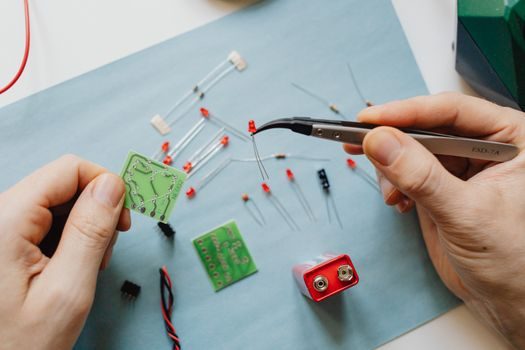
FR-4 standard Tg 130-150 °C covers industrial and consumer; mid-Tg 150-170 °C and high-Tg 170-200 °C (FR408HR, S1000-2, IT-180A equivalents) handle automotive under-hood; polyimide and LCP (liquid-crystal polymer) flex handle >200 °C and mmWave [S2].
Low-loss material families separate cleanly: mid-loss (Df 0.008-0.012 at 10 GHz, DK 3.3-3.7) for 25-56 Gbps SerDes; low-loss (Df 0.003-0.006, DK 3.2-3.5) for 56-112 Gbps; ultra-low-loss (Df ≤0.0025, DK 3.0-3.4) for 112 Gbps PAM4 backplane and AI accelerator packages. Buyers should treat Df/DK at 10 GHz and at the actual operating frequency as separate columns, not collapse them [S3].
Surface finish choice is a real cost lever: ENIG (electroless nickel immersion gold) and ENEPIG (electroless nickel electroless palladium immersion gold) for fine-pitch and wire-bond; OSP (organic solderability preservative) for cost-driven consumer; hard gold for edge-finger wear; HASL (hot air solder leveling) lead-free still alive in low-cost industrial but losing share to ENIG [S2].
Supply Side: Capacity, Region and Lead Times
Greater China (mainland + Taiwan) holds 70-75% of global PCB output by value, Southeast Asia (Vietnam, Thailand, Malaysia) is the active expansion zone for low-to-mid layer, and Japan + South Korea anchor high-end substrate and RF (radio-frequency) flex [S1].
2026 lead times: standard multilayer 4-6 weeks, HDI 6-10 weeks, rigid-flex 8-12 weeks, AI-server low-loss 14-20 weeks, ABF substrate 20-30 weeks — the substrate bottleneck is the tightest node in the entire electronics supply chain and is gating AI server build rates in the first half of 2026 [S3].
Capex is concentrating in Thailand (mega-site builds for EV and HDI), Malaysia (substrate), and Vietnam (multilayer); readers evaluating dual-sourcing should weight geographic risk: copper price swings feed the copper market 2026 outlook for clad-laminate cost, while resin and glass-cloth supply stays a separate constraint [S1].
Cost Structure and What Buyers Can Move
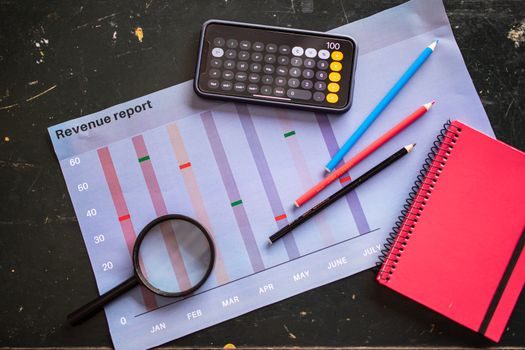
Raw material — copper clad laminate (CCL), prepreg, copper foil — sits at 45-55% of PCB cost, labour 10-15%, equipment depreciation 10-15%, with the remainder in chemistry, panel utilization scrap and yield loss. So 100% copper LME (London Metal Exchange) move is a near 1:1 driver on a 1 oz board, and a copper hedge program is a meaningful cost lever for 2026 contracts [S1].
Panel utilization is the single biggest engineering lever a buyer controls: array layout that lifts utilization from 75% to 88% on a standard 18×24 in panel drops unit cost by 10-15%; this is why EMS (electronics manufacturing services) partners push stackup and board-shape change orders, and why buyers who freeze the outline early win on price.
Yield: HDI and substrate-like PCB yield sits at 88-94% in volume; any-layer microvia below 60 µm drives scrap up sharply. Quote review should ask for first-pass yield at the supplier's site, not industry averages.
Standards and Reliability
IPC-A-600 (acceptability of printed boards) classes 2 and 3 govern visual and dimensional acceptance; class 3 is mandatory for aerospace, medical and most automotive ADAS (advanced driver-assistance systems) builds [S2].
IPC-6012 (qualification and performance specification for rigid printed boards) sets qualification baseline; IPC-6013 for flex, IPC-6018 for high-frequency (microwave) boards, and IPC-6012DA for the automotive addendum, with -40 °C to +125 °C thermal stress and CAF (conductive anodic filament) resistance as the named failure modes [S3].
UL 796 (printed-wiring board flammability) gives the V-0 rating cited on nearly every datasheet; UL 746E for polymeric materials. For EV power and ADAS, AEC-Q100 is a component-level spec, not a PCB-level spec — board buyers should map to IPC-6012DA + CAF + thermal-cycle, not request a non-existent AEC-Q PCB rating [S2].
Selection Criteria by Application
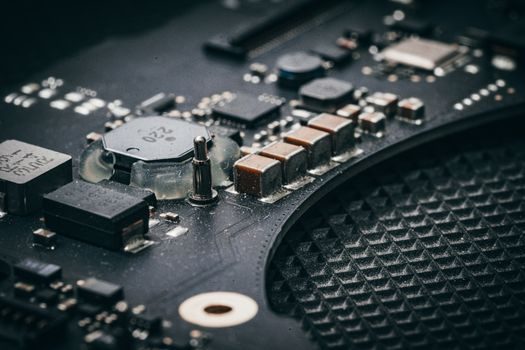
Industrial control (PLCs, drives, industrial valve positioners): 4-8 layer FR-4 mid-Tg, 1 oz copper, ENIG, 100-150 µm hole/line, IPC class 2, 5-7 year lifecycle — most stable, most commoditized, buy on price and lead time [S1].
EV inverter and BMS (battery management system) pressure sensor front-ends: heavy-copper 4-8 layer, high-Tg 170+ °C, embedded copper, 200 °C Tg, IPC class 3 with AEC-Q100 downstream [S2].
AI server and switch: 16-22+ layer mid- to ultra-low-loss CCL, hybrid stackup, 25-50 µm line/space, 100-115 Ω differential, ENEPIG, IPC class 3, long lead time, long contract [S3].
Smartphone mainboard / SLP: 12-14 layer any-layer HDI, mSAP (modified semi-additive process, line/space 30-40 µm), ENIG/OSP, IPC class 2+, fast iteration [S1].
Limits, Failure Modes and Constraints
CAF failure — copper ion migration along glass-fibre bundles under humidity-bias — is the dominant long-term reliability risk on high-layer-count and high-voltage boards; buyers in 5G base-station and EV BMS should specify CAF-resistant glass and prepreg [S3].
Signal integrity ceiling: at 56 Gbps NRZ (non-return-to-zero) and 112 Gbps PAM4 (4-level pulse-amplitude modulation), insertion loss budget tightens fast; mid-loss Df 0.010 is a hard wall for long-reach backplane, forcing ultra-low-loss or active cable. Specifying Df at 1 GHz while operating at 28 GHz is a common quote-review miss.
Thermal management: at >100 W/cm² on AI packages, PCB CTE (coefficient of thermal expansion, typically 12-16 ppm/°C in-plane) mismatch with silicon drives solder fatigue; low-CTE cores (6-10 ppm/°C) and coin/heat-spreader integration are now baseline in HPC builds [S2].
Readers building out a sourcing matrix should also check the substrate bottleneck against the top silicon wafer companies 2026 capacity map, because the same ABF shortage gates both wafer-packaging and large-area substrate supply for AI servers.
Track the copper-clad contract roll-over in Q3 2026 and the Thailand mega-site first-wave output in H2 2026 — both move 2026 unit cost by mid-to-high single digits, and both are visible signals buyers can watch before the next quote refresh.