
Refined copper remains a load-bearing input for electrification, with 2026 demand-side pulls coming from power-grid upgrades, EV traction motors and wind-farm collector cabling, and from AI-driven data-centre power-distribution build-outs; Benchmark Mineral Intelligence's 2026 copper forecast service covers granular supply, demand, cost and price curves out to 2050 [S3].
For industrial specifiers, the 2026 copper market differs from prior cycles because the demand stack is now tied to electrical infrastructure rather than purely to construction-cycle copper-of-cathode consumption, which reshapes copper material sourcing windows for busbar, magnet wire and bus-tube fabricators.
Where 2026 copper sizing sits in published reports
Several commercial research houses issued copper-themed updates in the May–June 2026 window, anchored on the same underlying supply–demand story but presenting different value scopes; one analyst package covering chloromethane downstream chemistry references 2026 market-report structures consistent with the broader metals-and-minerals coverage cycle, with 150-page January-2026 dated deliverables and 2–3 business-day re-issue on data refresh [S1].
An infant-formula sibling report illustrates the 2026 forecast framing other Future Market Insights titles use: a 2025 base of USD 54.5 million, a 2026 reading of USD 59.2 million, and a 2036 long-tail of USD 136.4 million, the same baseline-year → 2026 → multi-decade pattern applied across FMI's metals coverage [S2].
For the copper-specific deep dive, Benchmark's 2026 service package (membership-style access, weekly updates) is the main long-horizon reference, with supply, demand, cost and price series extending to 2050 and an explicit emphasis on copper's role in new-energy applications [S3].
Demand stack: grid, EV, wind, data-centre copper
The four pull-throughs that 2026 forecasters consistently highlight are: (1) overhead and underground grid replacement, where industrial valve and transformer skids consume copper busbar and winding strip; (2) EV traction motors and inverters, typically 40–90 kg of refined copper per passenger BEV depending on architecture; (3) wind-farm collector cable, where 3–6 MW offshore units alone pull multi-tonne copper runs per turbine; and (4) hyperscale data-centre PDUs and busways, which scale linearly with rack power density [S3].
Benchmark's framing of copper as a "new energy" metal — published 2026-06-08 — puts the demand-elasticity question on the buyer's desk: capacity additions at mine, smelter and refinery level must clear within a tighter window than the prior decade's ~3-5 year cycle, which is the core reason 2026 cathode and wirebar spot has stayed volatile relative to historical patterns [S3].
Supply side: cathode, wirebar and scrap constraints
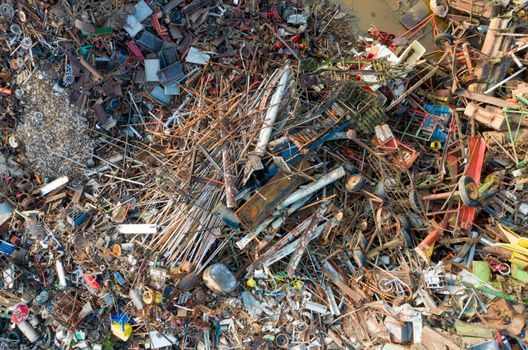
On the supply axis, 2026 reporting flags the same structural frictions that have carried through 2024–2025: concentrate-grade decline at mature porphyry operations, ramp-up risk at new African and South American greenfield projects, and a scrap-collection stream that is rate-limited by collection logistics rather than price. The practical consequence for a specifier is that flow meter and instrumentation tube buyers in copper alloys (C12200, C70600) compete for the same refinery output as wirebar and busbar customers during tight months [S3].
Benchmark's service structure — weekly updates layered over a long-horizon model — is built precisely for that fast-moving spot layer, where cathode premiums, treatment-and-refining charges, and freight differentials can shift single-digit percentages between report revisions [S3].
Price signals a B2B buyer can track in 2026
Three price series are worth monitoring in parallel. First, LME 3-month copper, the headline benchmark that drives converter and fabricator pass-through. Second, copper cathode premium (typically quoted CIF major European or US ports), which captures the physical availability premium over the LME print. Third, copper wirebar and billet premiums for semi-fabricators, which is the layer where busbar, pressure transmitter housing and instrument-tube fabricators actually transact. All three are covered inside Benchmark's weekly update layer [S3].
For procurement teams that benchmark against a 12-month trailing average, 2026's reported volatility profile means a flat budget assumption will under-deliver if the year tracks toward the upper end of the published range; a moving-average pass-through clause tied to the LME print plus a fixed cathode-premium adder is the standard hedging pattern for long-lead equipment contracts.
Spec implications: what changes for the buy in 2026

Three concrete spec decisions follow from the 2026 supply–demand picture. (1) Specify dual-source on pressure sensor and instrument-valve bodies where the housing or wetted part is C36000 or C46400 brass — the secondary source should be on a different mill and ideally a different region, because regional scrap-collection disruptions can pull one source out for weeks. (2) Lock busbar cross-section and plating (tin or nickel) early in the engineering cycle, since busbar copper competes directly with EV and transformer demand for the same hot-rolled and drawn stock. (3) Where the BOM allows, qualify C11000 ETP and C12200 DHP interchangeably for non-critical current-carrying parts, and reserve C10100 OFE for the highest-conductivity nodes only [S3].
The broader procurement story for industrial metals in 2026 — including aluminium extrusion, steel plate and the spec map for buyer verification — is laid out in the Aluminum Market 2026 sizing and sourcing spec map and the Steel Plate Price & Cost Guide 2026, both of which share the same 2026 demand-elasticity framing.
Standards and verification anchors for copper of cathode
Buyers should anchor verification on recognised specifications rather than trade names: ASTM B49 for drawn or rolled rod, ASTM B115/B115M for cathode, ASTM B170 for oxygen-free copper in electrical conductors, and the EN 1652 / EN 13599 series for rolled and drawn flat products used in electrical applications. UNS designations (C11000, C12200, C10100, C70600) are the most reliable cross-mill shorthand. For copper-alloy instrument tubing used in plc and analyser sample lines, ASTM B75 and B111 remain the typical call-outs, with NACE MR0175 hard-typed where sour service is in scope [S3].
Mill test certificates should be checked against the actual UNS code, the temper designation (e.g. H00, H02, O60), and the dimensional standard referenced on the MTC; a mismatch between the UNS on the cert and the UNS on the purchase order is the single most common documentation defect seen in 2026 incoming-quality audits.
Trackable signals for the rest of 2026

Three signals are worth pinning to a calendar: (1) the next Benchmark weekly update window, which carries the freshest cathode-premium and freight-differential data points for industrial buyers [S3]; (2) the major smelter and refinery annual maintenance calendars, which historically tighten physical supply for 2–4 week windows and shift the cathode premium locally; and (3) the next round of OEM quarterly earnings from EV and grid-equipment majors, which telegraph the demand stack one quarter ahead of the underlying copper consumption print. A 2026-06-26 baseline keeps the buyer's dashboard aligned with both the weekly price layer and the long-horizon 2050 model that Benchmark publishes [S3].