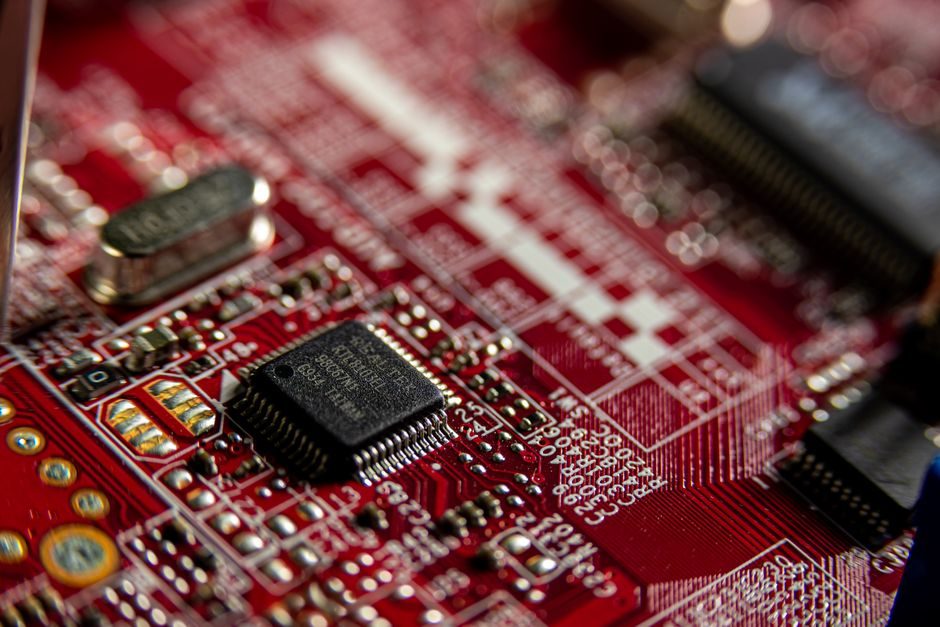
As of 2026-06-27, Made-in-China.com indexes 2,000+ electronic PCB manufacturers carrying 6,000+ SKUs, while Alibaba's PCB supplier directory hosts China-based factories with reported top-3 export markets of Oceania 18.0%, Eastern Europe 11.89%, and Western Europe 10.01% [S1][S8]. The supplier count is wide enough that the buyer's real work is filtering by laminate, layer count, and assembly service tier rather than counting vendors.
Unit pricing for FR4 bare boards on Made-in-China.com clusters in a US$0.05-16.00/piece band across OEM/ODM, multilayer, and double-side constructions [S5][S9], while turnkey PCBA for HDI aerospace applications sits at US$0.659-3.584/piece and premium Fr4 wireless-charging assemblies at US$0.50-1.80/piece [S8]. HKTDC Sourcing's Cables & Accessories PCB category adds Hong Kong-traded options alongside the mainland book [S4].
Two Gateway Platforms, Two Vendor Shapes
Alibaba's PCB supplier page surfaces Chinese factories with disclosed annual revenue brackets (US$2.5M-US$5M and US$5M-plus tiers visible on listings) and a 87.5%-96.6% response-rate band, with main products tagged as PCBA, PCB, electronic components, program testing, and contract manufacturing [S1]. Made-in-China.com's electronic-PCB channel returns the 2,000+ manufacturer / 6,000+ product count, with explicit OEM, ODM, and fast-delivery flags plus R&D capacity markers on individual factory profiles [S8]. A third route, the HKTDC sourcing portal, indexes the same ecosystem but routes inquiries through Hong Kong trading-company desks, which matters for letters of credit and mid-volume LCL freight [S3][S4][S7].
For a process-engineer buyer the practical split is: Alibaba for spot RFQs and prototyping where the factory's own export team replies; Made-in-China.com for spec-driven sourcing with USD-denominated FOB quotes and piece-level MOQs; HKTDC for buyers who need an HK-side consolidator or who already trade on CIF Hong Kong terms. The same factory frequently appears on two or all three platforms, but the price you see is platform-specific because the platform's RFQ form pulls different fields (target unit price currency, lead time in days, payment terms T/T) [S2].
Price Bands by Construction and Service Tier
The cleanest read of the 2026 market comes from Made-in-China.com's OEM PCB category, where five construction/service tiers price out as follows: rigid double-side/multi-layer custom FR4 at US$0.05-16.00/piece, one-stop PCB board OEM/ODM at US$0.68-10.80/piece, premium multilayer PCB assembly services at US$0.05-16.00/piece, custom OEM Bluetooth-earphone PCB with 1.6 mm multilayer design at US$2.547-3.265/piece, and high-quality OEM/ODM FR4 mod chips at US$2.55-3.30/piece [S5][S9]. The wide US$0.05-16.00 spread tracks layer count (1-2 layer vs 8-12 layer), copper weight (1 oz vs 2-3 oz), surface finish (HASL vs ENIG), and whether the quote includes components [S6].
Turnkey PCBA for higher-end markets lands in a tighter, higher band: HDI PCB and PCBA for aerospace at US$0.659-3.584/piece, FR4 wireless-charging PCBA at US$0.50-1.80/piece, and FR4 copper manufacturing assemblies at US$2.00/piece [S8]. The aerospace-tier HDI pricing reflects laser-drilled microvias, sequential lamination, and tighter impedance tolerance — all of which are spec-driven, not vendor-driven. Buyers comparing across vendors should pin the same layer count, copper weight, finish, and assembly scope before reading the price line; otherwise the 300x spread inside a single category (US$0.05 vs US$16.00) is meaningless.
Filter by What You Can Audit: Laminate, Layer Count, Finish
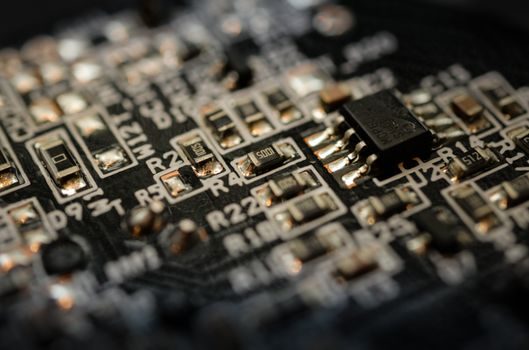
The two platforms expose different spec knobs. Made-in-China.com listings name the laminate family explicitly — "FR-4 custom PCB & PCBA board prototypes" and "FR4 mod chips" appear verbatim on the search-result tiles — together with thickness tags (0.2-6 mm rigid) and board-type tags (multilayer, double side) [S5][S6]. Alibaba listings lead with service tags ("PCBA, PCB, Electronic Component, Program Testing, Contract Manufacturing") and trade-data tags (top markets, response rate, total revenue band) rather than laminate grade [S1].
That asymmetry dictates the RFQ strategy. On Made-in-China.com the buyer pre-fills the platform's RFQ form with the FOB target unit price, currency (USD/EUR/GBP/RMB/AUD/CAD/CHF/JPY/HKD/NZD/SGD/NTD), shipping method (sea freight), lead time in days after deposit, and payment terms T/T — a fixed template the factory responds to [S2]. On Alibaba the same factory is more likely to respond with a custom quote tied to its top-3 market mix. For a buyer integrating with industrial controls, the link is direct: any pressure transmitter or flow-meter signal conditioner on a FR4 carrier board needs the same UL94 V-0 flammability rating and the same ENIG finish you would spec for a sensor PCB, so the FR4 / 1.6 mm / ENIG / 4-layer combination is the engineering common denominator across both consumer and industrial SKUs.
Three Real Sourcing Failure Modes
First, the US$0.05 floor on Alibaba and Made-in-China.com is a 1-2 layer FR4 prototype price with HASL finish and no components; treating it as the market price for a 6-layer ENIG board is a category error and a sure way to underbudget [S5][S9]. Second, response rate is a platform metric, not a delivery metric: a 96.6% response-rate factory can still ship late, and the 87.5% response-rate factory can still be the more reliable producer if its line is full [S1]. Third, payment-terms templates default to T/T with deposit, which means a US-based OEM wiring USD from an IRA-eligible industrial-control build needs to factor in 30/70 or 50/50 deposit balance milestones before the factory releases the gerber files for review [S2].
Wholesale, Distributor, and Component-Ancillary Channels
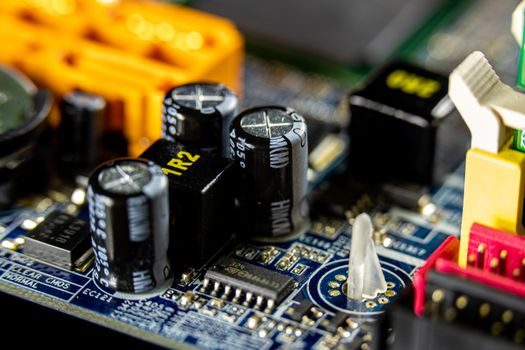
Go4WorldBusiness's PCB wholesale channel adds a US-domestic wholesale/distributor layer, with one Ohio-based supplier (Divanti Group LLC, Garfield Heights) listing chipset-lot inventory (H61 3,350 units; H81 2,206 units; H55 visible in the lot breakdown) at a US$7 MOQ of 7,937 pieces — a distributor model rather than a factory model, and useful only when the buyer needs legacy/component-level stock rather than new-build boards [S10]. This is the channel to tap when the design is already in production and the bottleneck is a single end-of-life component, not a greenfield design.
For greenfield designs the platforms split by trigger: Made-in-China.com is RFQ-form driven with explicit FOB pricing [S2], Alibaba is listing-and-chat driven with revenue-bucket filters [S1], and HKTDC is trade-show-desk driven with HK trading-company terms [S3][S4]. Cross-listing is common, so the practical move is to issue the same RFQ to the top three matches on each platform and compare on a normalised BOM, layer count, and finish basis.
How to Read a PCB Supplier Card
A minimum-checkable card on Made-in-China.com carries: factory name, R&D capacity tag (ODM, OEM, or both), main products line (PCB, PCBA, PCB prototype, PCBA service, PCBA prototype are the common five), fast-delivery flag, and a response-time field [S8]. The 2,000+ manufacturer / 6,000+ product count on the index page is the platform's breadth claim, not a vendor-quality signal [S8]. The Alibaba equivalent is the total-revenue bracket (US$2.5M-US$5M is the smaller tier; US$5M-plus is the larger tier visible on the directory) plus the 87.5%-96.6% response-rate band and the top-3 markets tag [S1].
Concrete spec anchors to ask for, regardless of platform: UL94 V-0 rating on the laminate, IPC-A-600 acceptance class (Class 2 vs Class 3), ENIG vs HASL finish, copper weight in oz, controlled-impedance tolerance in ohms, and a written layer-stackup diagram. The factory's RFQ response on Made-in-China.com will name FR4 and 0.2-6 mm thickness in the product tags, but the UL/IPC/ENIG/impedance lines only surface once you push the inquiry past the listing into the formal quote [S2][S5]. Tracking these six lines per quote is the difference between sourcing a sensor-carrier PCB and sourcing a control-board PCB for the same industrial valve actuator stack.
The T/T template on Made-in-China.com's RFQ form leaves the milestone schedule open, which is where a careful buyer writes in the FAI gate [S2]. The 2026-06-27 platform data also suggests that response-rate alone is a poor filter; cross-checking at least two platforms' listings for the same factory name is the cheapest sanity step before any deposit moves.