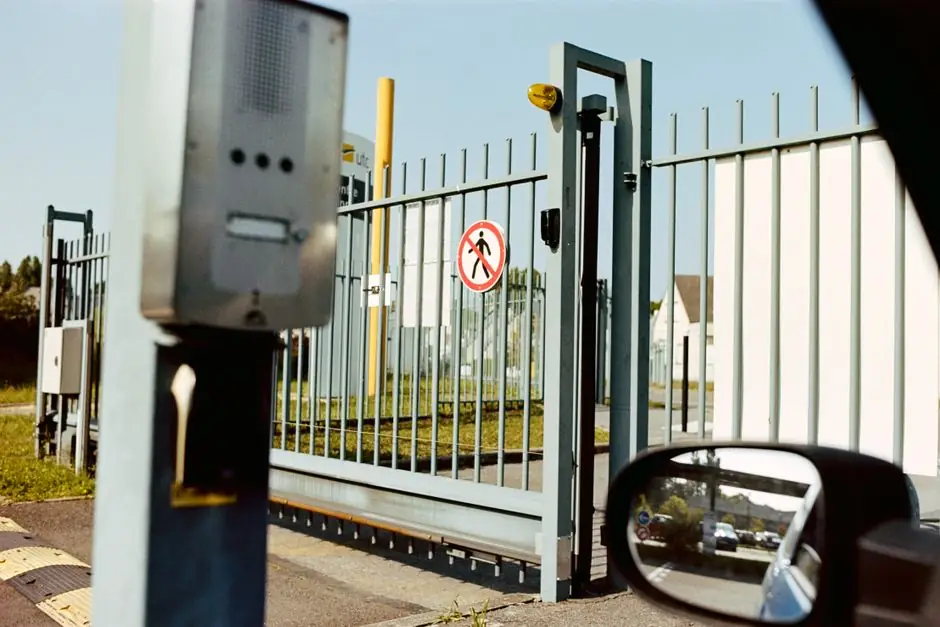
Construction-site theft runs between roughly $50,000 and $250,000 per incident when heavy equipment, copper, or a site office is involved, which is why the perimeter layer is now treated as engineered infrastructure rather than a fence add-on [S1].
The three sensor families that dominate bidding documents and integrator proposals in 2026 are underground seismic, fence-mounted, and free-standing infrared (IR) or microwave beams, with video analytics increasingly added as a verification layer rather than a primary detector [S5][S6]. Selecting among them is a function of site mobility, existing perimeter fabric, terrain, and the contractor's tolerance for false alarms that wake up a UL-listed central station.
Detection Technologies and How They Differ on a Jobsite
Underground seismic detection uses buried sensors to read ground vibration from footsteps, vehicles, or digging and is the only category that remains unaffected by rain, wind, fog, and direct sunlight, because the hardware sits below grade [S5]. Fence-mounted sensors attach directly to fence fabric or posts and detect cutting, climbing, or vibration, but they only protect the line where a fence already exists and are sensitive to wind-driven fence movement that turns into nuisance alarms [S5]. Free-standing IR or microwave beam systems trigger when the path between a transmitter and receiver is broken, need a straight, unobstructed line of sight, and are degraded by fog, heavy rain, snow, birds, foliage, and dust [S5]. Camera-based video motion detection sits on top of these as a verification layer; standalone, it still needs a clear view of the full perimeter and is most useful when cued by a buried or fence sensor pointing it at the exact detection point [S5].
For a deeper look at how these same sensor families are specified in a different high-theft environment, see the Perimeter Alarm Spec Map for Welding and Cutting Yards article, which applies a similar seismic-vs-beam-vs-fence logic to scrap-metal yards.
Site Mobility and the Portable-Fence Constraint
Construction perimeters are not static: as the building rises, gates move, laydown yards shift, and finished slabs create new access points that did not exist at groundbreaking [S3]. Portable electric fencing with monitored, 10-foot-tall, 7,000-volt electric-fence fabric is one option that allows the perimeter to be re-staked as the site evolves, paired with zoned perimeter detection, auto-arming gates, and ground-wire monitoring as add-on layers [S3]. A buried seismic cable, by contrast, has to be re-trenched and re-mapped each time the footprint moves, so it fits a long-duration, single-footprint project more cleanly than a phased high-rise or a horizontal civil job with rolling work fronts.
For sites where the perimeter is still being negotiated, the AMAROK-style three-layer model (physical barrier, monitored electric deterrent, lights and alarms on breach) tends to win on integration, while pure buried-sensor systems win on aesthetics because no visible hardware gives the intrusion attempt away [S3][S5].
Comparison of the Three Main Detector Families
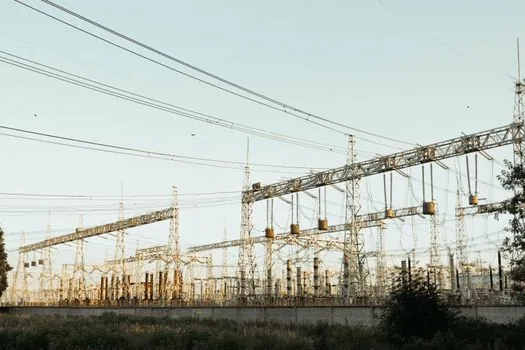
The decision matrix below lines the three dominant options up against criteria that actually drive integrator proposals on a jobsite, with the data sourced to the published comparison in S5: [S5]
Underground seismic detection is fully concealed, requires no existing fence, is unaffected by rain, wind, or fog, generates minimal false alarms once adaptive algorithms are tuned, adapts to open ground, slopes, and vegetation, and is hard to defeat because there are no visible wires or panels to cut; its weakness is higher civil-work cost up front and the need to re-lay when the site moves [S5]. Fence-mounted sensors are visible on the fence line, require an existing fence, are sensitive to wind-driven fence vibration, are limited to the fence line itself, and can be bridged or climbed between sensor zones, but they are the lowest-cost retrofit when a chain-link or welded-mesh perimeter already exists [S5]. IR beams are visible as posts and a beam path, do not need a fence but require clear line of sight, are degraded by fog, heavy rain, or snow, and can be crawled under or jumped over, so they tend to be specified only along short, straight runs such as a gate throat or a narrow access corridor [S5].
For background on the broader device class and where it sits in the security stack, the perimeter alarm reference covers terminology, sensor categories, and integration with central-station monitoring.
Detection Economics: What the Losses Look Like
Industry framing published in 2026 puts a single construction-site theft event in the $50,000 to $250,000 range once you stack equipment replacement, project delay, and re-mobilization costs, which is the number contractors should use when they argue the alarm budget against a project owner [S1]. AMAROK's own construction-sector page goes further, stating that the majority of stolen building materials and goods are never recovered and tying site theft directly to undefended multi-entry layouts, expensive equipment, and a perimeter that changes as the work progresses [S3]. The same logic pushes integrators toward layered detection rather than a single sensor type: one detector family to catch, a second to verify, and a monitored channel to dispatch.
Who Perimeter Alarms Are For, and Where They Fall Short
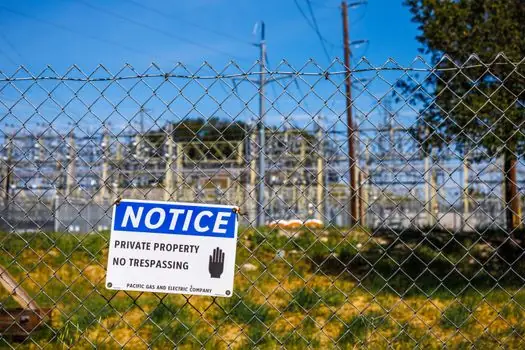
Perimeter alarms are for sites with a defined boundary, valuable mobile assets (excavators, generators, copper, fuel), and either a permanent fence line or budget to install one. They are not a substitute for access control at equipment storage cages, site offices, and material staging areas, nor for license-plate capture at vehicle entry and exit points, both of which the 2026 best-practices list calls out as separate layers [S1]. They are also a poor fit for an unmapped laydown yard where the perimeter changes weekly and nobody is ready to re-trench seismic cable, and for sites where vegetation, wildlife, or heavy forklift traffic would generate nuisance alarms faster than the central station can clear them [S5].
Related selection logic for adjacent site equipment appears in the explosion-proof electrical selection for construction sites guide, which covers hazardous-area wiring that often runs alongside the same perimeter cable trays.
Standards, Monitoring, and Integration Constraints
Best-practice write-ups in 2026 anchor the alarm side of the spec on UL-listed professional monitoring with emergency dispatch integration, video verification of every alarm event, and a virtual keypad that lets the project manager arm, disarm, and check status from a phone [S1]. On the sensor side, Senstar's perimeter-alarm considerations emphasize that outdoor systems must handle weather, temperature swings, wildlife, and vegetation without constant false alarms, which is the structural reason buried detectors outperform exposed hardware on windy sites [S7]. Video analytics on their own still need a clear view of the full perimeter; paired with a buried sensor that cues the camera to the exact detection point, the same camera becomes a verification layer rather than a stand-alone detector [S5].
For projects that also need intrusion detection tied into a broader building system, the fire alarm control panel reference covers how detection, notification, and monitoring panels are typically segmented on a multi-system jobsite.
Selection Criteria a Specifier Should Walk Into the Bid With

Five questions drive a defensible perimeter-alarm spec on a construction site: (1) Is there an existing perimeter fence, and is it welded-mesh, chain-link, or temporary panels? (2) How often will the footprint move, and what is the re-deployment cost per move? (3) What is the prevailing wind and weather exposure, and what is the local wildlife pressure? (4) Does the central station require video verification before dispatch, and is the video platform compatible with the chosen sensor? (5) What is the project's loss-tolerance number, and does the annualized cost of the alarm contract fall under that number when amortized over the build? The published comparison shows that buried seismic wins on weather resistance, false-alarm filtering, and defeat resistance, fence-mounted wins on retrofit cost where a fence already exists, and IR beams win only on narrow, straight, well-maintained sightlines [S5]. The same logic explains why UL-listed 24/7 monitoring with emergency dispatch is now treated as a hard requirement rather than an option, because the deterrent value of an alarm that nobody answers is close to zero [S1].
Track, on the next bid cycle, how often integrators are proposing a hybrid spec (buried seismic as primary, camera as verification, IR beam at gate throats) rather than a single-family design, and whether the central station requires two-way audio or video verification before dispatch; those two signals indicate where the perimeter-alarm market is converging through 2026.
Component reference pages worth checking: construction tools.