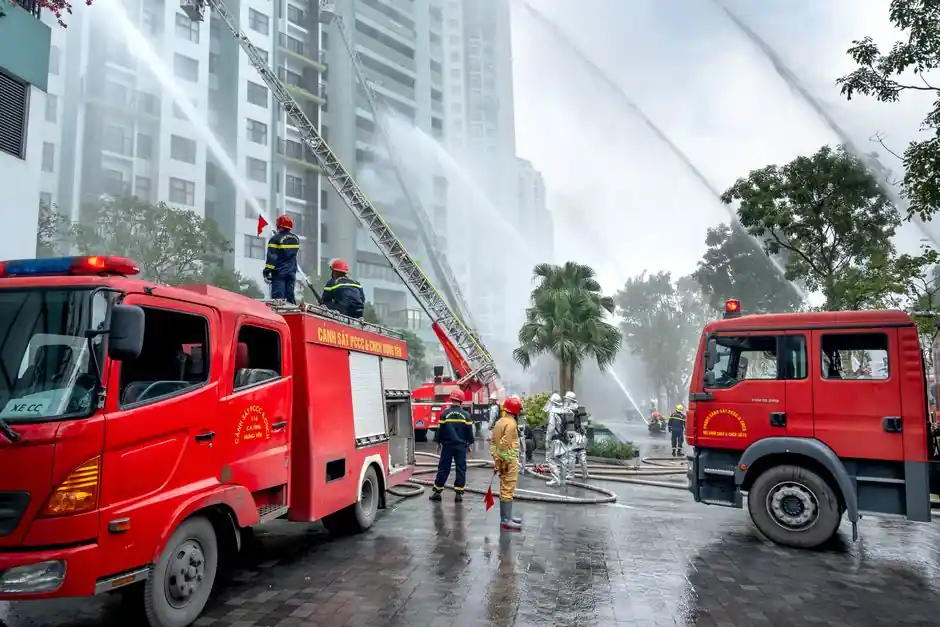
Fireground perimeter alarm selection in 2026 is dominated by three architectures: solar-powered dual-beam infrared sets with 4G auto-diallers, active infrared stacks with anti-masking, and fibre-optic vibration cables that pinpoint intrusion to within metres along a fence line [S1][S2][S3].
For an incident commander, the perimeter is the boundary between the hot zone, the warm zone, and the cold zone; alarm selection therefore has to support rapid redeployment, reject false triggers from firefighters and hose movement, and feed alerts into the command tent without hardwiring [S2].
Selection criteria for fireground deployment
Fireground perimeters change every 20 to 60 minutes as crews rotate sectors, so a kit that deploys without trenching, conduit, or mains power is the default. The DA600+ kit referenced in 2024/2026 distributor stock ships with four solar-powered 1B beam sets, a four-channel wireless receiver, and a KP9 4G auto-dialler, with each beam pair using dual detection heads spaced 60 mm apart so that both must trip simultaneously to create an alarm [S1].
Detection range on those beams is up to 100 metres per pair, with a 900 metre line-of-sight wireless link back to the receiver, and the receiver supports up to 128 paired beam sets, which is enough to ring a 1.2 km staging perimeter with margin [S1]. False-alarm rejection matters because a perimeter that pages the incident commander every time a nozzle swings is worse than no perimeter at all, which is why the dual-head logic, the anti-masking function on Optex-class beams, and the temperature-compensated PIR logic in outdoor motion sensors all show up in 2026 fireground kits [S1][S2].
Three architectures compared on five decision axes
For firefighting staging, the realistic options line up as solar dual-beam IR with 4G dialler, active IR stacks with hardwired receiver, and fibre-optic vibration cable. The table below scores them on the axes that matter at an incident, using only what is in the public 2026 product and integrator data [S1][S2][S3].
Solar dual-beam IR sets score high on deployment speed (no trenching, no power) and on cost (consumer-grade), with detection up to 100 m per pair and anti-animal rejection from the 60 mm spaced dual heads, but they are line-of-sight only and lose the link in dense smoke or heavy rain [S1]. Active IR stacks from Optex and Honeywell, as listed by Niaar for UAE critical sites, run 10 to 200+ metres per beam, offer 2/3/4-beam stacked versions to defeat crawl and jump, and add anti-masking, but they need clean 12/24 V DC and a wired backhaul to the panel [S2]. Fibre-optic vibration cable scores on EMI immunity and exact positioning, and is specified for chemical storage and refinery fence lines, with the cable itself acting as the sensor so there is no electronics in the field; it is the slowest to deploy and the most expensive per metre, but it keeps working through heavy smoke and electrical storms where wireless beams drop out [S3].
Integration with incident command and the alarm controller
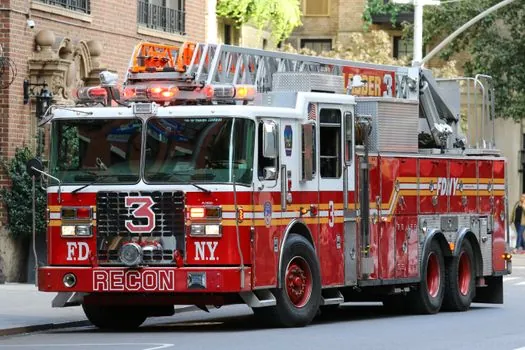
Once a beam or sensor trips, the alert has to reach the incident commander, the safety officer, and the rehab sector officer in a form they can act on. The DA600+ receiver exposes four dry relay outputs (N/O or N/C) plus a 12 V DC switched output, and the KP9 dialler escalates the event by phone and SMS to key-holder numbers once the system is armed [S1]. For a fireground, that relay pair is normally wired into a gas alarm controller or a portable fire alarm control panel so the same panel that handles a hydrocarbon detector trip can also flag a perimeter breach, which avoids carrying two pagers into the hot-zone briefing.
For a longer-duration incident, a perimeter alarm feed into the command tent can be tied to the same notification bus as the accountability system, so a lost firefighter trigger and a fence breach trigger both light the same map. The KP9 supports up to 95 wireless zones and 2 wired zones in the spec sheet, which is enough granularity to label each beam with its sector on the incident action plan [S1].
Use cases by fireground zone
On a wildland-urban interface fire, the staging area and the rehab tent are usually co-located, and a four-beam solar kit gives the safety officer a 200 to 400 metre square exclusion zone in under 30 minutes, with a 4G escalation path to a chief officer off site [S1]. On a structure fire with a hazmat component, the cold-zone boundary is set 50 to 100 metres from the structure, and active IR stacks are preferred because they have to be hardwired anyway to satisfy the AHJ's tamper and supervision requirements, and the 2/3/4-beam stack defeats both the firefighter who ducks under a single beam and the curious bystander who jumps it [S2].
On a petrochemical or LNG incident, the perimeter is the outer fence of the facility and runs for kilometres, so fibre-optic vibration cable on the existing fence is the architecture the operator already maintains, and the perimeter alarm output rides the same SCADA link as the fire alarm control panel already in the control room [S3]. For a confined-space rescue at a tank farm, the same spec map is covered in detail in the related Perimeter Alarm Selection for Confined Space Entry article, which focuses on trip-wire-class sensors around the access port rather than the long-run fence line. For a warehouse fire with shift change, the staging pattern is closer to the Perimeter Alarm Selection for Warehouse Operations spec map, where solar beams and 4G diallers are the default because no fixed power is available. On a temporary construction-site fire watch, the kit described in Perimeter Alarm Selection for Construction Sites applies, and the dual-beam 60 mm logic is the main defence against the false alarms that plague single-beam photoelectric sets in windy conditions [S1].
Limitations, failure modes, and what to spec around
Solar beams drop out at night if the panel is shaded by apparatus or by tree cover, and the manufacturer adds a top-up charging port specifically to recover from a low-sunlight spell, which a fireground logistics officer should plan for [S1]. Wireless links at 900 MHz or 2.4 GHz are attenuated by fire smoke, hose water mist, and the metal skin of a hazmat apparatus, so the receiver should be sited with line of sight to the beam pairs and a signal repeater (part 004-2910) carried as a contingency to double range when the geometry forces it [S1]. Active IR stacks are defeated by snow, fog, and heavy smoke, and Optex anti-masking is a tamper detector, not a smoke rejector, so the AHJ may still require a secondary detection layer in IICL3 conditions [S2].
Fibre-optic cable has to be specified with the right jacket for the chemical and UV exposure at the site, and the cable itself becomes a consumable on a long-duration incident if it is dragged or kinked, so a 20% length over-order is standard practice [S3]. Across all three architectures, the alarm has to be treated as a supervisory signal, not a primary fire detector, and the incident commander should not stand down a crew based on a single beam trip without a second confirmation from a perimeter alarm zone, a radio call, or a visual observation.
Standards, sourcing, and a trackable next signal
Perimeter intrusion detection systems at critical infrastructure in the UAE are specified to comply with UAE Ministry of Interior requirements for security system installations, and integrators such as Niaar bundle Honeywell, Bosch, and Optex sensors with the control panel and alarm management software as a layered system [S2]. On the consumer-grade side, the DA600+ kit carries CE-typical documentation and a 12-language menu for multi-agency deployments, and the KP9 4G dialler uses a user-supplied nano SIM on PAYG or contract, which means a fireground logistics officer has to plan a SIM and a phone number before the kit is armed [S1].
The fibre-optic vibration system is sold as a stand-alone perimeter alarm with positioning output, and is targeted at chemical storage facilities, refineries, and secured industrial zones, where the same cable can be branched through a multi-zone controller to feed a SCADA HMI that the incident commander is already watching [S3]. For a fire chief writing a SOP in late 2026, the next trackable signal to watch is whether your regional AHJ accepts a 4G auto-dialler as a primary notification path, or only as a secondary to a hardwired fire alarm control panel, because that decision alone drives whether the staging-area kit is a solar-beam-plus-dialler stack or a wired active-IR stack with a leased-line dialler.