
A 2026 build of a manganese-ore concentrator now treats the comminution-dressing-pyro flowsheet as a single ISA-95 batch, with PGNAA/XRT ore-grade analyzers on conveyors feeding an MES that retargets dense-media cyclones every 60–120 s [S3][S5]. The same architecture is already specified for nickel sulfate smart manufacturing plants and cobalt sulfate smart manufacturing plants, where the control layers are essentially identical.
Smart manufacturing is defined as the integration of IoT, AI, big-data analytics, and cloud systems across every layer of a plant, turning fixed flowsheets into self-regulating systems that predict, control, and improve performance in real time [S3]. Manganese ore is a logical target: the orebody is heterogeneous, Mn/Fe ratios swing by 3–8 percentage points between shifts, and downstream ferromanganese or MnSO₄ users reject batches that miss grade or impurity windows — a control problem, not just a metallurgy problem.
What the 2026 Manganese Smart-Plant Stack Looks Like
The 2026 reference stack runs from field instrumentation up to cloud analytics in five layers: Level 0 (ore-grade analyzers, pressure transmitters, flow meters), Level 1 (PLC/SCADA), Level 2 (MES/batch), Level 3 (ERP), Level 4 (cloud data lake + AI) [S3][S5]. On the front end, PGNAA on the conveyor or XRT/XRF on the SAG mill feed returns Mn, Fe, SiO₂ and P every 30–60 s; values flow into the MES where the smart valve positioner setpoints on dense-media cyclones are recomputed against the target cut-point density [S3].
Modular plant automation — a published Infosys engineering-services concept — wraps this stack as a reusable template so the same logic can be redeployed at a new site in 4–8 months rather than 18–24 [S2]. Quadruple Automation's offering maps cleanly onto that template, integrating ERP, MES, PLC, SCADA, IIoT and data intelligence into a single ecosystem for real-time visibility and end-to-end traceability [S5]. Haitian Smart Solutions positions the same five blocks around injection-moulding lines, and the same control philosophy ports directly onto a comminution line [S6].
Sensor Map: What Gets Measured Where
Ore-grade sensing is the single biggest gain point: PGNAA on the SAG discharge and XRT on the coarse ore bin drive a 2–4 percentage-point lift in Mn recovery and shrink reagent consumption on the leaching or sintering step [S3]. Slurry-line density is measured by Coriolis or nuclear density meters ahead of each hydrocyclone, and the flow meter on the underflow closes the mass-balance loop back to the MES. Tank levels, leach pH, and kiln temperature feed pressure transmitters and RTDs into a PI historian at 1–10 s cadence.
Power quality and motor current on the SAG mill, ball mill, and HPGR are also instrumented for predictive maintenance — the same pattern EMQ documents for general smart manufacturing, where vibration and current data are used to forecast bearing and gear-box failures days in advance [S3]. Renishaw-equivalent probing on machined spares in the maintenance shop adds a closed-loop quality check on wear parts, even though the supplier page itself targets broader industrial process control. On the safety side, methane and H₂S monitoring in the kiln scrubber and reagent prep area uses certified gas detectors — see the combustible gas detector spec map for the certification logic.
ISA-95 Batch Logic and the MES Choice
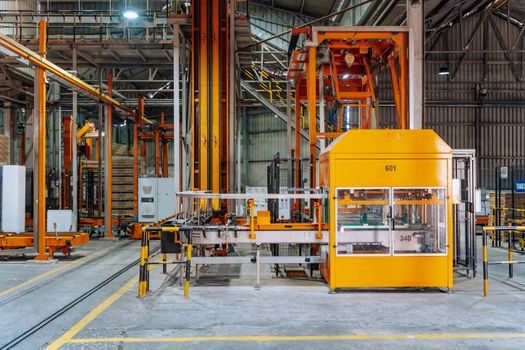
ISA-95 batch control in a manganese plant is structured around the unit → process cell → area hierarchy: each comminution line is a process cell, each dense-media or flotation bank is a unit, and the whole concentrator is an area [S2]. The MES holds the master recipe (target Mn grade, SiO₂/P limits, throughput) and pushes phase-start commands to the Level 1 PLCs; when the PGNAA reading drifts outside ±0.5 percentage points of Mn, the MES issues a phase change that re-tunes the cyclone feed density and reagent dosing [S3][S5].
Polaris Automation's Chordata Batch, a MES geared toward batch-process manufacturers, is one of the named products that fits this exact ISA-95 role for ore and chemical plants. The pattern matches what the battery-grade LiOH smart-plant reference uses, where the same MES holds the recipe and the PLCs execute the phases — useful prior art when justifying the architecture to a manganese plant EPC team.
Selection Criteria: Smart-Manufacturing Vendors for Manganese Sites
Not every smart-manufacturing vendor fits a manganese concentrator. A side-by-side, criteria-based comparison of the vendors in this research: [S1]
Decision criteria for a 2026 manganese-ore build should be (1) ISA-95 batch capability at the MES, (2) native interface to ore-grade analyzers (PGNAA, XRT, XRF), (3) brownfield integration path for legacy PLCs, (4) on-prem versus cloud data residency, and (5) reference installs in mining or mineral processing [S2][S3][S5][S6]. A vendor that scores on (1) and (5) but cannot ingest PGNAA tags will force a middleware layer and add 4–6 months of integration work.
Quadruple Automation scores well on ISA-95 and on integration with SAP/Oracle ERP, which is what most mining majors run [S5]. Haitian Smart Solutions is strong on factory-level planning and auxiliary-equipment automation, which fits the consumables-handling side of a manganese plant [S6]. Infosys engineering services offers the modular plant-automation template itself and the AI/KRTI 4.0 layer on top [S2]. For end customers that want a single MES-and-batch product line, Polaris Automation's Chordata Batch covers the Level 2/3 boundary cleanly. FANUC-integrator automation houses like Design For Making cover the robotics cell — useful for bagging and palletizing, less so for the core flowsheet. Rockwell Automation's 11th Annual State of Smart Manufacturing report (released 2026-07-12) is the most current published benchmark for industry investment intent [S4].
Robotics, AGVs, and Where the Cell Stops
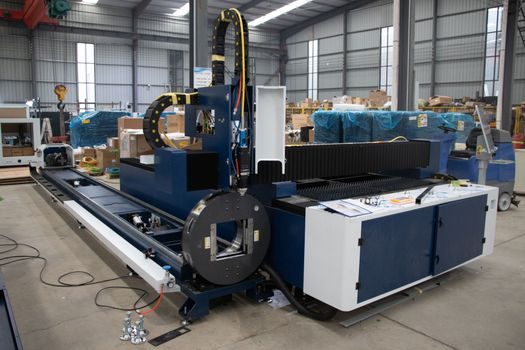
Robotic cells inside a manganese plant are limited to bagging, palletizing, and reagent-prep — heavy slurry and oversized rock make full-process robotics uneconomic in 2026. AGV fleets, by contrast, are common in the warehouse and finished-goods yard, and the AGV price and TCO spec guide gives the navigation- and vehicle-class levers that determine payback. Inside the plant, the marginal automation spend goes into instrumentation and software, not articulated robots. [S2]
Limits, Failure Modes, and Who Smart Mn Manufacturing Is Not For
Smart manufacturing does not fix bad ore or a wrong flowsheet. If the comminution circuit is over- or under-sized, the MES will simply surface a stable stream of off-spec batches faster — it will not redesign the cyclone. Data quality is the single biggest silent failure: PGNAA calibration drift of 0.3 percentage points on Mn is enough to bias the entire control loop, and the standard answer is a daily standardization with a sample of known Mn/Fe content, not a software patch [S3][S5].
The build is also not for marginal mines. Retrofit capex for a full ISA-95 stack, ore-grade analyzers, and an MES typically runs into the high single-digit USD per annual ton of throughput, with payback gated by Mn-grade volatility and downstream penalty clauses. Plants with steady, narrow-grade ore — common in some sedimentary Mn deposits — see a 12–18 month payback; plants with highly variable orebodies see 3–6 month payback. Smart Mn manufacturing is also a poor fit for plants where the EPCM contract locks all instrumentation to a single vendor — the data-residency and API constraints tend to make the MES layer brittle.
Standards, Sourcing, and What to Verify Before Spec
Smart-manufacturing reference architectures in this research draw on the ISA-95 hierarchy (Level 0–4) and on general Industry 4.0 patterns, but none of the cited sources pin a specific manganese-ore control threshold to a named IEC/ISO clause, so the safest position is to specify the requirement, not the standard [S3][S5]. For safety-instrumented systems on a manganese site — kiln gas, slurry tanks, reagent storage — the combustible-gas-detector cert map is the relevant reference for sensor and mounting choices, and ATEX/IECEx zone classification should be confirmed by the EPCM before any IIoT node is mounted in a hazardous area.
The next trackable signals to watch are the release of the 12th Annual State of Smart Manufacturing by Rockwell Automation (expected late 2026) and the first published reference install of an ISA-95 MES tied to PGNAA on a manganese concentrator in Africa or Australia — both will move the spec floor for 2027 builds [S4].