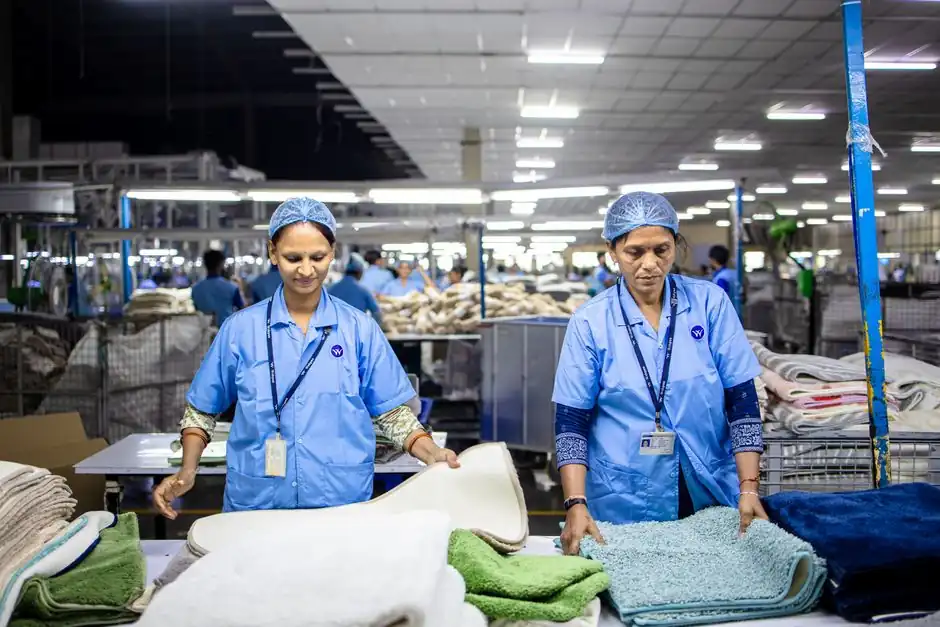
UCP two-bolt cast-iron pillow block units with UC insert ball bearings remain the default shaft support on spinning, weaving, and finishing lines, with the housing rated to compensate for ±2° to ±3° of shaft-to-frame misalignment per current supplier engineering data [S1][S3].
Textile-mill duty cycles sit in the 40,000 to 60,000 hour L₁₀ life band at 95 to 96 percent reliability, matching continuous 24/7 process lines where unplanned stops dwarf the bearing purchase cost [S1].
Why the UCP / UC Insert Combo Dominates Textile Frames
UCP two-bolt pillow blocks paired with UC insert ball bearings are listed by every major mounted-bearing catalog as the workhorse for light-to-medium radial loads on horizontal shafts, and textile machinery (carding frames, drawing sets, ring spinning, looms, stenters) is a textbook fit [S1][S3]. The spherical outer race of the UC insert seats in a matching spherical socket in the housing, which lets the unit absorb mounting-surface errors of ±2° to ±5° without transmitting bending stress to the inner ring [S3]. That forgiving geometry matters on long line shafts bolted to fabricated steel frames that never sit perfectly flat on a mill floor.
For low-to-medium radial load positions, UCP units with deep-groove ball inserts cover the bulk of the bill of materials; SNL/SNG or SAF split-housings with spherical roller bearings are reserved for the few high-load nodes (calender rolls, tenter chain drives) where a standard insert is under-spec [S1]. Standard single-row deep-groove inserts absorb axial load only up to roughly Fa / Fr ≤ 0.3, so any position with continuous belt pull or chain tension should be checked against that limit before specifying a UCP [S1].
Material and Seal Choices for a Humid, Lint-Laden Mill
Cast iron is the default housing material for textile-mill pillow blocks because it is cheap, dampens vibration, and survives the typical thermal cycling of a dyehouse or finishing range, while stainless (SSUCP series) and thermoplastic (TP-SUCP series) options exist for genuinely corrosive zones [S2][S3]. Cast iron and ductile iron housings handle the dry-side of a mill well, but washdown, bleach, or acid finishing areas push selection toward SSUCP2 stainless or TP-SUCP2 thermoplastic housings, both of which are stocked in the same UCP mounting footprint for drop-in replacement [S2].
Seal selection is the single biggest reliability lever: supplier data attributes over 50% of pillow block failures to contamination ingress, and textile airborne lint plus humidity is one of the harsher combinations an insert can face [S3]. Specify double-lip nitrile or felt-and-rubber seals as a baseline, move to sealed-for-life (2RS) inserts where re-lubrication access is awkward, and reserve stainless or thermoplastic housings for the wet-processing side. Bearing inserts in textile duty typically run on lithium EP-2 grease through a Zerk nipple, with relube intervals set by the dust and moisture load rather than by calendar time [S3].
Sizing the Load: C, C₀, and L₁₀ on a 24/7 Line
Pillow block life is governed by ISO 281, with the relevant textile-mill L₁₀ target of 40,000 to 60,000 hours at 95 to 96% reliability on continuous process lines, a band that is roughly 4 to 6× the L₁₀ expected of single-shift conveyor duty [S1]. The unit's effective capacity is set by whichever is weaker: the insert's dynamic load rating C (and static C₀) or the housing's fracture strength, so the two must be checked independently rather than relying on the catalog headline number [S1]. For shaft diameters from 20 to 50 mm, a 2-bolt UCP205 to UCP210 covers the radial loads typical of a card or ring-spinning frame; above 60 mm shaft size, an SNL or SAF split-housing with a spherical roller insert becomes the economical choice.
For a quick sanity check, the equivalent dynamic load P combines radial and axial components per the ISO 281 framework, and the L₁₀ life in hours follows the standard power-law relationship between P, C, and shaft speed. Anything that pushes Fa/Fr past 0.3 on a deep-groove insert should be rerouted to an angular-contact or tapered-roller variant, otherwise the ball-race shoulder wears out well before the rated life is consumed [S1].
Selection Criteria: UCP Cast-Iron vs SSUCP Stainless vs TP-SUCP Thermoplastic
Across the three housing material families that share the UCP mounting footprint, the trade-off is straightforward: cast iron wins on cost and vibration damping, stainless wins on corrosion resistance, and thermoplastic wins on chemical resistance and weight, with a clear ranking for each decision criterion used in textile-mill specifications [S2][S3].
Cost per unit: cast iron UCP < stainless SSUCP2 < thermoplastic TP-SUCP2, with thermoplastics often 1.5 to 3× the cast iron part price depending on insert size. Corrosion resistance against bleach, acid dye baths, and steam: thermoplastic ≥ stainless > cast iron. Maximum continuous operating temperature: cast iron and stainless track the insert's grease limit (typically around 120 to 150°C with standard seals), thermoplastics drop to roughly 80 to 100°C depending on polymer grade [S2]. Maintenance access: cast iron and stainless accept standard Zerk relube, thermoplastic units are often specified sealed-for-life because the housing material is less tolerant of petroleum greases at elevated temperature. Hygiene and washdown tolerance: stainless and thermoplastic both qualify for food-adjacent or wet-process zones, cast iron does not.
Locking Method and Shaft Fit on Textile Drive Lines
Set-screw locking on the extended inner ring is the standard UC-insert arrangement and is sufficient for the steady radial loads on most textile shafts, but high-torque or reversing positions (loom cranks, stenter drives) should be specified with eccentric collar or adapter-sleeve locking instead [S1][S3]. Eccentric collar locking (UCP-EC series) gives faster mounting and better resistance to shock loads, while adapter-sleeve locking (UKP series) on a tapered-bore insert is the right call for larger shaft diameters and any position where frequent removal is expected. For the same reason, plummer block arrangements (SN, SD series) that mount a separate self-aligning ball or spherical roller bearing directly on a cylindrical shaft, with optional adapter or withdrawal sleeves, are typically chosen for the larger calender and tenter rolls [S5].
Shaft tolerance and finish are easy to over-spec: standard UC inserts assume a tolerance class h7 shaft with a surface roughness around Ra 0.8 μm, and tighter fits rarely improve life while making future replacement harder.
Where Pillow Blocks Are Wrong: Heavy-Duty Mill Nodes
A standard UCP cast-iron pillow block is the wrong pick for any position that combines large shaft diameter (above ~60 mm), high radial load, or significant shock, which in a textile plant means the main calender rolls, heavy tenter chain sprockets, and large printing-bowl bearings [S5]. In those positions, a plummer block (SN/SD series) with a split housing and a self-aligning ball or spherical roller bearing gives both higher load capacity and the ability to replace the bearing without pulling the shaft [S3][S5]. Split housings also make field alignment easier because the cap can be shimmed independently of the base.
For wind-turbine-class heavy-duty applications, the same shift toward split-housing, large-bore spherical roller constructions is standard practice and is documented separately in the heavy-duty split-housing pillow block selection guide. Plants that already run pillow blocks on automotive or pulp-and-paper lines will recognize the same UCP / SNL split logic, just retuned for the duty profile, as covered in the automotive line and pulp and paper selection guides.
Specification Checklist Before Issuing the Purchase Order
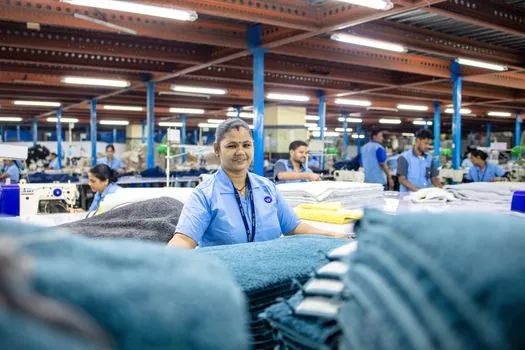
Final textile-mill pillow block specification should fix, in order: shaft diameter and tolerance (typically h7), radial load and any axial load component with target Fa/Fr ratio, required L₁₀ life and reliability (40,000 to 60,000 h at 95 to 96% for 24/7 lines), housing material (cast iron / stainless / thermoplastic), insert type and locking method (UC set-screw / eccentric collar / adapter sleeve), seal arrangement (double-lip nitrile / 2RS sealed-for-life), lubrication (EP-2 lithium grease, Zerk or sealed), and ambient conditions (temperature, humidity, chemical exposure) [S1][S2][S3]. Cross-check that the calculated equivalent dynamic load P against the chosen insert's C rating gives the targeted L₁₀ at the actual operating speed before locking the part number.
For plants standardizing across multiple mills, a single supplier series (UCP2 stainless for wet zones, UCP cast iron for dry zones, SNL for heavy nodes) cuts spare-parts inventory and lets maintenance crews swap inserts without re-aligning frames. Trackable signals worth watching: ISO 281 revision updates on the a₁ reliability factor for 96%+ targets, and any shift in supplier catalogs toward sealed-for-life thermoplastics rated above 100°C, which would extend the washdown envelope for bleach and peroxide lines.
Spec-level background on the components involved: pillow block bearing, aac block, and block brick.