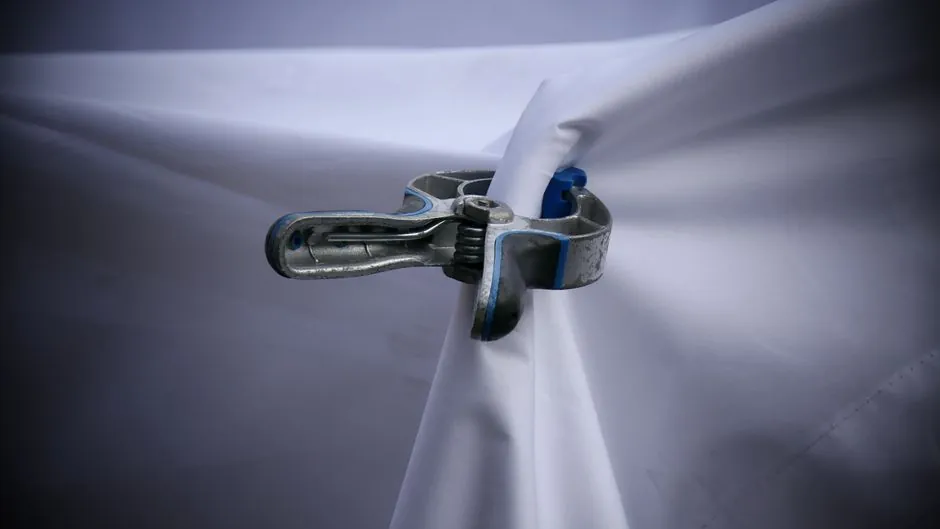
A pipe clamp is two clamp heads threaded onto standard steel pipe, so its capacity is set by the pipe length rather than a fixed factory dimension [S6]. That same configurability shows up in both the woodworking shop and the petrochemical plant, where a single clamp family is reused for very different jobs by changing the pipe, the lining, or the fastener pattern.
The core trade-off is universal: pipe clamps are cheap, long, and easy to reconfigure, but they deflect more than parallel-bar or beam clamps, and bare black pipe reacts with water-based adhesives and certain chemicals [S1][S3]. Picking the right variant (standard two-screw, single-screw quick-lock, U-bolt/saddle, plastic, rubber-lined, or heavy-duty) determines whether those weaknesses matter on your specific job [S4][S5].
Anatomy and Operating Principle
A standard pipe clamp pairs a fixed head and a sliding head on threaded black or galvanised steel pipe, with capacity determined by the pipe length used [S6]. In industrial pipe supports the same name covers a different hardware class: two half-circle shackles wrapped around the pipe and tightened with bolts to lift, hang, or restrain it [S3][S4]. Both share the same logic: the pipe itself is the structural member, the heads or shackles are the gripping hardware.
Woodworking heads apply pressure through a wide foot that distributes load across the workpiece, lowering the chance of crushing softwoods [S2]. Industrial pipe clamps instead focus on load transfer: they must carry the pipe weight plus thermal, seismic, and vibration loads while allowing controlled movement for expansion [S4]. The single-screw quick-lock variant, exemplified by Walraven starQuick, snaps closed by hand and removes the two-screw torque step entirely for fast sanitary and heating runs [S4].
Where Pipe Clamps Win: Custom Length, Cost, Versatility
Customisable length is the headline advantage: changing the pipe immediately changes clamp capacity, so a 24 in. clamp can become a 72 in. clamp with the same heads and a longer pipe nipple [S2][S6]. Cost follows the same logic: standard 3/4 in. black iron pipe is inexpensive per foot, so a 4-pack of pipe-clamp heads typically costs less than a single mid-range parallel clamp of equivalent reach [S1][S2].
Industrial users get the same scalability: heavy-duty pipe clamps support district heating, petrochemical, and oil-and-gas runs where pipe diameter, lining, and safe working load (SWL) must be matched to the line [S3][S4][S5]. Adjustable variants allow re-tasking across pipe sizes during installation, and rubber-lined versions add noise and vibration control on the same hardware footprint [S4][S5]. The clamp itself also doubles as an anchor point: when welded to a pipe shoe it produces an H-style or T-style shoe that lifts the pipe off corrosive supports [S3].
Where They Fall Short: Deflection, Marring, Reaction, and Speed
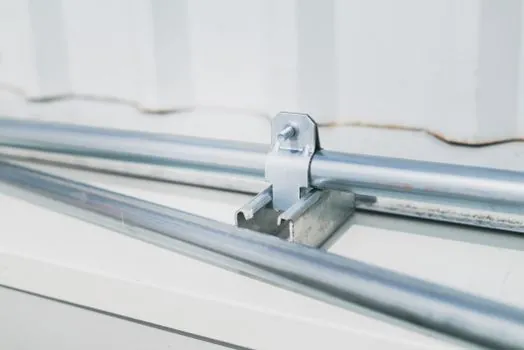
Pipe clamps deflect more under load than parallel-bar clamps because the round pipe section bends along its length, which makes flat panel glue-ups harder to keep planar [S1]. Bare black pipe also reacts with water-based wood glues, leaving dark stains that must be sanded out or blocked with masking tape, plastic wrap, or aftermarket non-marring pads [S1]. The heads themselves usually ship without protective faces, so softwood and finished surfaces need scrap-wood cauls or padding between head and workpiece [S1][S2].
In process piping the same trade-offs appear as vibration, thermal growth, and corrosion: unlined steel clamps can wear pipe coatings, and the wrong lining material fails against aggressive media such as acids, chlorine, oils, or greases [S3][S4]. Setup is also slower than a quick-action parallel clamp, since each head must be cranked along the thread to reach the workpiece before pressure is applied [S1]. For production glue-ups where cycle time matters, professionals typically reach for parallel or bar clamps instead and reserve pipe clamps for the long-reach or one-off jobs where cost dominates [S1].
Variant Comparison: Standard, Single-Screw, Plastic, Heavy-Duty
Standard two-screw pipe clamps remain the default for straightforward metal or plastic pipe runs and offer the broadest size range at the lowest unit cost [S4]. Single-screw quick-lock clamps (push-to-close) cut installation time on sanitary, heating, and electrical jobs where many clamps are needed in sequence [S4]. Plastic clamps, such as starQuick-style products, target domestic copper and plastic pipe plus corrosive environments, trading load capacity for fast, tool-light installation [S4].
Heavy-duty pipe clamps carry the highest safe working load and suit indoor and outdoor high-load pipework, including district heating and bridge-mounted district-energy lines, and are offered both lined and unlined [S4]. Rubber-lined variants add vibration damping and acoustic isolation, which is the typical spec for mechanical-equipment rooms and overhead lines near occupied space [S4][S5]. On the woodworking side, traditional U-bolts and saddle clamps fill the role of low-cost pipe brackets on steel and copper lines where no rubber lining is required [S4]. Across all variants the capacity is set by pipe diameter, wall thickness, and lining choice, so the spec sheet, not the brand, is the deciding factor.
Selection Criteria and Standards Context
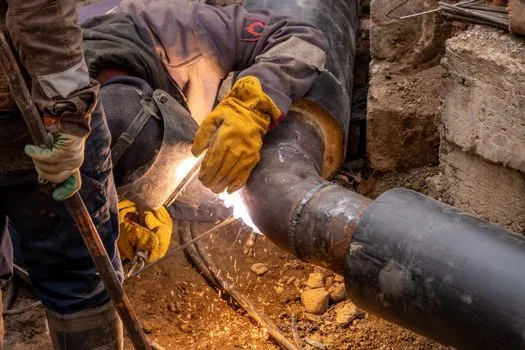
For woodworking, the deciding numbers are clamp reach (pipe length), head material (cast iron vs. aluminium), thread pitch (faster sliding vs. finer adjustment), and whether non-marring pads are included [S1][S2]. For process and mechanical piping, the deciding numbers are nominal pipe size, safe working load, lining material compatibility with the carried fluid, temperature rating, and corrosion environment, with rubber or EPDM lining specified where vibration, noise, or chemical resistance is required [S3][S4][S5]. Material compatibility with the media is a hard gate: oils, greases, acids, and chlorine each rule out specific lining and clamp-body materials, and the wrong pairing leads to coating failure and pipe wear [S3][S4].
Industrial specifiers should treat pipe-clamp selection as part of the broader piping-support system, not a standalone purchase, and confirm SWL, lining, and fastener grade against the project piping class and the relevant hangers, supports, and restraints on the same line. For related decisions on pipe support hardware in chemical and process service, the PE pipe selection guide and the construction machinery and equipment reference cover adjacent spec territory. The pipe clamp encyclopedia entry consolidates the defining geometry and terminology used across both the woodworking and industrial families.
Use Cases and Failure Modes
Woodworking use cases cluster around long-reach glue-ups: edge-gluing tabletops, laminating wide panels, and assembling long case goods where reach matters more than speed [S1][S2]. The dominant failure modes are workpiece marring from bare heads, black-pipe staining from water-based adhesives, and panel bow from pipe deflection on wide glue-ups [S1][S2].
Industrial use cases cluster around pipe hanging, pipe elevation off corrosive supports, seismic and vibration restraint, and high-load district heating or process lines [S3][S4][S5]. The dominant failure modes are unlined-clamp abrasion on coated or plastic pipe, lining attack by aggressive chemicals, and clamp overload when SWL is undersized for the supported weight plus thermal and seismic loads [S3][S4]. Pairing pipe clamps with threaded rod and a clevis hanger is the typical overhead-spec pattern, while welding the clamp to a pipe shoe is the standard elevation pattern [S3].
Who Should and Should Not Specify Pipe Clamps
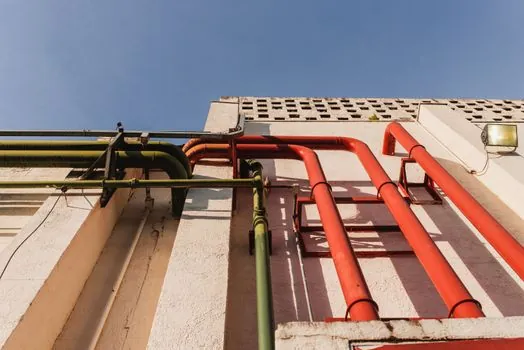
Pipe clamps are the right call for hobbyist and small-shop woodworkers who need long reach at low cost, for maintenance teams that need reconfigurable pipe supports, and for specifiers building long runs of standard pipe support where the same clamp family will be re-used across many sizes [S1][S2][S4]. They are also a fit for corrosive-environment and sanitary/heating installations where plastic quick-install clamps deliver the fastest installation time at acceptable load [S4].
Pipe clamps are the wrong call for high-volume production glue-ups where cycle time and panel flatness dominate, for any application where bare black pipe will contact water-based glue without a barrier, and for high-temperature or high-pressure process lines where the SWL, lining, and material compatibility of a purpose-designed heavy-duty or engineered support is required [S1][S4][S5]. Buyers chasing the lowest unit cost on a single small clamp should also weigh freight and the cost of adding non-marring pads, which parallel clamps ship with as standard [S1].
Trackable signals for the next spec cycle include the spread of single-screw quick-lock plastic clamps into more sanitary and electrical lines, growth of rubber-lined heavy-duty variants for district heating retrofits, and the continued displacement of pipe clamps by parallel-bar clamps in professional woodworking shops as clamp-head prices fall [S1][S4]. For a parallel comparison of flexible supports in adjacent systems, the expansion joint pros and cons map uses a similar criteria-based format. Material-supply context for the steel and copper that feed both clamp bodies and pipe stock is covered in the electric motor raw material sourcing spec map, and warehouse stocking strategy for the pipe and fitting SKUs that pair with these clamps is mapped in the warehouse PPR pipe selection guide.