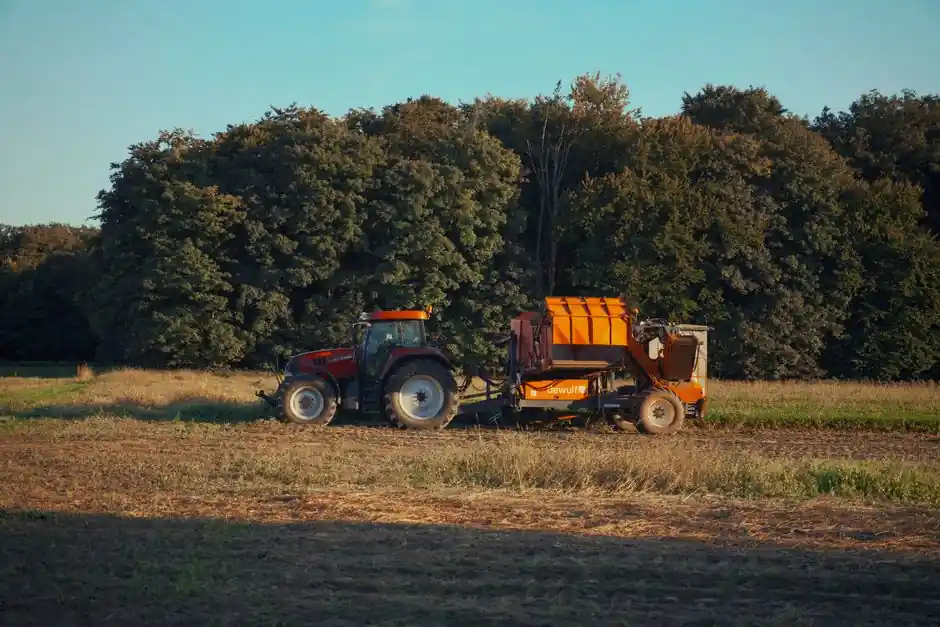
Selection for agricultural machinery is constrained by dust ingress (IP55 minimum, IP65 preferred for wheel-hub duty), wide ambient swings (typically -20 to +60 degrees C), shock loading from field obstacles, and seasonal utilization that often runs under 1,000 hours/year, which changes how engineers should weight efficiency versus cost [S3].
Why a Planetary Reducer Fits Most Ag Drive Loci
The coaxial input/output layout of a planetary reducer also matches the inline engine-to-PTO or engine-to-wheel architecture used on most modern tractors and self-propelled sprayers, removing the right-angle housing that worm units require [S1][S3].
For wheel-hub applications in particular, used-wheel-reducer inventory from tractor OEMs shows that final-drive units are commonly sized in the 1.5-9 kW per-wheel input range with 15:1-30:1 reduction, matching a planetary architecture rather than a worm-gear one [S4]. Where engineers need higher ratios in a single stage, two-stage planetary stacks of 50:1-120:1 are standard, whereas a worm gearbox achieving 40:1 in a single stage would lose 40-60% of the input power as heat [S1].
Where Worm Reducers Are Still the Right Pick in Ag Use
Worm gear reducers remain a practical fit for low-duty agricultural machinery such as small grain conveyors, simple mixer drives, gate actuators on livestock feeding systems, and auger positioners where self-locking prevents back-driving and where duty cycles are short [S1]. Standard NMRV-pattern worm units deliver ratios of 20:1, 40:1, or 60:1 in a compact right-angle housing at a price point that a planetary stage cannot match for inputs under 0.75 kW [S1].
The same source is direct about the trade-off: worm reducers "may be the most practical choice" for "conveyors, small mixers, simple transfer units, agricultural machinery, and low-precision equipment" when the machine "does not require servo positioning, low backlash, high input speed, or high efficiency" [S1]. Self-locking behavior is useful in lifting and holding applications, but it should not be treated as a guaranteed safety brake without a manufacturer-specific check, and the sliding contact that produces self-locking is also what produces heat and lubricant degradation in long duty cycles [S1].
Comparison Bands for Ag Engineers
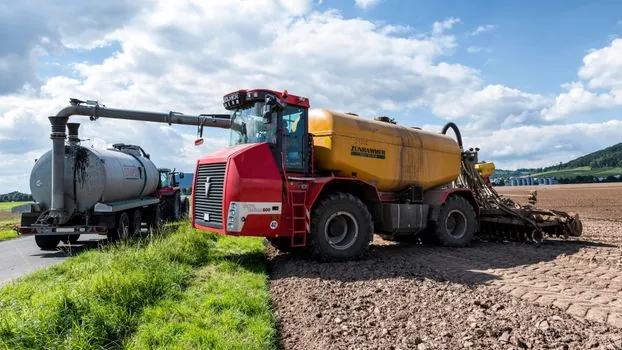
The table below summarizes the operating bands a spec engineer should pin down before selecting between a planetary and a worm-gear solution in an agricultural context; values reflect ranges stated in the source material or commonly published manufacturer data, not inferred ratings. [S1]
Criterion 2, typical single-stage ratio: planetary 3:1-10:1 per stage (stacked to 50:1-120:1); worm 20:1-60:1 in a single stage [S1][S3]. Criterion 3, input speed ceiling: planetary commonly rated for 3,000-6,000 rpm input; worm typically limited to 1,500 rpm input to control heat [S1]. Criterion 4, dust/sealing for field use: planetary units are routinely built to IP55-IP65 for wheel-hub duty; worm units in the same agricultural machinery category are commonly IP54 unless upgraded [S3][S4].
The fourth band is decisive on the field: a gear reducer running in tilled-soil dust, with seasonal thermal swings, will lose lubricant life much faster in a worm housing than in a sealed planetary stage, and the slide-versus-roll contact difference is the root cause [S1].
Selection Criteria Specific to Agricultural Machinery
Six spec bands should be locked before a purchase order is cut: (1) input power and speed from the diesel or electric drive, normally 1.5-15 kW at 540, 1,000, or 1,500 rpm for tractor PTO derivatives; (2) required output speed and torque at the driven element, which sets the ratio; (3) duty cycle, where seasonal use under 1,000 hours/year tolerates a worm unit, but daily silage or feed-mill work over 8 hours does not; (4) ambient and sealing, with IP65 and -20 to +60 degrees C as a typical agricultural machinery envelope; (5) shock and vibration load from stony or uneven ground, which pushes the designer toward planetary with case-hardened planet gears; and (6) maintenance access, since farms often lack the service tooling for servo-class planetary units with low-backlash grades under 5 arc-min [S1][S3][S4].
For an existing construction machinery and equipment fleet that is being repurposed or compared against farm units, the same planetary architecture carries over, but the duty profile and sealing expectation differ; engineers cross-spec'ing from earthmoving to agricultural machinery should re-verify thermal limits, not just ratio and torque [S2][S3].
Failure Modes and Limits Engineers Should Plan For
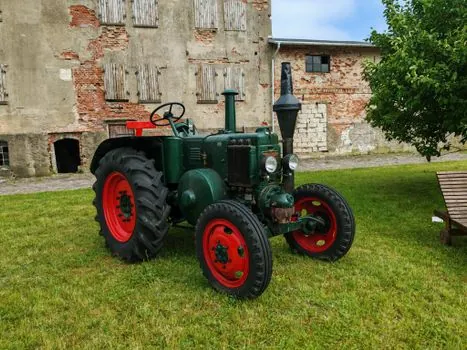
The dominant failure mode on a planetary reducer in agricultural service is seal failure and abrasive dust ingestion, which leads to planet-bearing pitting and ring-gear scoring; this is a sealing and maintenance problem more than a design problem [S1][S3]. For a worm reducer, the dominant failure mode is lubricant breakdown from sustained heat, which then accelerates worm-wheel wear, with sliding contact creating friction that "affects lubricant life, seal life, and long-term efficiency" [S1].
Back-driving is the second axis to control: planetary reducers will freewheel under load unless a holding brake or sprag is added, while worm reducers can be self-locking depending on ratio, lead angle, and friction [S1]. On hilly agricultural terrain with trailed implements, a self-locking worm stage can be a safety plus; on a powered wheel hub, a non-locking planetary with a spring-applied brake is usually the better-controlled choice [S1][S4].
Standards, Sourcing, and What to Verify on the Datasheet
Agricultural machinery gearboxes are commonly referenced against ISO 6336 for load-capacity calculation of spur and helical gears, ISO 281 for bearing life, and the AGMA 2001/DIN 3990 family for rating, although the source material does not pin specific clauses and the specifier should confirm the current revision on the OEM datasheet [S3]. Wheel-reducer and final-drive units for tractors are typically sold with a frame size, ratio, and torque rating keyed to the tractor model rather than to a generic standard, so cross-referencing the manufacturer's selection software is the safer path [S4].
Used and remanufactured wheel reducers from tractor OEMs are a recognized sourcing channel in the agricultural-machinery aftermarket, and the listing side notes these are "for tractors and agricultural machinery" with compatibility keyed to the specific OEM final-drive housing [S4]. For new builds, precision planetary gearbox suppliers (the segment described in OEM-side company news from late July 2026) position planetary units as a mechatronics product used across "construction machinery, mining machinery, agricultural machinery" and adjacent automation, which confirms agricultural machinery as a primary but not exclusive vertical [S2].
The pragmatic decision rule that follows: specify a planetary reducer for any agricultural-machinery drive that runs more than four hours per day, exceeds 0.75 kW, or lives in a sealed wheel-hub; specify a worm reducer only for short-duty, low-power, right-angle, self-locking needs where cost dominates. For an engineer cross-checking a planetary selection against a cycloidal reducer or an RV reducer for the same tractor-driven implement, the tie-breakers are shock tolerance (RV and cycloidal win), input-speed ceiling (planetary typically wins above 3,000 rpm input), and unit cost at the 5-15 kW agricultural-machinery sweet spot, where planetary remains the lower-cost option in 2026 [S1][S2][S3]. For a broader view of planetary and other gear reducer architectures in a non-agricultural vertical, this textile-mill gearbox spec map shows how the same selection logic shifts when duty rises above 16 hours/day.