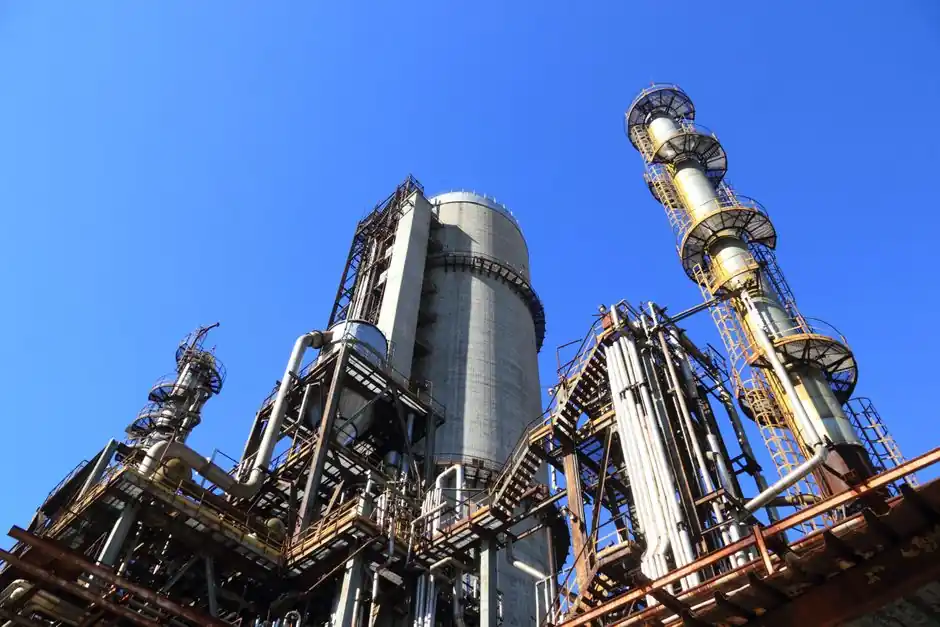
Pulp and paper mill drives place unusual demands on gear units: continuous duty at 7,200+ hours per year, steam-laden humidity, pH swings from 4 to 10 in white water, and shock loads on refiner and reel drum lines. Helical planetary reducers with 95–99% single-stage efficiency and torque ratings from 57 kNm to 6,700 kNm dominate new mill specifications because they deliver the highest torque density in a footprint that fits existing foundation bolt patterns [S2][S3].
Premium Transmission's modular planetary line, with gear unit sizes 20 through 106, power ratings of 10–34,850 kW, and nominal ratios of 16–1,600, is representative of the spec envelope pulp mills are now writing into 2026 RFQs [S2]. For motion-control sections (calender rolls, reel drum positioning, winder dancers), a separate class of low-backlash precision planetary reducers, like the PX Series, is specified with backlash ≤3 arcmin and service life rated for ≥20,000 hours [S1].
Where Planetary Reducers Sit in a Paper Mill Drive Train
A paper machine has four distinct drive sections, and each one calls for a different reducer topology. Pulp refiners, including conical, disc, and twin-rotor models, are among the highest-shock loads on site, so heavy-duty planetary units with case-hardened gears, ductile iron housings, and a minimum AGMA service factor of 1.5 are the baseline [S3]. Calender and reel drum drives, which sit downstream and run at controlled web tension, can be served by the same modular planetary family as the refiners when configured with hydraulic or servo input [S2].
Winder sections and reel drum indexing are the precision end of the line: backlash must stay below 5 arcmin for general servo automation, and ≤3 arcmin for indexing at the unwind stand [S1]. Coater stations and size-press drives usually fall back to helical or bevel-helical units rather than planetary, because the ratio requirements are lower and the price premium of planetary is harder to justify outside the high-torque sections.
Selection Criteria That Matter for Paper Mills
Five criteria separate a paper-grade planetary reducer from a general-purpose one. First, sealing: the housing must be sealed oil-lubricated with IP55 or better, because wash-down and stock-spray exposure will destroy a grease-lubricated unit within 12–18 months. Second, material: ductile iron housings with epoxy coating and stainless steel output hardware survive the moist, mildly acidic or alkaline atmosphere better than cast iron with bare paint. [S1]
Third, efficiency: single-stage planetary efficiency is 95–99% (Premium Transmission cites up to 99% on their modular line) [S2]; the PX Series quotes ≥95% [S1]. Fourth, ratio coverage: standard single-stage ratios of 3, 4, 5, 7, and 10 cover most calender drives, while 2-stage ratios of 15–100 and 3-stage ratios up to 1,000 cover refiner and feeder drives; combined stages can reach 4,000:1 for low-speed winch and reel-drum applications [S1][S2].
Fifth, and often overlooked, is thermal: paper machine ambient can sit at 40–50 °C with high humidity, and continuous-duty gearboxes run hot, so reducer selection must verify the gearbox's rated thermal capacity at the actual ambient, not at the 20 °C test bench figure [S2].
Planetary vs Cycloidal vs Helical-Bevel: When to Pick Which
The three families most commonly offered for paper mill duty are helical planetary, cycloidal, and helical-bevel. Helical planetary units deliver the highest torque density (the PX Series quotes 3× the torque of a single-mesh gear pair of the same size because the load is shared across 3 planet gears) and the highest single-stage efficiency, at 95–99% [S1][S2]. Cycloidal units, sold by Sumitomo as the Cyclo drive, are reported to deliver torque densities 200–300% higher than comparable planetary units and tolerate shock loading very well because of their multi-tooth contact pattern, but they run hotter, are louder, and have lower single-stage efficiency, typically 85–90% [S4].
Helical-bevel units sit at the low end of the price curve and are the natural pick for slow-speed conveyors and chipper drives where efficiency loss is tolerable and ratio requirements are modest (under 100:1). For refiner and calender drives where torque density and floor space both matter, helical planetary wins. For sections with extreme shock or frequent stall events, the additional cost of a cycloidal unit is recoverable in maintenance savings, and a planetary reducer for the steel mill drive section follows the same torque-density logic, with shock and continuous-duty stress both elevated.
Failure Modes and What Spec Audits Should Catch
Three failure modes show up repeatedly in paper mill gearboxes. Bearing failure from moisture ingress: even with IP55 sealing, steam leaks from headers and stock piping will migrate past seals, so a paper-grade spec should call for sealed-for-life bearings or at least a documented regrease schedule tied to hours, not calendar months. Oil seal failure: the lip seals on the output shaft are the most common repair item; specifying dual-lip seals and stainless hardware extends service intervals. [S3]
Gear pitting and micropitting: the most expensive failure mode, and almost always traceable to either under-rated AGMA service factor or wrong lubricant viscosity. A spec should require AGMA service factor ≥1.5 for refiner drives and ≥1.25 for calender drives, with verification against the actual peak torque envelope, not just the motor nameplate. For agricultural planetary reducers, the same AGMA service factor rule applies, though the contamination risk profile differs from a paper mill.
Standards, Sourcing, and What a 2026 RFQ Should Include

For a pulp and paper mill drive, the reducer RFQ should call out the AGMA service factor (per the AGMA 2001 / ISO 6336 gear rating family), required efficiency at rated load, backlash class for servo-driven sections, IP rating of the housing, and a thermal-rating statement at the actual ambient. Surface treatment, paint specification, and shaft material should also be itemised because the wet, mildly acidic environment will eat a generic epoxy coat inside 5–7 years. Stainless output hardware and epoxy coating rated for pH 3–11 are the minimum acceptable baseline. [S1]
For encyclopedia background on planetary reducer topology and load-sharing, the gear construction, ratio math, and torque-sharing principles are explained in detail. The broader gear reducer family reference covers parallel-shaft, bevel, and worm alternatives that occasionally show up on paper machine auxiliaries such as pumps and agitators. The construction and heavy machinery equipment reference is useful for the forestry and chip-handling upstream of the mill, where similar shock-load planetary units are specified for log-handling and chipper drives. The 2026 supply landscape includes Siemens-Flender, SEW-Eurodrive, Bonfiglioli, NORD, and Sumitomo as the main mill-grade vendors, with several modular planetary specialists supplying the 57–6,700 kNm envelope that most refiner and reel drum applications sit within [S2][S4].
Trackable signals to watch over the next quarter: AGMA service factor audit language appearing in more mill EPC specs as mills standardise on ≥1.5 for refiners; sealed-for-life bearings replacing regreaseable units in modular planetary line upgrades; and a continued shift from grease-lubricated to oil-lubricated planetary units in the 200–1,000 kW refiner class. Any of those three would be a meaningful 2026 spec direction change.