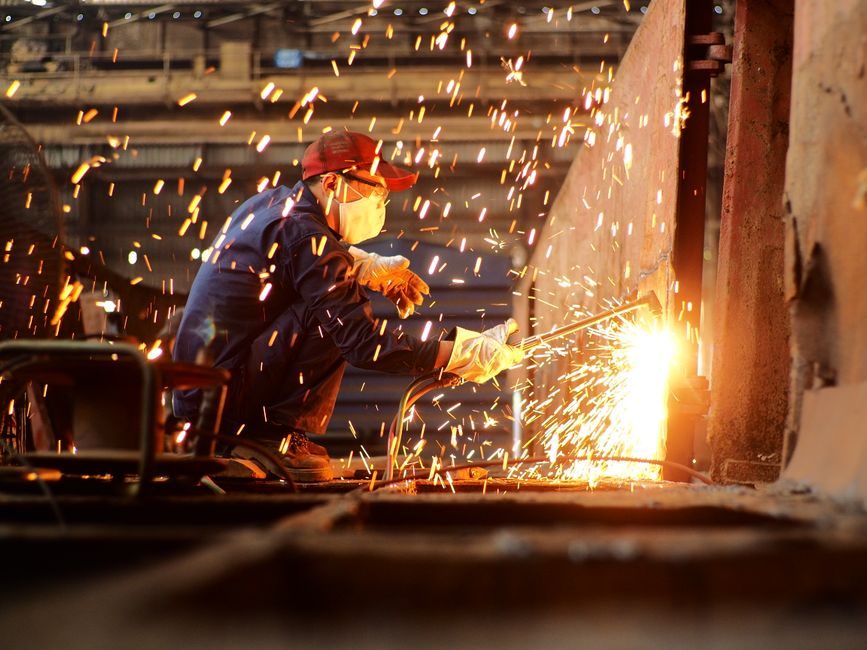
Inverter compressed-air handheld plasma systems such as the TELWIN Superior Plasma 70 cut 20 mm (0.8 in) cleanly and sever 30 mm (1.2 in), with high-stability cutting current, contact striking, and onboard thermostatic, over-voltage, under-voltage, over-current, torch-short, phase-loss, and no-air protection [S1].
For buyers in July 2026 the practical decision tree still sits on four levers: declared sever/thickness rating, continuous output current, duty cycle at rated amperage, and whether the chassis is a handheld IGBT inverter, a compact CNC, or a 5-axis gantry precision table. Catalog pricing on Made-in-China (2026-06) shows a precision 5-axis gantry CNC plasma cutter at US$ 8,800-10,000 per piece, and a compact CNC plasma cutter at US$ 920-10,294 per piece [S6].
Cutting Thickness and Sever Rating: What the Numbers Actually Mean
Manufacturers quote two numbers: a "clean cut" thickness on mild steel and a "sever" or maximum pierce thickness, usually 30-50% higher. The Superior Plasma 70's 20 mm clean / 30 mm sever pair is the typical 70 A IGBT inverter envelope [S1]. Hypertherm's handheld platform guidance confirms the same tiering logic: most metal-fabrication and heavy-equipment shops use handheld plasma to replace oxyfuel, punch, drill, and shear work because the plasma arc cuts all electrically conductive metals independent of an oxidising flame [S3].
For sheet-metal work under 10 mm, 40-50 A pilot-arc inverter packs (e.g. the Lotos LTP5000D or VEVOR CUT-50DF form factor) cover the bulk of HVAC, auto-body, and light-fabrication jobs, and their non-touch pilot arc lets the user start on painted or coated plate [S2]. Above 25 mm, jump to 80-130 A machines or move to oxyfuel; handheld plasma is the wrong tool for thick plate because kerf taper, dross, and electrode wear scale non-linearly with thickness beyond the rated sever.
Inverter vs Compact CNC vs 5-Axis Gantry: Three Chassis, Three Buyers
Inverter handheld chassis (typically 40-70 A, 220 V single-phase) suit site work, repair, and small fabrication. Telwin's Superior Plasma 70 lists 220 V inverter topology, contact striking, and remote-control interfacing for automated cutting systems via a dedicated connector [S1]. Compact CNC table chassis add a stepper/servo XYZ gantry, THC (torch height control), and a CAM post-processor; Made-in-China's compact CNC precision plasma cutter is quoted at US$ 920-10,294 per piece at 1-piece MOQ [S6].
5-axis gantry precision tables add bevel head and tube/section cutting, and a Jinan Allwin 5-axis gantry plasma bevel system lists at US$ 8,800-10,000 per piece on the same portal (2026-06) [S6]. The chassis choice locks the buyer into a different set of consumables, source code, and operator skill. A shop buying a handheld is buying electrode + nozzle + shield cup + stand-off guide kits (consumable families documented for Lotos LTP5000D and VEVOR CUT-50DF platforms) [S2]; a CNC buyer is also buying a CAM licence, a height-control sensor, and a nesting software workflow.
Duty Cycle, Air Supply, and the Hidden Spec Sheet

Two plasma cutters with identical 60 A output can have dramatically different real-world throughput because duty cycle (the percentage of a 10-minute window at rated current) is often 40-60% on entry-level inverters and 60-100% on industrial chassis. Telwin publishes thermostatic protection plus phase-loss and no-air protection, which signals an industrial-grade protection chain rather than a hobby-grade one [S1]. Air quality is the other hidden spec: plasma requires clean, dry compressed air at roughly 4-6 bar (60-90 psi) with a coalescing filter and desiccant; moisture in the supply is the leading cause of fast electrode and nozzle failure on pilot-arc machines [S1].
Consumable wear scales with current and arc-on time. The VEVOR CUT-50DF / CUT-50 consumable line is sold as electrode 10-packs, nozzle 10-packs, shield cup 2/5-packs, and stand-off guide 2/5-packs, plus mixed 24-piece and 50-piece kits.
Pilot Arc vs Contact Start vs HF Start: How the Arc Strikes
Three striking methods are common. Contact (drag) start — used by the Superior Plasma 70 — moves the nozzle down to touch the workpiece, then retracts to start the arc; it is reliable on clean plate but struggles on painted or coated surfaces [S1]. Pilot arc (non-touch) — used by Lotos LTP5000D and VEVOR CUT-50DF platforms — strikes a pilot arc inside the torch body and transfers to the plate when distance is right, which is why non-touch pilot-arc consumable kits are widely sold for these models [S2].
High-frequency (HF) start is common on older CNC chassis and starts the arc with a high-voltage spark; HF start can interfere with nearby CNC electronics and is being phased out on newer industrial machines. Hypertherm's handheld platform guidance frames the strike method as one of the key differentiators buyers should check before committing [S3].
Buying Channels, MOQ, and Total Cost Levers
The Chinese export channel remains the most price-competitive for both compact and gantry CNC plasma: Made-in-China lists 1-piece MOQ on both the US$ 920-10,294 compact CNC tier and the US$ 8,800-10,000 5-axis gantry tier, with a 5.0/5.0 supplier rating on the Jinan Allwin listing as a quality signal (2026-06) [S6]. For handheld inverters, eBay aftermarket consumables (Lotos, VEVOR, Hypertherm-compatible) are a useful cross-reference for both authenticity checks and price benchmarking [S2].
Total cost of ownership is driven by four levers: machine price, electrode/nozzle/shield-cup consumable cost per arc-hour, compressed-air dryer/filter maintenance, and CNC retrofit (THC, CAM, nesting) if upgrading from handheld. The links between this decision tree and adjacent welding decisions are tight — see the TIG welder selection guide on duty cycle and process gates and the arc-welding spec-gate breakdown for the upstream/downstream spec trade-offs. The terminology is also catalogued in the plasma cutter encyclopedia entry, which is the right starting point if the buyer is also evaluating rebar cutters for construction fabrication or a marble cutter for stone — the chassis logic and consumable model are similar but the arc medium is different.
Failure Modes and Spec Traps Buyers Should Plan For
Four common spec traps cause early failures. First, quoting only the "sever" thickness and treating it as a clean-cut rating — derate by 30-50% for production planning. Second, ignoring duty cycle at the working current — running a 40% duty-cycle inverter at 100% of nameplate will trip thermostatic protection within minutes [S1]. Third, undersizing the air compressor — a 60 A plasma pulls roughly 4-6 bar at 150-200 L/min; a domestic compressor cannot keep up and the arc will sputter. Fourth, mixing consumable brands — pilot-arc nozzle geometry is brand-specific; an off-brand electrode on a Lotos or VEVOR torch shortens nozzle life and triggers arc instability.
Hypertherm's platform guidance also flags that handheld plasma is a substitute for oxyfuel, punch presses, drills, and cutting shears — but it is not a precision milling tool, and a buyer expecting ±0.1 mm tolerances should be looking at the 5-axis gantry chassis rather than a handheld inverter [S3][S6].
Decision Matrix: Match the Machine to the Job

Job profile drives chassis choice. Site work, repair, light fab under 10 mm steel → 40-50 A handheld inverter with non-touch pilot arc (Lotos/VEVOR class). Mid-volume fab and HVAC on 10-20 mm steel → 70 A inverter handheld (Telwin Superior Plasma 70 class) or compact CNC. Production cutting of sheet and plate in a shop → compact CNC plasma with THC and nesting software (US$ 920-10,294 per piece, 2026-06 catalog data) [S6]. Bevel cuts, tube and section work, structural steel → 5-axis gantry precision plasma at US$ 8,800-10,000 per piece [S6].
Power input is the second filter: single-phase 220 V handheld inverters (Telwin, Lotos, VEVOR class) for site and small-shop work; three-phase 380 V industrial chassis for CNC and gantry. The third filter is automation: if the buyer needs CNC integration, the chassis must support a remote-control / control-signal connector — the Superior Plasma 70 explicitly supports an interfacing connector to set the various cutting-process control signals [S1].
Closing: track two signals in H2 2026 — (a) Made-in-China 5-axis gantry precision plasma listings in the US$ 8,800-10,000 band, currently the price floor for new gantry entries (2026-06) [S6]; (b) consumable-pack pricing on pilot-arc 40-50 A handheld lines, which is the leading indicator of real competition at the entry level [S2]. Both data points are updated monthly and will give a defensible read on where the 2026 plasma-cutter market is heading.