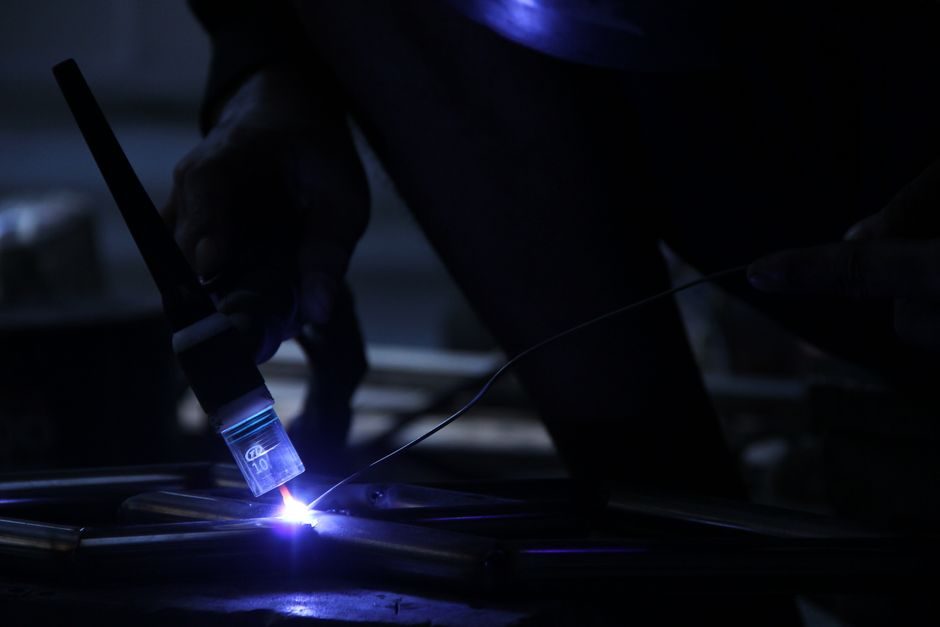
The four common industrial cutting routes — oxy-fuel, plasma, laser, and waterjet — split cleanly on thickness, edge quality, and material conductivity [S3]. Plasma sits in the 0.5–50 mm mild-steel band, cuts stainless and aluminium without pre-heat, and is the dominant portable choice for fabrication shops that need CNC-grade edge geometry on plate under ~25 mm [S3].
Gate 1: Material, Thickness and Conductivity Class
Plasma cuts any electrically conductive metal — mild steel, stainless, aluminium, copper, galvanised — and ignores the pre-heat cycle that oxy-fuel demands on thick carbon plate [S3]. A 1–3 mm sheet, 6–12 mm structural plate, and 25–40 mm heavy plate are three different machine classes; a 60 A inverter will struggle on a 30 mm clean cut the way a 200 A mechanised unit is wasted on 2 mm body-panel work.
For non-conductive material — stone, tile, glass, plastic — plasma is the wrong tool and an abrasive waterjet or diamond saw is the right one [S3]. A buyer specifying a single plasma unit for a mixed shop should also evaluate a complementary tool, which is where the marble cutter buying logic overlaps in workflow but not in physics.
Gate 2: Power Source — Amperage, Duty Cycle and Arc Start
Amperage drives cut capacity. The industry shorthand holds at roughly 10 A per 1 mm of clean cut on mild steel for inverter-class machines, so a 60 A unit is rated near 15–20 mm sever, and a 130–200 A mechanised source reaches 35–50 mm plate [S3]. Pilot-arc (HF or contact) start and pilot-arc current limit determine whether the torch can fire on painted or coated plate without retracing.
Duty cycle at 40 °C ambient — usually 60% or 100% on industrial models — sets how long the source delivers rated current before thermal cut-back. A 100% duty unit costs more but eliminates the stop-cut-start rhythm that destroys CNC productivity on long nesting runs. Piercing capacity (max thickness the torch can punch through vertically) is typically 50–60% of sever capacity on conventional plasma and approaches 100% on high-definition units.
Gate 3: Cut Quality — Bevel Angle, Kerf and Slag
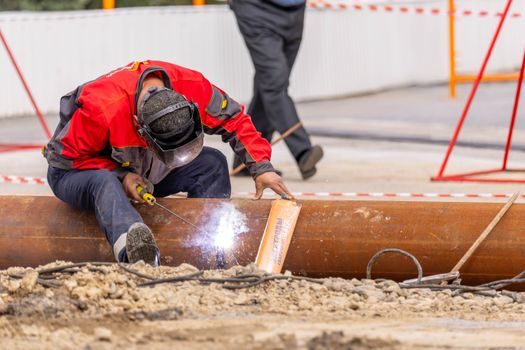
Conventional plasma leaves a 3–8° top-to-bottom bevel on 10–25 mm cuts; high-definition (fine-grain) plasma with constricted nozzles and nitrogen or argon-hydrogen shielding drops that to under 2° on stainless and aluminium [S3]. Kerf runs 0.8–1.5 mm depending on nozzle orifice and current; dross (slag) on the bottom edge is the cleanest single indicator of gas-flow and standoff health.
If the part feeds directly into a welding cell, a 3–5° bevel is acceptable; if it feeds into a powder-coat line, a high-definition cut with H35 / F5 shielding gas pays for itself in reduced re-work. Buyers running both profiles should standardise on torches that accept the same plasma cutter consumables family — tips, electrodes, swirl rings, shrouds — so the parts shelf collapses from dozens of SKUs to a handful.
Gate 4: Consumables and Operating Cost
Plasma consumables — electrode, tip (nozzle), swirl ring, shield, shield cap, retaining cup — sit in the torch head and create the constricted arc; they wear and must be replaced, with life measured in arc-on minutes or pierces [S1]. A 40 A drag tip on 6 mm mild steel typically lasts 60–120 pierces; a 200 A mechanised nozzle on 25 mm stainless can exceed 800 pierces before bore erosion widens the kerf.
Three levers move consumable cost: standoff distance (drag vs mechanised), gas purity (instrument-grade air vs shop air with desiccant), and pierce technique (ramp pierce vs on-plate pierce). The wrong consumable mix in a CNC cell can double operating cost without changing cut quality visibly for the first hour. This is also where a rebar cutter workflow comparison is instructive — rebar shears are non-thermal and have zero consumable arc-life, which is why they coexist rather than compete with plasma on structural work.
Gate 5: CNC vs Hand-Held, and Air Supply
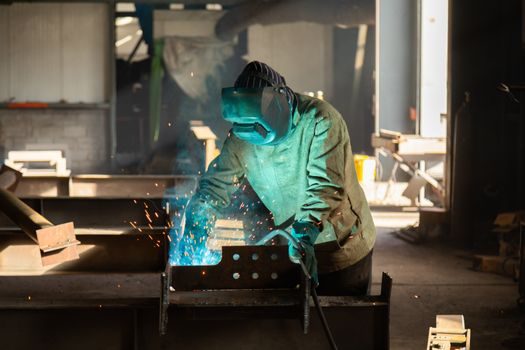
Hand-held units dominate site work, scrap yards, and one-off repair; mechanised or CNC machines dominate fabrication shops and structural steel. A CNC-ready machine must publish an arc-voltage divider (typical 1:50 or 1:100) and a clean dry-contact start signal so the controller can read torch height in real time. Without these, the source cannot be retrofitted to a table later. [S1]
Air supply — pressure, flow, and cleanliness — is the silent gate. Most inverter plasma needs 5.0–8.0 bar at 100–300 L/min of clean, oil-free air; a 25 cfm compressor with a refrigerant dryer and particulate filter is the minimum for a 100 A class unit, and undersized supply is the single most common reason for short electrode life [S1].
Gate 6: Cutting Method Decision Matrix
Four cutting methods compete for the same plate, and the right one depends on three criteria — material thickness, required edge quality, and production volume [S2][S3]. A criteria matrix in the style of a Pugh or selection grid lines them up as follows [S2].
Criteria: (a) Max clean cut on mild steel; (b) Edge bevel / dross; (c) Heat-affected zone (HAZ) and distortion; (d) Cost per metre at 10 mm plate.
Oxy-fuel: (a) unlimited beyond 25 mm, (b) rough kerf, heavy dross on thin, (c) large HAZ, (d) lowest fuel cost but slowest [S3]. Plasma (conventional): (a) 0.5–25 mm, (b) 3–8° bevel, light dross, (c) moderate HAZ, (d) mid cost, fastest in band [S3]. Plasma (high-definition): (a) 0.5–40 mm, (b) under 2° bevel, near-laser dross-free, (c) reduced HAZ, (d) higher gas and consumable cost [S3]. Laser (fibre): (a) 0.5–25 mm carbon, (b) square edge, no dross, (c) smallest HAZ, (d) highest capital, lowest per-part on thin gauge [S3].
The matrix is the same format engineers apply to any multi-criteria equipment pick — valves, pumps, drives — and is the reason a procurement team that already runs a Pugh grid for piping can drop plasma straight into the existing workflow [S2].
Standards, Safety and Indoor Air
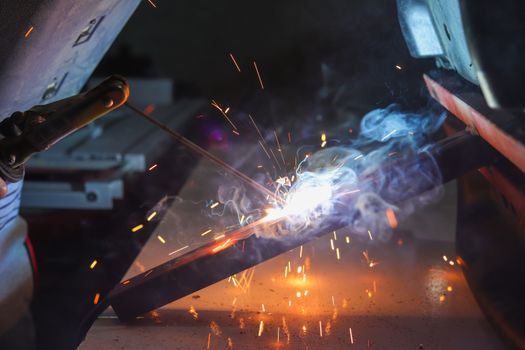
Plasma cutting produces UV, IR, ozone, and a plume of metal-oxide fume, so the operator side requires an auto-darkening helmet (DIN 9–13), a respirator rated for the specific metal (P100 or higher on stainless with hexavalent risk), and fume extraction sized at 0.5–1.0 m/s capture velocity at the torch. Workspace classification for plasma tables typically follows guidance parallel to ATEX 2014/34/EU zone thinking only when solvent or powder loads are present; the plasma source itself is non-explosive but the cut fume is. [S2]
Electrical safety is set by the inverter's open-arc voltage (typically 200–300 V DC) and the IEC 60974 series for arc-welding equipment. Buyers in EU plants should confirm CE marking under the Machinery Directive and the EMC Directive, and confirm that the CNC interface carries the same compliance pack as the power source.
When Plasma Is the Wrong Tool
Plasma loses to laser on any thin gauge below ~2 mm where heat input and kerf loss dominate, and loses to oxy-fuel on any carbon-steel plate over ~50 mm where fuel cost is trivial and the cut does not need to be square. It also loses to abrasive waterjet on hardened tool steel, titanium, or any material that cannot tolerate the heat-affected zone, and to a dedicated rebar shear on straight bar stock where the part never sees a machine tool. [S3]
For the structural-steel shop running 6–25 mm plate at high mix, however, no other process matches plasma on cut-time-per-kilowatt-hour, and that is the metric the production planner should be quoting in the business case, not the sticker price of the power source. A useful side-by-side framing for buyers weighing adjacent corded-power kit appears in the demolition hammer vs angle grinder spec cut — same logic of matching duty cycle and head type to job mix applies across the corded-power category.
The next spec to lock before issuing any RFQ is the consumable list and unit price — electrode, tip, shield — at the projected monthly pierce count, because on most shops the consumable spend over 24 months equals the original equipment cost. Ask the supplier for a written arc-on-minute rating per consumable set and for a recommended gas filtration chain; the answers separate a vendor that knows the duty cycle from one that has only read the brochure.