Interior finishing jobs typically run 1–10 mm mild steel, galvanised sheet, and stainless trim, and a 30–50 A dual-voltage plasma cutter on 60–90 PSI clean dry air at 4–6 CFM covers the band with minimal dross [S2][S5].
Buy 20–30% more amperage than your typical plate so the torch idles below its rated current, which extends consumable life and keeps the 3–8° bevel on a 10–25 mm cut within a weldable tolerance [S2][S5].
Amperage Bands and What They Actually Cut On Site
A 20–30 A unit is rated for 1/8–3/16" (3–5 mm) recommended cut and 1/4" (6 mm) severance, which is the right class for HVAC sheet, electrical panel back-plates, and light gauge partitioning trim [S2]. A 40–50 A unit lifts that to 1/4–3/8" (6–10 mm) recommended and 1/2" (12 mm) severance, covering the steel stud, door frame reinforcing, and light structural plate that an interior fit-out contractor runs into daily [S2][S4]. A 60–80 A machine pushes 3/8–1/2" (10–12 mm) recommended and 3/4" (19 mm) severance, which is the threshold for mezzanine framing, lintel work, and stair stringer plate; above 80 A the unit moves from interior finishing into heavy fabrication and the compressor load jumps from 6 CFM to 8 CFM at 90 PSI [S2].
Industrial shorthand is roughly 10 A per 1 mm of clean cut on mild steel for inverter-class machines, so a 60 A source is rated near 15–20 mm severance, while a 130–200 A mechanised source reaches 35–50 mm plate [S5]. For an interior finishing crew that never needs to pierce 25 mm plate, that scaling rule is a quick sanity check before ordering.
Duty Cycle, Air Supply, and the 120V vs 240V Question
Duty cycle is the share of a 10-minute window the source can deliver rated current before thermal cut-back: a 50 A unit at 35% runs 3.5 minutes and then cools 6.5 minutes, while a 60% unit runs 6 minutes and cools 4 minutes, and a 100% industrial source runs the full 10 minutes [S2]. Interior finishing work is mostly short pierces and trim cuts, so a 35–60% rating on a 30–50 A inverter is usually enough; a 100% rating only earns its premium on long production runs or CNC nesting [S2][S5].
Compressed air spec is 60–90 PSI (4–6 bar) at 4–8 CFM depending on amperage, and a 40–50 A cutter needs a 30-gallon tank minimum, while a 60–80 A unit steps up to 60 gallons [S2]. Moisture and oil are the killers: they clog the tip, blow out the swirl ring, and roughen the cut edge, so an inline desiccant dryer or refrigerated dryer is non-negotiable on any finishing job where the part feeds directly into powder coat or paint. Reference designs for a plasma cutter system all share the same chain: clean dry air, regulated pressure, and a torch that accepts a documented consumables family.
120 V units are typically limited to 12–40 A output with a 3/8" recommended cut, while 240 V units run 40–100 A+ at 1/2–1" recommended; a dual-voltage 50 A machine that delivers 50 A on 240 V and ~30 A on 120 V is the standard answer for a site that has to plug into either a household outlet or a shop circuit [S2][S4]. On a real interior finishing site, that dual-voltage capability often decides the purchase.
Pilot Arc vs Contact Start and When It Matters Indoors
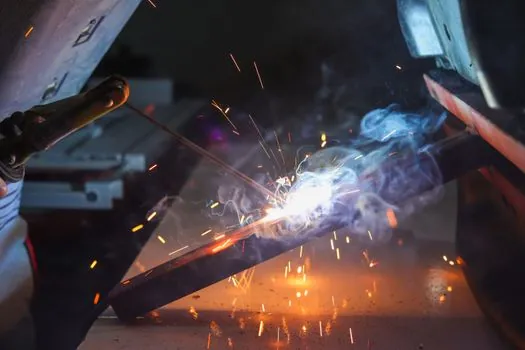
A pilot-arc (high-frequency) start fires the arc without touching the workpiece, which is what lets the torch cut expanded metal, grating, painted or galvanised steel, and rusty plate without retracing; a contact (scratch) start is cheaper and electrically cleaner but cannot start on a coated surface and tends to stick on edge starts [S2]. For interior finishing, the coated-surface capability is the deciding factor because galvanised stud, primed plate, and powder-coated trim are routine.
Mechanised piercethrough is typically 50–60% of sever capacity on conventional plasma and approaches 100% on high-definition (fine-grain) systems; for an interior crew that mostly pierces 6–10 mm plate, that means a 50 A contact-start unit can ramp-pierce the full recommended band, while a 30 A unit is restricted to on-plate start on clean material [S5]. High-frequency start can interfere with nearby CNC controls or low-voltage signalling, so on a finished fit-out site with sensitive electronics, a pilot-arc unit on a filtered circuit is the safer pick.
Cut Quality, Kerf, and Bevel Tolerance for Visible Work
Conventional plasma leaves a 3–8° top-to-bottom bevel on a 10–25 mm cut, while high-definition plasma with constricted nozzles and argon-hydrogen or nitrogen shielding drops that under 2° on stainless and aluminium [S5]. Kerf runs 0.8–1.5 mm depending on nozzle orifice and current, and dross on the bottom edge is the cleanest single indicator of gas-flow and standoff health [S5].
For visible interior work, the practical gate is: 3–5° bevel is weldable and acceptable for parts that feed a welding cell, while parts heading to a powder-coat or architectural trim line benefit from a high-definition cut with H35 or F5 shielding gas, because the reduced re-work pays for the gas premium on a 50–100 piece run [S5]. A rebar cutter or marble cutter does not solve a steel edge-quality problem, and forcing a plasma cutter onto non-conductive material is the wrong tool call; spec the right cutting process for the substrate rather than over-rating a single source.
Consumables, Compressor Sizing, and Total Operating Cost
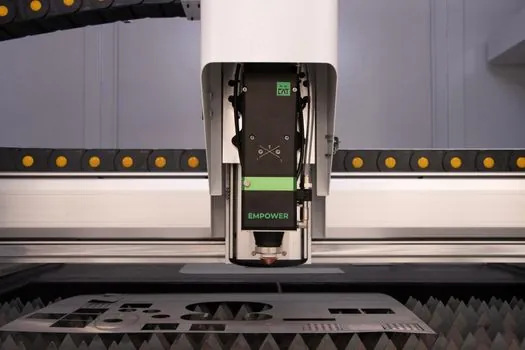
Plasma consumables (electrode, tip, swirl ring, shield, retaining cup) sit in the torch head and wear with arc-on minutes and pierces; a 40 A drag tip on 6 mm mild steel typically lasts 60–120 pierces, while a 200 A mechanised nozzle on 25 mm stainless can exceed 800 pierces [S5]. The three levers that move consumable cost are standoff distance (drag versus mechanised), gas purity (instrument-grade air versus desiccant-dried shop air), and pierce technique (ramp-pierce versus on-plate pierce), and the wrong mix in a CNC cell can double operating cost without changing visible cut quality [S5].
A 40–50 A interior finishing rig should be paired with a 30-gallon compressor delivering 5 CFM at 90 PSI, plus an inline filter and desiccant; the same checklist appears in any oxy-fuel cutter or finishing-material prep station, so the compressed-air side of the shop is a shared utility, not a per-tool expense [S2].
Comparison Table: 30 A vs 50 A vs 60 A+ for Interior Finishing
Three classes cover most interior finishing procurement decisions, and the decision criteria are cut thickness, duty cycle, air demand, and input power: [S1]
Class A, 30 A (120 V capable): recommended cut 3–5 mm, severance 6 mm, duty cycle 20–35% at rated amps, 4 CFM @ 90 PSI on a 20-gallon tank, runs on standard 120 V outlets; best for HVAC sheet, electrical back-plates, and trim [S2][S4]. Class B, 50 A dual-voltage: recommended cut 6–10 mm, severance 12 mm, duty cycle 35–60% at rated amps, 5 CFM @ 90 PSI on a 30-gallon tank, dual 120/240 V; best for steel stud, door frame, and light structural plate [S2][S4]. Class C, 60 A+ (240 V): recommended cut 10–12 mm, severance 19 mm, duty cycle 60% at rated amps, 6 CFM @ 90 PSI on a 60-gallon tank, requires a dedicated 240 V breaker; best for mezzanine framing, lintels, and stair stringers [S2][S4].
The interior finishing segment sits almost entirely in Class A and Class B, and Class C is justified only when the contractor also takes on structural or stair work. A complementary cut-off tool, the concrete groove cutter and the finishing-material toolchain, addresses the non-conductive side of the same fit-out.
Limitations and Failure Modes to Spec Against
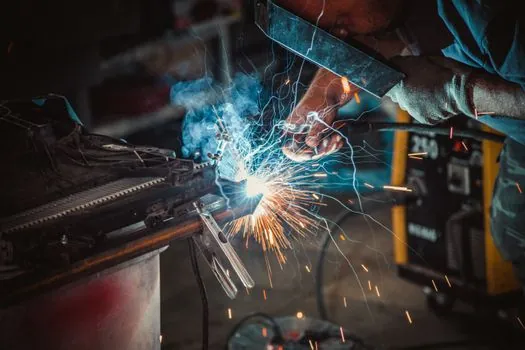
Plasma cutting fails on three predictable fronts: dirty air, wrong consumable mix, and over-amp operation. Dirty or wet air blows out the swirl ring and roughens the kerf, often misread as a torch fault; an inline filter plus desiccant eliminates this in the standard install [S2].
Running a cutter at its maximum amperage continuously to chase a thicker plate is the second common failure, and it shortens consumable life and trips thermal cut-back, so a buyer should size to the typical plate and accept a 20–30% headroom margin rather than push a smaller unit to its limit [S2][S4]. Third, contact-start torches cannot start on painted, galvanised, or rusty plate, and forcing them to do so destroys the consumable seat, so a pilot-arc torch is the correct spec for interior finishing work where coated material is routine [S2]. A 60 A inverter will struggle on a 30 mm clean cut the same way a 200 A mechanised source is wasted on 2 mm body-panel work, so the right sizing rule is to match amperage to the most common plate in the cut queue, not the thickest piece the crew occasionally faces [S5].
The trackable signals over the next procurement cycle are dual-voltage 50 A inverter pricing (Class B), pilot-arc availability on entry-level 30 A units, and the share of interior fit-out specs that call out high-definition shielding gas instead of shop air for visible trim. Buyers running a plasma cutter selection criteria gate-by-gate workflow can fold the same six-gate logic into interior finishing RFQs without re-inventing the spec sheet.