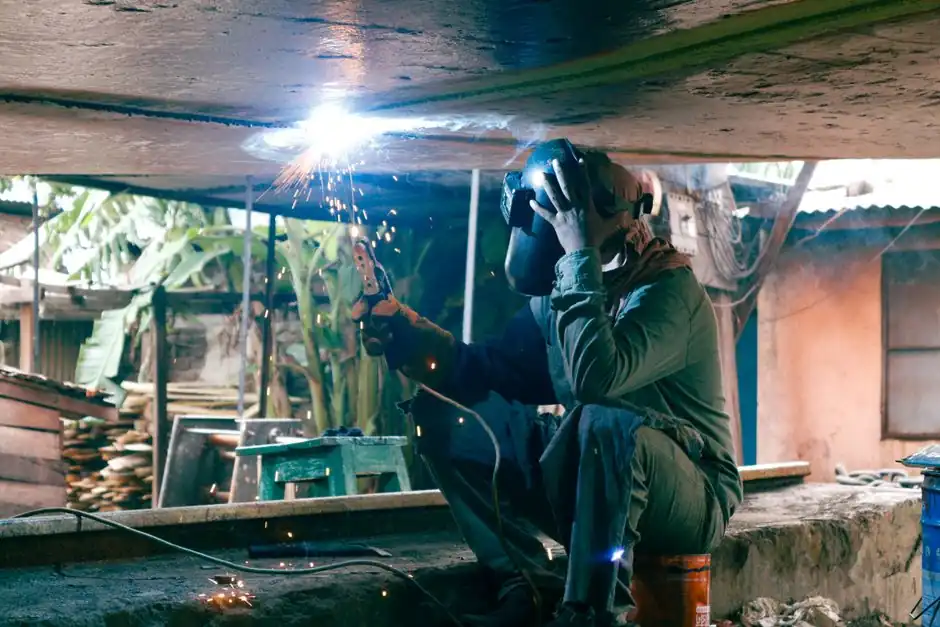
Steel construction work usually cuts A36 mild steel between 1/4 in and 3/4 in, so a 40-60 A plasma cutter with a 50-100% duty cycle at rated output covers most field and shop needs, per hands-on testing of 10 dual-voltage machines published 2026-06-29 [S3].
Severance thickness (where the arc blows through but the edge is rough) runs roughly 30-40% above the clean-cut rating, so a machine rated 5/8 in clean will sever close to 7/8 in; production fab shops should size to clean-cut, not severance [S3].
Thickness and Amperage Mapping for Structural Steel
Recommended cutting capacity, not maximum marketing numbers, is the spec to compare, because recommended capacity accounts for cut speed, consumable life, and edge quality across an 8-hour shift [S1]. A 30 A class unit (Hypertherm Powermax30 XP, Miller Spectrum 625 X-TREME) cleanly severs 5/8 in mild steel, which covers rebar, plate, and light structural shapes typical in rebar processing workflows [S2].
Step up to a 45 A Powermax45 XP or 65 A Powermax65 SYNC when 3/4 in to 1 in plate enters the mix, and reserve 80-125 A Powermax85/125 class machines for 1-1/4 in plus plate and heavy beam coping [S2]. The Hypertherm Powermax125 sits at the top of the consumer line and is the reference point for shops that occasionally push past 1 in [S2].
Duty Cycle, Input Voltage, and Air Supply Gates
Duty cycle is expressed as a percentage of a 10-minute window at a stated output: 60% at 45 A means 6 minutes cutting, 4 minutes cooling, and actual runtime drops with higher ambient temperature, thicker material, and extended lead times [S1]. The YesWelder Firstess CT2050 tested at 100% duty cycle at 45 A on 220 V input, which is unusual for the price band and useful for production fab cells [S3].
Input voltage decides where the machine can actually run: PFC (power factor correction) designs like the CT2050 accept 96-265 V at 50-60 Hz, but clean-cut thickness on 110 V drops to 25/32 in versus 1-3/16 in on 220 V, so spec the breaker and receptacle, not just the machine [S3]. Compressed-air demand of 5-7 CFM at standard shop pressure is typical for 40-50 A inverters; using the optional built-in compressor on multi-process units trades cut quality for cable-free field deployment [S3].
Material-Specific Behaviour: Mild, Stainless, Galvanized

Mild steel is the baseline: every plasma cutter on the market is rated for it, and cut speed scales almost linearly with amperage up to the recommended limit [S2]. Galvanized steel cuts on the same machines, but the zinc coating produces toxic fumes, accelerates consumable wear, and forces PAPR-class respiratory protection plus local exhaust ventilation, which adds to total project cost [S2].
Stainless steel runs hotter per unit thickness, so duty cycle drops faster and consumable life shrinks; a machine that cuts 5/8 in mild steel cleanly typically cuts about 1/2 in stainless at the same amperage before edge quality and consumable life degrade [S2]. For stainless-heavy work such as process piping or architectural panels, oversizing the cutter by one amperage class is cheaper than burning through nozzles and electrodes. See how this fits alongside TIG welding for plumbing installation when stainless pipe joins the same scope.
Portability, Pilot Arc, and CNC Compatibility
Handheld field cutting demands a sub-50 lb unit with a robust pilot-arc start: blowback (non-high-frequency) starting is preferred because it lets the same machine feed a CNC table without RF interference, which matters on fab shop floors running marble cutter and concrete groove cutter tables nearby [S3]. The CT2050 ships a non-contact pilot arc with blowback start, allowing cuts on painted, rusted, or oily structural steel without shielding-gas loss, a real advantage on retrofit and demolition work [S3].
Weight tracks capability: the 7-in-1 CT2050 weighs 61 lb because of integrated TIG and Stick functions, while single-process 30 A cutters drop under 30 lb for one-handed overhead work [S3]. On tower crane or scaffolding work, every 10 lb of cutter mass multiplies operator fatigue over a shift.
Comparison: 30 A vs 45 A vs 65-80 A Plasma for Steel Construction
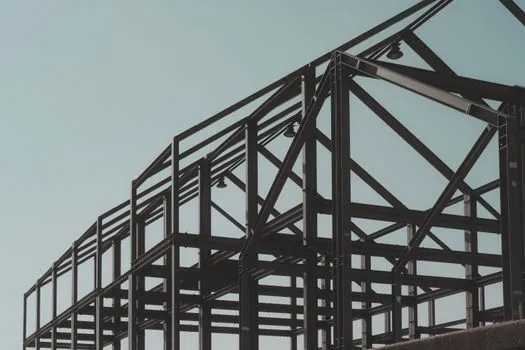
Across the three operating classes, the decision matrix for steel construction sites lines up as: clean-cut thickness (5/8 in / 1 in / 1-1/4 in), input power (110 V or 220 V / 220 V / 220 V three-phase optional), duty cycle at rated output (typically 50-60% / 60-100% / 60-80%), and best-fit workload (rebar, light plate, field repair / general fab, structural shape / heavy plate, beam coping) [S2][S3]. Within each class, consumable cost per cut hour and 5-year warranty terms (Lincoln FLEXCUT) often swing the buying decision more than headline amperage [S2].
For shops already running construction tools and construction machinery, the 45 A dual-voltage class is the most versatile single purchase: it bridges 110 V site power and 220 V shop power while keeping severance above 1 in for occasional thick-plate work. See also the broader plasma cutter reference for spec cross-checks before final procurement.
Limits, Consumables, and Field Failure Modes
Three failure modes dominate field complaints: (1) running a 110 V machine on undersized extension cords, which collapses arc voltage and stalls the cut; (2) feeding unfiltered shop air with moisture or oil, which pits the nozzle and shorts the electrode inside 10 hours; and (3) ignoring duty cycle on long seam cuts, which trips thermal protection mid-cut and leaves a dross-heavy edge [S1][S3].
Consumable life on mild steel at recommended capacity typically runs 100-200 starts per electrode/nozzle set on 40-50 A machines, and halves on stainless or galvanized at the same amperage [S2]. Stocking two spare consumable sets per machine per week of production work is the rule of thumb that keeps unplanned downtime off the schedule.
Trackable signals for the next spec refresh: Hypertherm's SYNC consumable platform and Lincoln's FLEXCUT warranty are the two 2026-2027 competitive pressure points, while dual-voltage PFC inverters in the 40-50 A class are now crossing the $1,000 retail threshold, a price point that reshapes rental-versus-purchase math for small steel erectors.