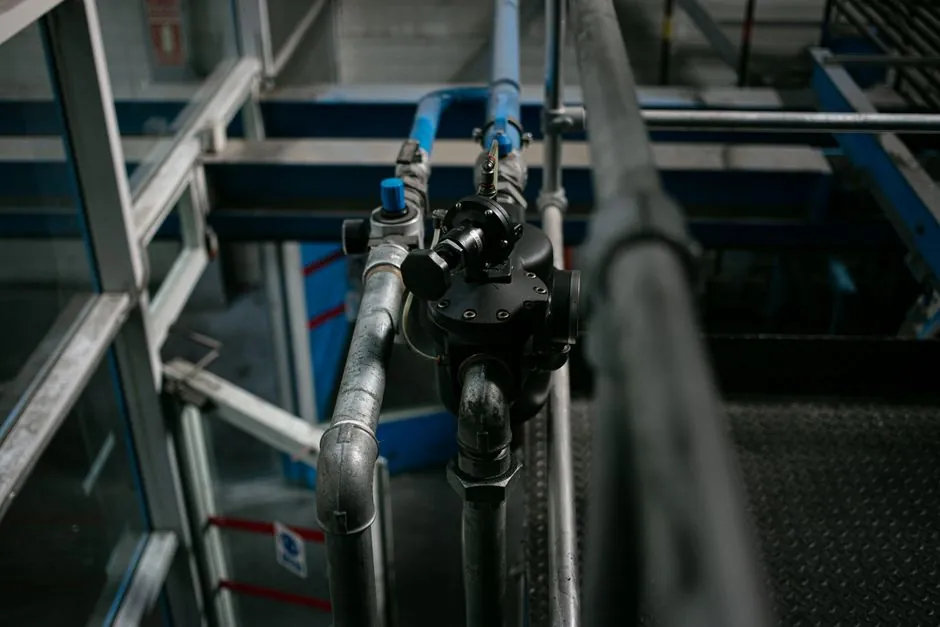
Plumbing installers who need a plasma cutter should match the machine to the heaviest wall they will routinely sever, not the thinnest branch line, because severance thickness is the dimension that pushes duty cycle, breaker size, and air demand at the same time [S1][S4].
Residential and light-commercial plumbing runs through Schedule 40 mild steel (commonly 1/8-1/4 in. wall on 1-4 in. nominal pipe), stainless tube for food/dairy lines, and copper for domestic water; plasma only covers the conductive subset, so a plasma cutter is paired with a mechanical cutter for PVC, PEX, and copper in most plumbing trucks [S3][S6].
Plumbing Material Matrix: Where Plasma Wins and Where It Does Not
Plasma cuts any electrically conductive metal: carbon steel, stainless steel, galvanized steel, and aluminum, with a pilot arc letting the torch start on painted, coated, or rusty pipe without contact [S4][S6]. A pilot arc (non-touch start) is the single most useful feature for plumbing work, because field pipe is rarely clean and shiny; blowback-start pilot arc on machines like the YesWelder CUT-55DS and CUT-65DS eliminates the high-frequency interference that can knock out GFCI on a service panel [S1].
Plasma cannot cut PVC, CPVC, PEX, or any plastic pipe, and it produces HAZ (heat-affected zone) and dross on the cut edge that must be ground off before threading or pressing stainless [S7]. For copper tube in domestic water, a tubing cutter or brazing prep tool is faster, cleaner, and cheaper per joint; reserve the plasma for steel vent stacks, black iron gas lines (where local code allows), and structural steel penetrations through the building envelope [S3][S6]. Galvanized pipe is workable but the zinc coating vaporizes and coats the consumables, so expect to swap nozzles and electrodes 3-5x faster than on bare mild steel [S6].
Voltage, Amperage, and Thickness: A Plumbing-Specific Comparison
Three classes of inverter plasma cutter cover the realistic plumbing workload, sized by input voltage and clean-cut capacity on mild steel [S1]:
Class 1, 110/120V, 20-45A (CUT-45DS class): clean cut up to 1/8 in. at 110V and 5/16 in. at 220V, severance to 5/32 in. / 15/32 in., air at 12 CFM @ 60 PSI, 11 lb. Best fit: residential service trucks cutting 1-2 in. black iron, small structural, and repair work where 110V is the only outlet. Class 2, 110/220V dual, 35-55A (CUT-55DS class): clean cut 5/16 in. at 110V, 1/2 in. at 220V, severance 15/32 in. / 3/4 in., air 5-7 CFM @ 60 PSI, 14.55 lb. Best fit: light-commercial plumbing and HVAC where half the cuts are below 1/4 in. and the rest are 3/8-1/2 in. mains. Class 3, 110/220V, 45-65A (CUT-65DS class): clean cut 5/16 in. / 5/8 in., severance 5/8 in. / ~63/64 in., air 5-7 CFM @ 72 PSI, 21.8 lb. Best fit: commercial and industrial plumbing on 4 in. and larger steel pipe, where severance above 1/2 in. is routine [S1].
For a plumbing-only truck, the typical spec gate is: dual-voltage 110/220V, pilot-arc start, 60% duty cycle at the rated amperage, and a clean-cut rating at least 25% above the heaviest wall you actually cut. Under-spec by 50% and you burn consumables, slow the cut, and never get a square edge for threading [S1][S4].
Duty Cycle, Breaker, and Air: Field Constraints That Bite First
Duty cycle is the percentage of a 10-minute window the machine can deliver rated output at 40 deg C, and the three reference machines all sit at 60% at their max amps; that means 6 minutes cutting, 4 minutes cooling, which is fine for trim work but tight for a plumber ripping 20+ cuts on a 4 in. main [S1].
Breaker sizing on the reference units is 63A, drawn at the input; on a 110V residential panel that exceeds a standard 20A branch, so a dedicated 50-60A feeder or a 220V drop is mandatory for anything beyond the CUT-45DS class [S1]. Air supply is the other silent failure: dirty or wet air destroys consumables and stops the pilot arc from transferring. The spec range across the three classes is 5-12 CFM at 60-72 PSI, and most plumbing compressors sit at 5-6 CFM @ 90 PSI, so a regulator dropping to 60-72 PSI and a coalescing filter are required, not optional [S1][S4]. A standard 13 ft. torch reaches floor work and overhead; for trench or crawlspace cuts, add a 25 ft. lead rather than running extension cords and air hoses in series.
Plasma vs. Mechanical and Oxy-Fuel on the Plumbing Truck
A plumbing truck typically carries three cutting tools because no single technology covers the full pipe list, and the overlap is small. Mechanical rebar cutter-style ratchet cutters handle copper, PEX, PVC, and thin-wall steel cleanly up to about 2 in., with no heat, no dross, and no power need; an oxy-fuel cutter is faster than plasma on carbon steel above 1 in. wall but requires gas cylinders, is prohibited on stainless for food-grade work because of carbon pickup, and is slow to set up on a service call [S7].
Plasma fills the gap from about 1/8 in. to 5/8 in. wall on conductive metals, especially in tight spaces where a torch line and cylinders are impractical. For specialized stone and tile work that sometimes shows up in a plumbing scope (bathroom rough-in, floor penetrations through terrazzo), the concrete groove cutter and marble cutter tool classes are unrelated, dry-cutting tools; do not confuse them with plasma. The decision rule on a real job: oxy-fuel for heavy carbon-steel demolition, plasma for production cutting of 1/8-5/8 in. steel and stainless, mechanical for everything else [S2][S7].
Consumables, Safety, and Failure Modes Specific to Pipe Work
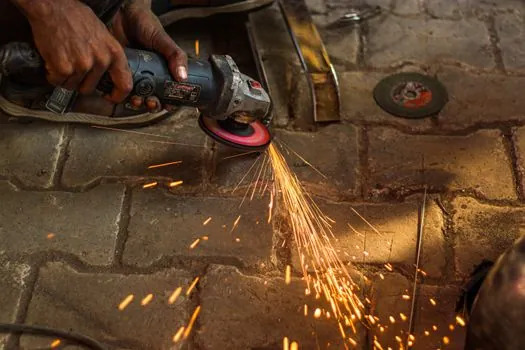
Consumables (electrode, nozzle, swirl ring, shield) are the operating cost, and pipe work is hard on them because cuts are long, often vertical or overhead, and frequently on coated or galvanized stock. Pilot-arc machines extend electrode life by 30-50% versus touch-start on dirty metal, and a non-touch pilot arc also lets the operator stand the torch on a magnetic roller guide like the PT-31 for consistent pipe cuts without human drift [S4].
Common failure modes on a plumbing site: (1) dross and slag on the cut edge because the operator ran below the recommended amperage for the wall thickness, fix by mapping amperage to thickness per the OEM cut chart, not by feel; (2) pilot arc fails to transfer, almost always wet air, fix with a desiccant dryer on the compressor line; (3) electrode wear, swap as a set (electrode + nozzle) because a worn electrode erodes the nozzle even if the nozzle looks fine; (4) cut not square, fix with a pipe-cutting fixture or circle-cutting attachment (P80 class) rather than freehand [S3][S4][S6]. Ventilation is required: plasma on galvanized steel releases zinc oxide fumes, and on stainless it releases hexavalent chromium; both need respiratory protection and airflow per OSHA 1910.252, even on a residential driveway [S3].
Selection Workflow and Trackable Signals
A plumbing contractor selecting a plasma cutter should confirm dual-voltage 110/220V input with a 60% duty cycle at the rated amperage, require a pilot-arc (blowback) start to handle painted or coated metal, and match the air supply to 5-7 CFM at 60-72 PSI for machines in the 35-65A class [S1][S4].
For a related shop-floor perspective on how inverter plasma machines are sized to throughput and tonnage in fabrication environments, the Plasma Cutter Spec Map for Road Maintenance Fleets article applies the same voltage/amperage/duty-cycle gates to a different field workload. Trackable signals for the next 6 months: OSHA enforcement data on zinc-oxide exposure during field cutting of galvanized pipe, and OEM releases of 120V inverter plasma in the 40-55A class with dual-voltage 110/220V input; either would shift the spec map for residential plumbing trucks.