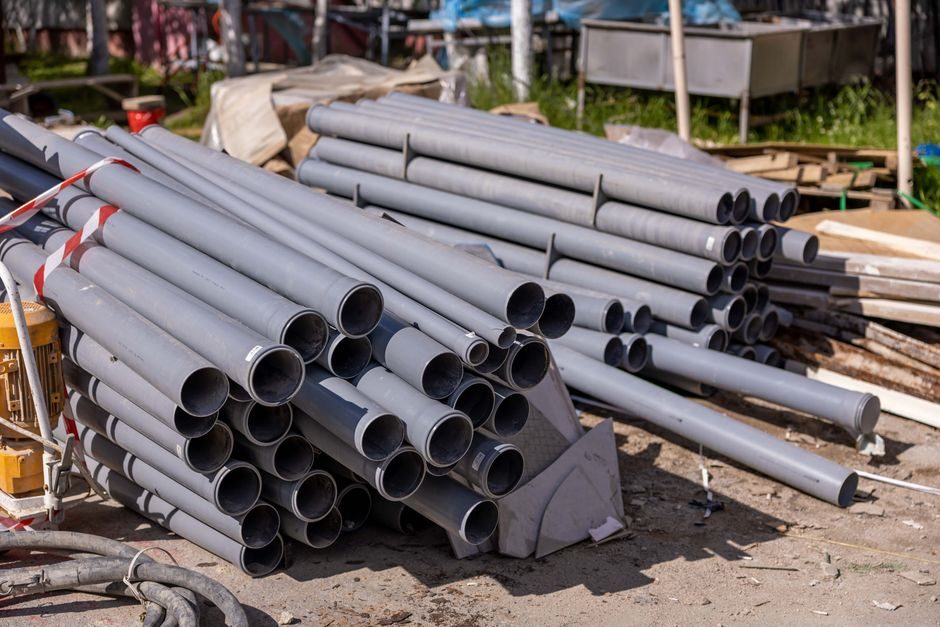
Alibaba's plastic extrusion profile supplier index returned 201 verified factories on 2026-07-01, with the top regional concentration in China and an aggregate 86.0% domestic-market share among listed manufacturers [S7].
The published quote-tier price bands as of 2026-06-04 sit at US$995.00–1,149.00 per ton for UPVC window-and-door profiles from Chinese factory listings, and at US$2.98–4.62 per meter for hydroponic PVC planting-groove profiles exported by Dongguan Riteng Industrial Co. [S4][S9].
Supplier Geography and Cluster Profile
Guangdong dominates the profile-extrusion supplier map: Dongguan Hongzheng Plastic Products Co. (52 staff, founded 2009-06-12) and Dongguan Riteng Industrial Co. (Lang Xia Village, Qiaotou Town) both sit inside the Pearl River Delta manufacturing belt, with 5.0/5 platform ratings and ≤1.69h average inquiry response times [S3][S9].
Outside mainland China, King Wai Group traces its history to Singapore in 1970, where its WALER PVC cable trunking became the first to be used in Singapore HDB public housing in the late 1970s and KOENIG tile trim followed in the early 1990s — a 55-year continuous operating history that few mainland suppliers can match [S8].
Upstream tooling capacity clusters separately in Hubei, where Hubei Tianrui Plastic Mould Co. (No. 66 Hexi Road, Xisaishan District, Huangshi) holds ISO 9001 certification and bills itself as one of the earliest specialised profile-extrusion mould developers in China [S6].
Material Family and Application Boundaries
Standard profile materials across surveyed suppliers cover PVC, UPVC, ABS, PP, PE, PS, PC, PMMA, and silicone co-extrusions, with LED-lighting housings and PC/PMMA lamp covers representing a sizeable sub-segment of Dongguan Hongzheng's catalogue [S3].
For higher-temperature or UV-exposed service, silicone LED strip housings and PMMA lamp covers are commonly quoted over commodity PVC because silicone's heat resistance and ageing resistance extend lumen-maintenance life in sealed fixtures [S3].
Comparing the four dominant material families used by extrusion profile suppliers on 2026 data: PVC scores lowest on heat deflection but lowest on cost; ABS raises impact strength at the cost of UV stability; PC delivers the highest impact-to-weight ratio with optical clarity; PMMA sits between PC and PVC on impact and above PC on UV transmittance — selection is therefore driven by the application, not by the supplier [S1][S3].
For background on the underlying polymer families and how they differ from metals in service, the engineering plastics overview maps the property ranges a buyer should pre-check before issuing an RFQ.
Process Capability and Tolerance Bands
PBS Plastics markets tighter-than-industry tolerances as a function of in-house die and downstream calibration know-how, with both rigid and flexible tubing plus profile capability out of a single US site — useful when a buyer needs a tight ±0.05 mm class tolerance on a 1–3 mm wall profile [S1].
For mould-side capability, Hubei Tianrui runs dedicated profile-extrusion die design, which is the typical path to a stable ±0.03 mm wall-thickness control on a 20–80 mm wide open profile [S6].
Lead-time benchmarks on Made-in-China supplier cards (Dongguan Riteng) show within-15-workdays delivery in both peak and off-season, indicating that Guangdong custom-profile orders can clear production inside a single calendar month for runs under roughly 5 tons [S9].
Pricing Benchmarks and Order Economics
The freshest verified 2026 price points on Made-in-China and Alibaba line up as follows: UPVC window/door profiles at US$995.00–1,149.00 per ton (5-ton MOQ); 40 mm PVC profile-and-aluminium combo at 6 m line-speed; PVC hydroponic groove at US$2.98–4.62 per meter; and 6061 aluminium truck-body extrusions sitting one tier up at US$2,800–3,600 per ton [S4][S5][S9][S10].
MOQ economics matter: a 5-ton UPVC run is a 3- to 4-week die-setup amortisation window for a 50–60 person workshop, while a 500-piece ABS or PVC trim order slips into a sub-2-week cycle on the same line [S4][S9].
The PVC resin feedstock context is covered in PVC Resin 2026: Capacity Crunch, Export Pivot, and the Mercury-Free Squeeze, which explains why UPVC profile factory-gate quotes can swing 10–15% inside a single quarter.
Selection Criteria: Who Fits, Who Does Not
A buyer needing medical-grade tubing with documented biocompatibility should default to PBS Plastics, whose medical production line is configured for stringent medical specifications rather than commodity profile runs [S1].
A buyer needing mass-market UPVC window/door or PVC cable trunking at sub-US$1,200/ton should default to a Guangdong or Jiangsu tier-1 or tier-2 factory with 50+ employees and a published on-time-lead-time card [S3][S7][S9].
A buyer needing Singapore/Southeast-Asia regulatory familiarity (HDB-grade cable trunking, tropical-climate UV stabilisation) should default to King Wai Group, whose 55-year regional track record is a different risk profile from a 5-year-old mainland job shop [S8].
For a broader view of how plastic products compare against palletised and piping formats downstream of the same resin flow, the plastic pallet family reference and the plastic pipe spec primer sit alongside profile extrusion in the same converter ecosystem.
Quality Certification and Failure Modes
ISO 9001 is the baseline quality-management cert visible on Hubei Tianrui's profile-extrusion mould cards, and the same cert is held across most tier-1 Guangdong profile extruders [S6].
Common failure modes buyers should pre-qualify against: (1) UV-driven chalking on white UPVC profiles within 24 months of outdoor service if TiO₂ loading is below 6 phr; (2) warping on wide PC profiles above 80 mm if the cooling-tank length-to-line-speed ratio drops below 1.5 s of residence; (3) colour drift on PMMA lamp covers if the extrusion melt temperature drifts above 245 °C for more than 10 minutes [S3].
Supplier card data on Alibaba reports a 97.1% response rate from the top-ranked custom ABS/UPVC/PP/PE/PVC profile manufacturer, with US$5–10 million in total revenue — a useful proxy for export-readiness when the buyer cannot visit the factory [S7].
Standards, Specs, and What to Put in the RFQ
The 201+ Chinese suppliers on the Alibaba index self-declare UPVC compliance with GB/T 8814 (profile geometry) and PVC-U window/door profile acceptance rules familiar to most EU and Middle-East buyers, though buyers should request the test report rather than rely on the listing copy [S7].
An RFQ for a custom profile extrusion should specify: profile drawing with ±0.05 mm tolerance, material grade (e.g. UPVC calcium-stabilised, PC Lexan 143R-class, PMMA VH-001), required length per piece, MOQ in tons or pieces, lead-time in workdays, and the destination port — these six lines are what differentiate a 24-hour quote from a 5-day quote on Made-in-China [S4][S9].
For buyers comparing plastic profile output to downstream plastic-piping and steel-plastic-composite-pipe applications inside the same plant, the steel-plastic composite pipe spec map and the plastic pipe spec primer provide cross-format context.
Trackable signals over the next 60–90 days: (1) any movement in the UPVC window/door price band at the US$995–1,149/ton floor, which would mark a feedstock shift rather than a competitive shift; (2) new factory audits posted on Made-in-China for Guangdong profile extruders, which historically run 6–10 per quarter and are the cleanest read on capacity additions; (3) any revision to GB/T 8814 acceptance limits, which would reset incoming-inspection scripts at every EU and US buyer's QC desk.