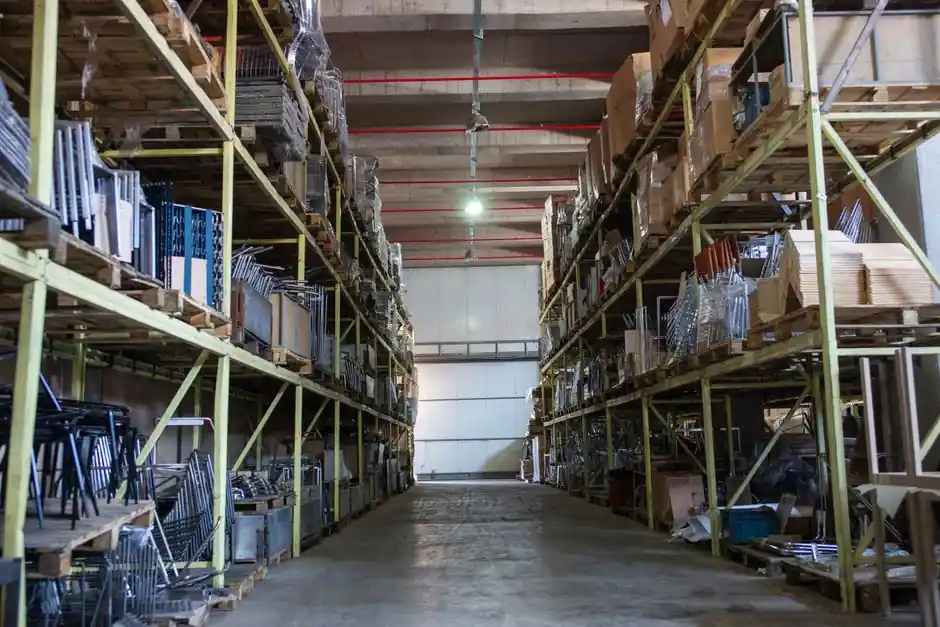
Apparel distribution centers handling 5,000 to 50,000 SKUs per day typically specify injection-molded plastic pallets in the GMA 48"x40" footprint for North American retail flows and the 1200x1000 mm EUR1 footprint for cross-Atlantic and intra-EU programs, with static load ratings from 4,000 to 30,000 lb (1,800 to 13,600 kg) selected to match tote-and-case weights rather than pallet-only mass [S1][S3].
Three load numbers must be specified in writing from the manufacturer: static (stationary, stacked on the floor), dynamic (lifted by forklift or manual pallet jack), and racking (open-span on a pallet rack beam); they are independent ratings and the lowest of the three typically governs apparel DC use [S1].
Material Selection: HDPE, PP, and Recycled Content
HDPE is the most widely specified polymer for apparel distribution pallets because it tolerates the constant forklift impact, ambient warehouse temperature swings, and the moisture exposure of receiving-dock staging without cracking or warping, and it supports smooth, easy-to-sanitize surfaces required for garment and footwear operations that also handle returns [S4].
Polypropylene (PP) pallets are stiffer than HDPE at the same wall thickness and are preferred where racks impose long-term creep loads, automated conveyors, or AS/RS interfaces demand tight dimensional tolerance, but PP loses impact strength below roughly 0 to -20 degrees C, which matters only in frozen-storage zones rather than typical ambient apparel DCs [S4].
Recycled-content pallets are cost-effective for closed-loop internal movement, one-way export shipments, and lighter-duty storage, but the research is explicit that high-recycled-content units are usually not the first choice for direct product-contact or hygiene-controlled environments, which keeps them out of primary apparel pick faces [S4][S5].
Footprint and Stacking Geometry for Apparel DC Racking
The GMA 48"x40" (1219x1016 mm) pallet remains the standard footprint in North American grocery, retail, and apparel distribution, and 30"x42" units are used for direct-to-store replenishment of hanging garments and folded case packs; in Europe the EUR1 1200x1000 mm footprint is the equivalent baseline [S1].
For apparel operations, the deck design choice matters as much as the footprint: a solid top deck protects folded apparel, hangtag bar kits, and polybagged footwear from forklift-tine punctures, while a vented or open deck is lighter and drains moisture from incoming outdoor pallet loads, but it allows small polybagged items to fall through and should be paired with a slip sheet or cap when handling [S3][S4].
Stackable and nestable geometries each carry different truck-fill math: stackable (block or picture-frame) pallets cube out at roughly the same volume as the load and are paired with rackable pallet rack systems, while nestable (nine-leg or cruciform) pallets nest when empty and return 4-to-1 or better on trailer cube, which directly reduces dedicated apparel shuttle fleet size [S1][S3].
Load Rating Math for Folded Apparel, Hanging Garments, and Footwear Cases

For a typical 48"x40" GMA pallet of folded apparel in corrugated cases, dynamic load ratings of 2,500 to 4,000 lb (1,130 to 1,815 kg) are common and match the per-pallet weight of 20 to 30 cases; lighter hangtags-only or accessories-only pallets often need only 1,500 to 2,000 lb (680 to 910 kg) dynamic ratings, and over-specifying the dynamic rating wastes resin and cost [S1][S3].
Racking ratings must be specified separately because open-beam pallet rack spans transfer the entire load to the pallet's top deck and stringers rather than the floor; for a standard GMA rackable apparel pallet, racking ratings of 2,000 to 2,800 lb (910 to 1,270 kg) are typical, and unsupported rack spans over 72 inches generally require a heavier reinforced-top-deck design [S1].
Static ratings, often 4 to 6 times the dynamic rating on the same pallet, are only relevant for block-stacked floor storage of full pallet loads in reserve storage; apparel DC operators who stack four or more high should verify the static rating against the bottom pallet, not the average [S1].
Hygiene, Static, and RFID Considerations for Apparel Floors
Injection-molded plastic pallets have a non-porous, sealed surface that resists bacteria, mold, and pest harborage, which matters in apparel returns processing where the same pallet may carry garments that left the DC months earlier; structural foam pallets are explicitly called out as more brittle because of internal air pockets and a higher failure rate under repeated forklift impact [S1].
For DC zones with ESD-sensitive electronics attached to garments (RFID tags, smart hangtags, in-store beacons), anti-static or conductive PP formulations are available at modest premium and are specified by surface resistivity rather than by a generic "ESD" label, with values typically in the 10^6 to 10^9 ohm range for static-dissipative behavior; this is a separate decision from food-grade resin and is governed by application, not by [S5] [S4].
For closed-loop apparel rental, subscription, and re-commerce flows, RFID tag mounting and color coding are typically specified at the order, not the SKU, so a manufacturer offering custom resin color, in-mold logo plates, and tag-embedding pockets reduces retrofit cost; the [S2] manufacturer-selection criteria explicitly call out custom solution capabilities and traceability as engineering inputs buyers should require in writing [S2].
Manufacturer Vetting and Quality System Checklist

Buyers should require ISO 9001:2015 certification from any plastic pallet manufacturer under serious consideration, along with documented lot traceability and a published resin spec; the [S2] quality-selection guide names commitment to quality, custom capability, safety focus, environmental responsibility, and dedicated engineering as the five traits a serious supplier must show [S2].
For apparel programs, the [S2] guidance on in-house engineering teams maps directly to racking interface, hangtag-bar integration, and conveyor-compatibility fixtures, while the [S2] note on ergonomic handholes reduces manual handling injuries in pick-face restocking where employees handle empty pallets dozens of times per shift [S2].
Environmental responsibility is not marketing fluff in pallet buying: the [S2] source describes a buy-back and in-house recycling program where roughly half of incoming sheeting is composed of reused material, and apparel programs with public sustainability commitments (Higg Index, retailer EPR rules) can credit closed-loop recycled-content pallets against Scope 3 packaging reporting, provided the recycled share is documented per lot [S2].
Comparison: Pallet Types Against Four Apparel DC Decision Criteria
Apparel DC pallet buyers can line the main options against cost, durability, hygiene, and racking suitability using the following comparison: injection-molded HDPE costs more upfront but is durable, hygienic, and rackable; injection-molded PP is stiffer and dimensionally stable for automation but less cold-tolerant; structural foam is lighter but brittle under repeated impact, which is a poor fit for high-velocity DC loops; thermoformed and export pallets are cheap for one-way shipments but not designed for rack loading or multi-trip loops [S1][S3][S4].
On cost-per-trip, injection-molded HDPE typically beats structural foam over 50+ trips because structural foam's brittleness drives higher replacement frequency; on hygiene, only injection-molded HDPE and PP carry the smooth, sealed surface that supports wash-down protocols; on racking, rackable injection-molded designs with reinforced top decks are the only options the [S1] source explicitly associates with supported racking systems [S1].
For a standard 48"x40" rackable apparel pallet, expect a 1,500 to 2,800 lb (680 to 1,270 kg) racking rating, 2,500 to 4,000 lb (1,130 to 1,815 kg) dynamic rating, and 15,000 to 30,000 lb (6,800 to 13,600 kg) static rating; the wide ranges reflect the gap between light-duty nine-leg nesters and heavy-duty block pallets, and buyers should pin the exact number on the data sheet, not on a marketing claim [S1][S3].
Limitations and Failure Modes Specific to Apparel DC Loops

Three failure modes hit apparel DC pallets disproportionately: forklift-tine puncture on the top deck, which is mitigated by specifying a solid top deck rather than an open one; UV embrittlement of HDPE in outdoor receiving yards, which is mitigated by carbon-black pigmented or UV-stabilized resin grades; and rack-impact damage from offset loading, which is mitigated by requiring racking ratings rather than only dynamic ratings [S1][S4].
The 2023 baseline global plastic pallet market was USD 7.5 billion, projected to USD 12.8 billion by 2033 at a 5.5% CAGR, which means supply is expanding but resin price volatility, particularly for virgin HDPE and PP, will continue to swing per-unit cost in either direction; apparel programs with 12- to 24-month fixed pricing should request resin-index clauses or capped escalators from the manufacturer [S6].
For apparel DCs running pallet stacker and electric pallet truck fleets, dimensional tolerance is as important as load rating: ISO-recognized pallets should hold +/- 3 mm on the footprint and +/- 5 mm on height, and buyers should request a Certificate of Compliance (COC) per lot, not a generic brochure figure [S1][S3].
Track these three signals over the next two quarters: ISO 9001 audit results and resin traceability statements from the pallet manufacturer; retailer-driven Scope 3 packaging reporting rules that credit recycled-content pallets; and any shift of the 5.5% global plastic pallet CAGR as apparel rental and re-commerce volumes move more SKUs into closed-loop pallet pools [S2][S6].
See also our earlier report, Sputtering Target Selection for Energy Equipment: Spec-First Map.