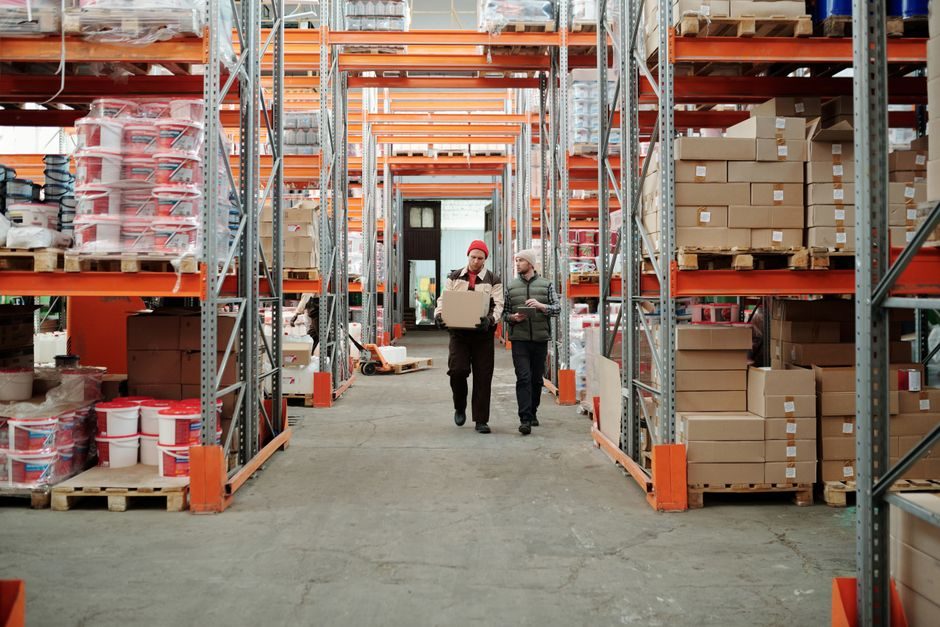
Plastic pallets are not one product. They split into at least four structural families — nestable open-deck, rackable, stackable column-foot, and one-way/export — with static load ratings spanning roughly 700 kg (racking) to 3,000 kg (static) on footprints that anchor to ISO 6780 interchange standards (1,140×1,140 mm) and the Euro pallet grid (1,200×1,000 mm) [S1][S3].
Buyers should pick by structural geometry first, then by polymer (HDPE vs PP vs recycled-PO), then by deck type (open vs solid) and RFID/traceability option. Misclassifying a nestable light-duty pallet as rackable is the single most common spec error in pallet procurement [S1][S3].
Structural Family Map: Nestable, Rackable, Stackable, One-Way
The four dominant geometries map to four use cases. Nestable open-deck pallets, like the Cabka Nest C5.2 (OD-9F), use 9 feet to save 1:1.5 nesting ratio and ship in 1,140×1,1140 mm ISO sizing, rated 1,500 kg dynamic / 3,000 kg static, with optional RFID tag integration for closed-loop pooling [S3]. Rackable pallets, typified by the Plasgad 3E RACK series (1,200×1,000 mm, 900/1,800 kg), use reinforced top decks and bottom runners to support up to 700 kg on cross-directional racking beams without sagging [S1].
Stackable column-foot pallets add a sleeve or fixed collar to stack loaded units vertically — used in closed-loop automotive and pharmaceutical loops. One-way/export pallets are the cheapest tier: thin-wall HDPE, often made from 100% recycled feedstock, designed for a single freight movement and ISPM-15 exemption for wood-fumigation compliance [S4][S5]. Plastic pallet box systems, like the KTP 2000 SmartFix series (length 800–1,500 mm, height 710–990 mm), sit adjacent to these families but function as foldable bulk containers rather than flat-deck unit-load bases [S2].
Load Class Boundaries: Static, Dynamic, Racking
Three load numbers matter, and they are not interchangeable. Static load is the maximum compressive load on a stationary pallet (often 3,000–5,000 kg on industrial units). Dynamic load is the forklift-handled moving load (typically 1,000–1,500 kg for HDPE nestable designs; 1,500 kg for the Cabka Nest C5.2 OD-9F) [S3]. Racking load is the edge-supported beam-rack load — the lowest of the three and the most commonly misquoted; the Plasgad 3E RACK series specifies 700 kg racking despite a 1,800 kg static rating, a 60% de-rate that surprises first-time buyers [S1].
Procurement specs should always require all three numbers separately, plus a 4-way forklift entry confirmation. A pallet rated 1,500 kg dynamic but unspecified on racking should never be ordered for selective-pallet racking without a written racking rating from the manufacturer.
Material and Resin Selection: HDPE, PP, Recycled Feedstock

Virgin HDPE dominates rackable and export pallets for its low-temperature toughness and chemical resistance. PP (polypropylene) is specified where higher stiffness at warm temperatures is needed — food, pharmaceutical, and hot-fill lines often default to PP because HDPE softens above ~50 °C while PP holds geometry past 90 °C. The Plasgad 3E 805 series is offered in both HDPE recycled and PP virgin grades to give buyers the resin/sustainability trade-off directly [S1].
Recycled-content pallets are now mainstream: Go Plastic Pallets states 96% of its UK inventory is made from 100% recycled household and business plastic waste, and Cabka's Nest line is explicitly built from recycled PO for re-melt at end of life [S3][S4]. For FDA-regulated or pharmaceutical lines, virgin PP or HDPE with documented lot traceability is still the default.
Footprint Standards: Euro 1,200×1,000 vs ISO 1,140×1,140
Two footprint standards dominate global pooling. The European Euro pallet at 1,200×1,000 mm (47.24 × 39 in) underpins Plasgad's PG1090, PG850, and 3E RACK series and is the default for intra-EU distribution [S1]. The ISO 6780 interchange footprint of 1,140×1,140 mm (44.88 × 45 in) underpins Cabka's entire Nest line and the broader North American sea-freight pool, optimised for ISO container floor space [S3].
Half-pallet (800×600 mm) and quarter-pallet (600×400 mm) footprints appear in the SmartFix pallet-box range rather than flat-deck pallets, and are sized to subdivide the Euro footprint by exact multiples for retail and last-mile delivery [S2]. A 1,200×800 mm footprint is the most common custom size for UK retail distribution but is not a recognised ISO or EN standard.
Deck Type and Fork Entry: Open vs Solid, 4-Way vs 2-Way
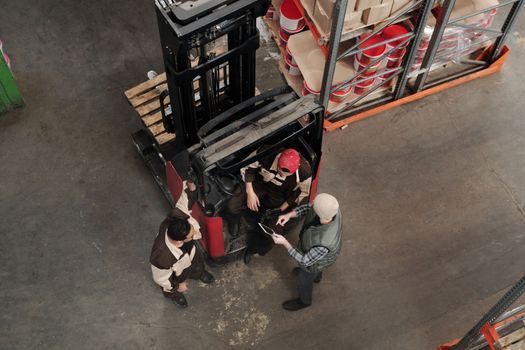
Open-deck pallets (OD) shed water, dirt, and wash-down chemicals — required in food processing, pharmaceutical, and meat/poultry plants. Solid-deck pallets (CD) contain spills and are preferred for bagged goods, small-parts distribution, and any line where contamination from the deck must be blocked. The Cabka OD-9F and CD-9F suffixes in the Nest C5.2 family show both deck options on the same 1,140×1,140 mm footprint with identical load ratings [S3].
4-way forklift entry is the de-facto industry default; 2-way entry is reserved for very low-cost export pallets where block-stacking saves mould cost. The Plasgad 3E RACK series specifies 4-way entry plus a smooth bottom surface for automated conveyor and AGV compatibility [S1].
Service Life and Trip Counts: The Sustainability Claim
Plastic pallet vendors typically claim 250–1,000 trips per pallet versus 8–10 trips for a typical wood stringer pallet, per Plastic Pallet Pros' published US marketing data [S5]. Independent pooling data from European FMCG lines backs the upper end of this range for closed-loop HDPE rackable pallets. One-way export pallets are designed for a single freight movement; their cost-per-trip economics only work when ISPM-15 fumigation, pallet repair labour, and wood disposal are factored in [S4][S5].
Lifetime sustainability is not automatic: HDPE and PP both photodegrade under UV, so outdoor storage cuts service life by 40–60% unless the resin is UV-stabilised. Buyers in tropical or high-UV sites should request UV-20 or equivalent masterbatch certification.
Selection Checklist for Procurement Engineers
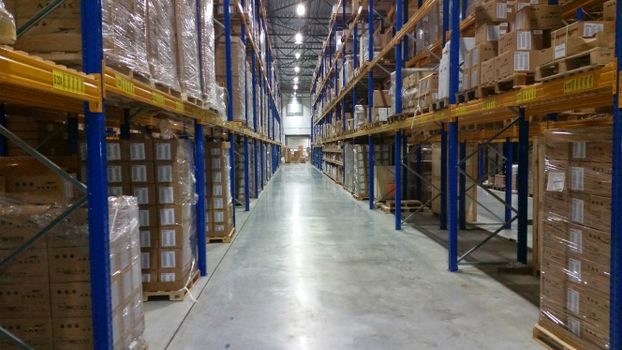
Step one: pick the structural family from the four above against your racking vs stacking vs one-way need. Step two: match resin to temperature and wash-down chemistry — HDPE for cold-chain and chemical resistance, PP for warm-temperature stiffness, recycled PO for non-food closed loops [S1][S3]. Step three: confirm all three load numbers (static, dynamic, racking) in writing; reject any quote that publishes only one. Step four: verify deck type and forklift entry, and request RFID/traceability if the pool is closed-loop. For an overview of how plastic pallets integrate into broader pallet rack systems, the deck-foot and runner geometry must be matched to the beam profile, not the other way round.
Trackable signals for the next procurement cycle: ISPM-15 enforcement tightening at EU and US ports (favours plastic export pallets), RFID-tagged pooled pallets crossing the 20% installed-base threshold in European retail, and rising recycled-PO content requirements in FMCG vendor scorecards. For materials-handling buyers also selecting a manual pallet jack to move these loads, fork-tip width and pallet stringer spacing must be cross-checked against the chosen pallet family before order release. Watch also whether engineering plastic recycled-content mandates extend from automotive into pallet moulding in late 2026.
See also our earlier report, TIG Welding Machine Types, Classes, and Selection Boundaries.