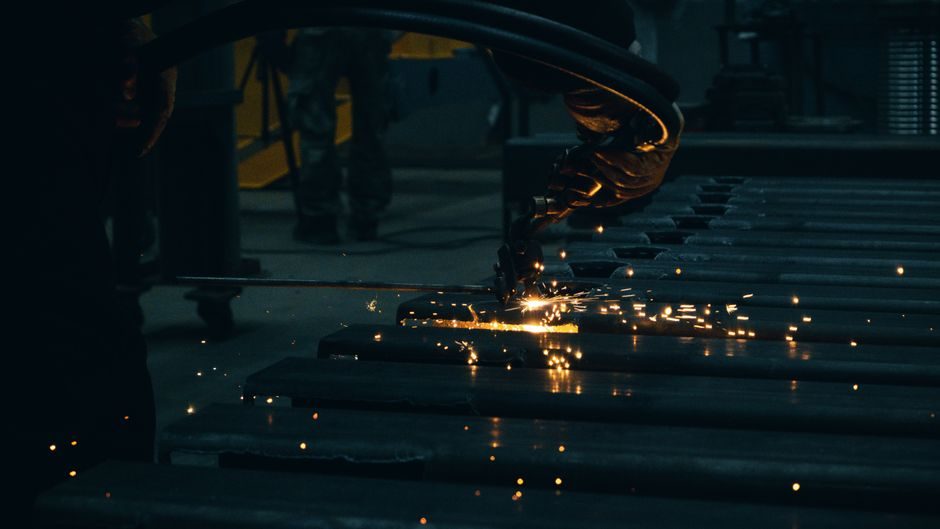
TIG (GTAW) welding machines split into three orthogonal classification axes: output current mode (DC, AC/DC, pulsed), automation level (manual, semi-automatic, fully automatic seam/orbital), and the inverter-vs-transformer power topology — and the right pick is set by base metal, thickness range, and joint geometry, not by brand preference [S3][S5].
The category includes heavy industrial seam-welding platforms such as the Schnelldorfer ELENA ONE automatic longitudinal TIG seam welder (welding lengths 600 / 1100 / 1300 mm) [S1], mid-range portable AC/DC inverter sets, and entry-level DC-only transformer/rectifier units commonly tagged as TIG-160S / TIG-200S / TIG-250S on export listings [S2][S4].
Current-Mode Classification: DC vs AC/DC vs Pulsed TIG
DC-only TIG is the baseline class — constant-polarity direct current for steel, stainless, copper, and most non-ferrous metals except aluminum and magnesium; this is the cheapest mode and the default export listing on budget OEM catalogs [S4].
AC/DC TIG machines add an alternating-current waveform required to clean the refractory oxide layer on aluminum and magnesium workpieces; modern AC/DC inverter sets typically expose adjustable AC frequency (commonly 50–250 Hz) and AC balance (electrode-negative ratio) to dial cleaning action versus penetration depth [S5].
Pulsed TIG overlays a low-frequency current envelope (pulses-per-second typically 0.5–500 Hz, with adjustable peak and background current) on top of DC or AC; pulsed mode reduces heat input on thin sheet, stabilizes the arc on stainless, and is the practical choice for cosmetic TIG on 0.5–2 mm stainless and for positional work [S5].
Automation Class: Manual, Semi-Automatic, and Automatic Seam / Orbital
Manual TIG stations dominate the entry-level and job-shop tier; the operator controls torch travel and filler-rod feed by hand, and the power source exposes foot-pedal or finger-tip amperage control — the format sold as portable TIG-160S / 200S / 250S [S4].
Semi-automatic TIG adds a cold-wire or hot-wire feeder plus a traversing carriage but keeps the operator setting arc length and travel start/stop; common in fabrication of small stainless vessels and lab equipment [S3].
Fully automatic TIG seam and orbital machines close the loop on travel speed, arc length, gas pre-flow/post-flow, and wire feed — exemplified by the Schnelldorfer ELENA ONE longitudinal seam welder, built for thin-section sheet metal and tube production in three welding-length variants (600 / 1100 / 1300 mm) and supported by the vendor's 25-year background in longitudinal seam welding [S1]. For tube/girth work, orbital TIG rotates the torch around a fixed pipe and is the dominant specification for sanitary stainless tube welding in pharma and food-grade piping.
Power-Topology Class: Inverter vs Transformer/Rectifier
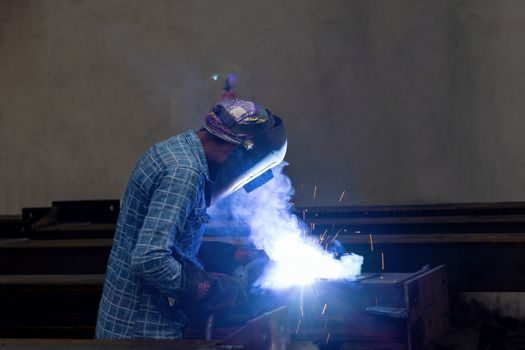
Transformer/rectifier (line-frequency) TIG power sources are heavy, robust, and tolerant of harsh shop-floor input power — they are the classic format behind long-running 160–250 A "industrial" TIG designations and dominate repair and shipyard use [S4].
Inverter TIG sources switch the DC bus at high frequency (typically 20–100 kHz), which slashes transformer mass (a 200 A inverter typically weighs 8–15 kg versus 60–100 kg for an equivalent transformer unit), enables built-in pulse and AC waveform shaping, and supports single-phase 110/220 V input — the format used across modern AC/DC and pulse-capable sets from Chinese OEMs such as Riling and the Sanqiao catalog [S3][S5].
Hybrid multi-process inverters bundle MMA (stick), TIG, MIG/MAG, and plasma into one cabinet; the trade-off is shared duty cycle and shared wear items, which a single-process dedicated unit avoids [S3].
Selection Criteria: Base Metal, Thickness, Joint, and Duty Cycle
For steel and stainless under 3 mm, a DC pulsed inverter is the minimum viable spec; above 3 mm or on aluminum, step up to AC/DC with pulse [S5].
For thin-wall stainless tube (0.5–2 mm wall) in sanitary service, orbital or automatic longitudinal seam TIG is the production specification — manual TIG on thin wall is technically possible but rate-limiting; the ELENA ONE family targets this exact segment at 600 / 1100 / 1300 mm weld lengths [S1].
For repair, fieldwork, and 110 V single-phase sites, prefer a portable inverter (TIG-160S / 200S class, typically 5–10 kg) over a transformer unit; for continuous three-shift production, a transformer/rectifier or heavy inverter at 60% duty cycle or higher is the more durable choice [S3][S4].
For thin sheet aluminum, AC frequency and AC balance are the two parameters that decide weld quality — a machine without both adjustable is not fit for purpose; budget DC-only sets will not strike and clean an aluminum arc no matter how high the amperage [S5].
Process and Application Boundaries: When TIG Is the Wrong Choice
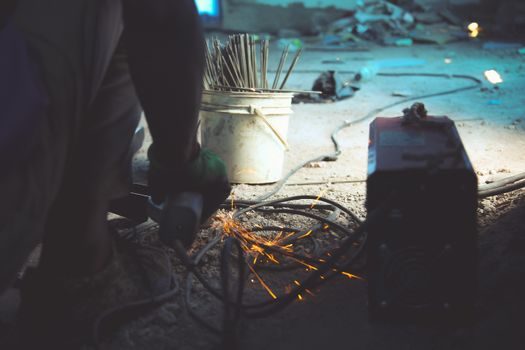
TIG is the right process for clean, cosmetic, corrosion-resistant welds on thin material and on reactive metals — but it is the wrong process for thick-plate structural work, for high-deposition production welding, and for dirty or rusty steel where MIG/MAG or flux-cored arc is faster and more tolerant. [S1]
Duty cycle, gas consumption (argon flow typically 7–15 L/min through a #5–#12 cup), and tungsten-electrode preparation time are the hidden cost drivers behind a TIG station versus a MIG station of equivalent amperage — for high-volume carbon-steel fabrication the TCO gap is large enough to swing the decision toward MIG/MAG with pulsed transfer.
Common operator-side failure modes are lack of post-flow (causing tungsten oxidation and rapid electrode consumption), incorrect AC balance on aluminum (either dirty weld or excessive tungsten erosion), and over-reliance on foot-pedal control on heavy plate where upslope/downslope ramps would give a more repeatable result.
Market Snapshot, Sourcing Signals, and Standards Anchors
On export portals, ARC TIG welding machines cluster in a wide factory-direct price band — current Made-in-China listings show ARC TIG models around US $41,000–42,500 per piece at 1-piece MOQ from suppliers such as Shandong Farin, with separate lower-cost portable inverter SKUs in the TIG-160/200/250 class [S2][S4].
Vendor product-line signals from Chinese welding OEMs Riling and Sanqiao in mid-2026 show parallel coverage of MIG, MMA/stick, TIG, and plasma categories from the same factory floor, indicating that multi-process inverter platforms have become the default new-product format over single-process transformer units [S3][S5].
For sourcing, the TIG welder specification should always be read against three numbers: output amperage class, duty cycle at rated output, and AC balance/frequency range for aluminum — and against a comparison with MIG/MAG inverter alternatives and plasma cutting platforms when the use-case is mixed fabrication rather than pure TIG. Process-wide TCO and selection trade-offs for arc welders are detailed in Arc Welding Machine TCO: Cost Drivers, Five-Year Stack, and Selection Trade-Offs, while the broader process map across MMA, MIG, TIG, and plasma sits in Arc Welding Machine Types: Process Map, Spec Boundaries, and Selection Criteria.
Trackable signals for the rest of 2026: more inverter AC/DC pulse units entering the sub-15 kg portable class, continued migration from transformer/rectifier to inverter on the shop floor, and incremental AC waveform refinement (wider frequency range, software-defined balance) on entry-level sets that previously had fixed AC balance [S3][S5].