A wastewater plug valve is qualified less by a single certificate and more by a stack of matching documents covering design standard, material class, pressure rating, seat leakage test, and lining or coating compatibility with the carried fluid [S1][S2].
The most common audit gap on a water-plant order is a vendor quoting an oilfield API 6A plug valve (1"-3", 6000-15000 PSI, material class AA/BB/DD/EE, PSL1-PSL3G) against a sewage or treated-effluent duty where the actual operating pressure is often ANSI 150 or PN10-PN16 [S2][S8].
Match Design Standard to Fluid, Not to Brand
Plug valves for upstream oil and gas follow API SPEC 6A with a clearly defined rated working pressure ladder of 6000, 10000 and 15000 PSI at nominal bore 1", 2" and 3", and temperature class letters K, L, P, R, S, T, U, V that map to specific minimum and maximum metal temperatures [S2]. Jereh's oilfield flowline plug valve family extends the ceiling to 138.0 MPa / 20000 PSI at 4" bore, with temperature rating -46 °C to 121 °C (LU) or -29 °C to 121 °C (PU) for sour-gas service per NACE-related material rules [S3]. These ratings are 20-100x higher than a typical municipal wastewater line, so quoting an API 6A valve into a water-plant RFQ is a red flag worth flagging on the first document review [S1][S2].
For wastewater service, the correct reference family is generally ASME B16.34 (valve design and testing) combined with a seat-leakage test per API 598 or EN 12266-1, and lining/coating suitability per the chemical resistance of the carried stream [S1]. Sleeve-lined plug valves (PTFE or PFA liner) dominate the 50-piece MOQ wholesale tier on Made-in-China, with landed prices around US$ 14-15 per piece for soft-seated general service and US$ 88 per piece for higher-class lined units [S4]. A plug valve ordered for chlorinated effluent, ferric chloride dosing or digester gas must carry a lining compatibility statement, not just a "WCB" body casting mark [S4][S9].
Material Class, Body Casting and Lining Stack
Body and trim are the second tier of the audit. On the wholesale market, the common cast body options for plug valves are WCB (carbon steel), CF8 and CF8M (304 and 316 stainless), with full-bore stainless variants aimed at higher-temperature and corrosive services [S8][S9]. API 6A oilfield valves add four material classes: AA (general service, no sour), BB (general service with limited sour exposure), DD (sour service, controlled environment) and EE (sour service, uncontrolled environment), each demanding a defined hardness ceiling and a NACE MR0175-compliant chemistry certificate [S2].
For municipal or industrial wastewater, buyers should require an explicit material test certificate (MTC) to EN 10204 3.1 for the body casting and a separate certificate for the plug and stem, especially when the fluid is digester gas (H2S-bearing) or trade effluent with hydrocarbons [S1]. Where a soft sleeve is fitted, the audit must include the sleeve material grade (virgin PTFE, glass-filled PTFE, PFA), the liner thickness in mm, and the upper temperature limit of that polymer, since PTFE softens above roughly 200 °C even though the metal body might be rated higher [S4]. Coating evidence on the plug surface, such as the nickel-based or HVOF coating commonly used on flowline plug valves for abrasive slurry, is another line item that the supplier should quote as a separate option with a defined surface hardness value [S3].
Pressure Class, End Connection and Test Pressure
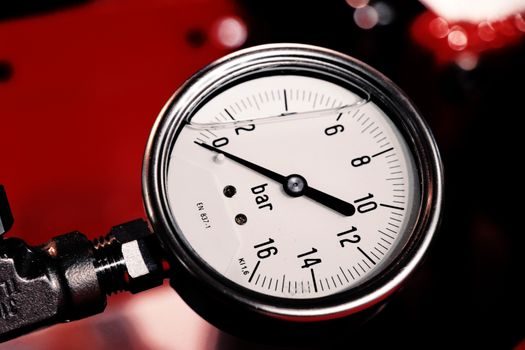
Pressure class on a plug valve for water service is normally ANSI Class 150 or Class 300 flanged, or PN10-PN16 for metric projects, and the hydrostatic shell test must be at 1.5x the cold working pressure with the seat test at 1.1x per API 598 or EN 12266-1 [S1][S8]. A frequent checklist error is accepting a vendor's "tested to 1.5x" statement without the matching test medium (water vs. air) and the test duration in minutes; both are mandatory entries on the inspection release note [S1].
End connections on full-metal-seated stainless plug valves aimed at high-temperature service include raised-face (RF) flanges, RTJ ring-type joints, and threaded or weld ends for sizes up to 4" [S8]. For a wastewater skidded package, buyers should also confirm that the plug valve line-frequency furnace heat-treatment documentation or any induction-hardening record for the plug face is available, because hard-facing thickness and dilution rate are common failure points on abrasive sludge service [S3][S5].
Sleeve vs Metal Seat: Selection Criteria Side-by-Side
Four decision criteria separate the three plug-valve variants most often quoted for wastewater lines, and a project engineer should be able to fill this table in the RFQ stage before the first quotation comes back [S1][S4][S8]:
Variant / Body material / Seat type / Typical pressure / Indicative price (FOB China, 2026 mid-year). Sleeve-lined soft-seated: WCB or CF8, PTFE/PFA sleeve, PN10-PN16, US$ 14-15/pc MOQ 1 pc to US$ 88/pc MOQ 50 pc [S4]. Full-bore stainless metal-seated: CF8/CF8M, metal-to-metal, ANSI 150-300, US$ 20-200/pc MOQ 1 pc, targeted at high-temp abrasive [S8][S9]. Oilfield API 6A high-pressure: alloy steel forged, metal seat, 6000-15000 PSI (extendable to 20000 PSI), API 6A PSL1-PSL3G, used only on digester gas compression or sludge-cake pumping [S2][S3]. A correctly chosen sleeve-lined plug valve typically costs less than a tenth of an oilfield API 6A unit, and that gap is the single biggest audit lever in a wastewater project [S4][S2].
Actuation, Maintenance and Inline Repair Evidence
Actuation selection should match the torque class of the valve, not the pipeline pressure. Oilfield flowline plug valves are available in manual, hydraulic, electric, handwheel, and combined manual+hydraulic versions, with a "low open/close torque" design enabled by the SPM (special plug machining) geometry and the surface coating on the plug [S3]. For a wastewater line that may sit idle for months between flushes, a self-lubricating PTFE sleeve or a non-lubricated plug with a defined torque value in Nm is usually preferred over a lubricated plug, because the latter requires a routine sealant injection schedule that operators often skip [S1][S3].
Inline repair evidence is a checklist item that many buyers forget: a reputable plug-valve supplier should be able to ship a special tool kit and a repair kit with the valve, so the seat and seal can be replaced without breaking the line [S3]. On a wastewater skidded package that is also built around an automatic molding line or a conveyor sorting line, the ability to do this in-place cuts the maintenance shutdown from days to hours, and should be priced as a line item rather than buried in the spare-parts list [S3][S1].
Common Failure Points Audit Catches
Three failure modes appear repeatedly in wastewater plug-valve service and are detectable from documentation alone before any fluid touches the body [S1][S3][S4].
1. Sleeve cold-flow under sustained heat: a PTFE sleeve rated to roughly 200 °C loses torque stability above 150 °C in continuous service, and digester gas compression or hot sludge lines can reach that range [S4].
2. Body casting porosity: cast WCB bodies with no radiographic or magnetic-particle evidence of weld repair on pressure-retaining walls fail the hydrostatic test at the first thermal cycle; EN 10204 3.1 MTC plus a vendor photograph of the test setup is the minimum evidence [S1].
3. Plug face coating wear in abrasive service: flowline plug valves reach 20000 PSI service because the plug is HVOF-coated or chrome-plated; on a low-pressure wastewater line the same coating is over-spec and the project can save cost by deleting it, but only after confirming the slurry solids content is below the supplier's stated limit [S3][S8].
How to Verify a Supplier's Certificate Is Real and In-Scope
A certificate of conformance with no MTC, no test-pressure record, and no third-party stamp should be treated as a marketing document, not a deliverable [S1]. The audit sequence to confirm scope is: (a) check the certificate number against the issuing body's public register where the mark scheme allows (e.g., CE under PED 2014/68/EU, API monogram, WRAS for potable water contact parts); (b) cross-check the stated standard and revision against the body or trim material grade; (c) confirm the pressure-temperature envelope on the certificate matches the line's design case with margin [S1][S2].
For a valve with a heat treatment furnace heat-treatment record, the auditor should also see the heat-treatment lot number stamped on the body and the corresponding furnace chart, because a missing chart is a common short-cut on cast valves [S1]. Wholesale platforms that show a tiered "Gold / Diamond Audited Supplier" badge on the listing give a partial signal, but the audit is a documentary one and the tier does not replace a 3.1 MTC [S4][S6].
The two signals to track over the next quarter are: any revision of the lining compatibility lists for PTFE and PFA at >40% H2S digester gas exposure, and any tightening of the API 6A sour-service material class definitions that would force wastewater projects to switch from WCB to a fully austenitic stainless body. Both are routine to flag in a quarterly supplier review [S2][S3].
Related analysis: Inline Pipeline Pump RFQ: Spec Map for Cooling Water Loops.