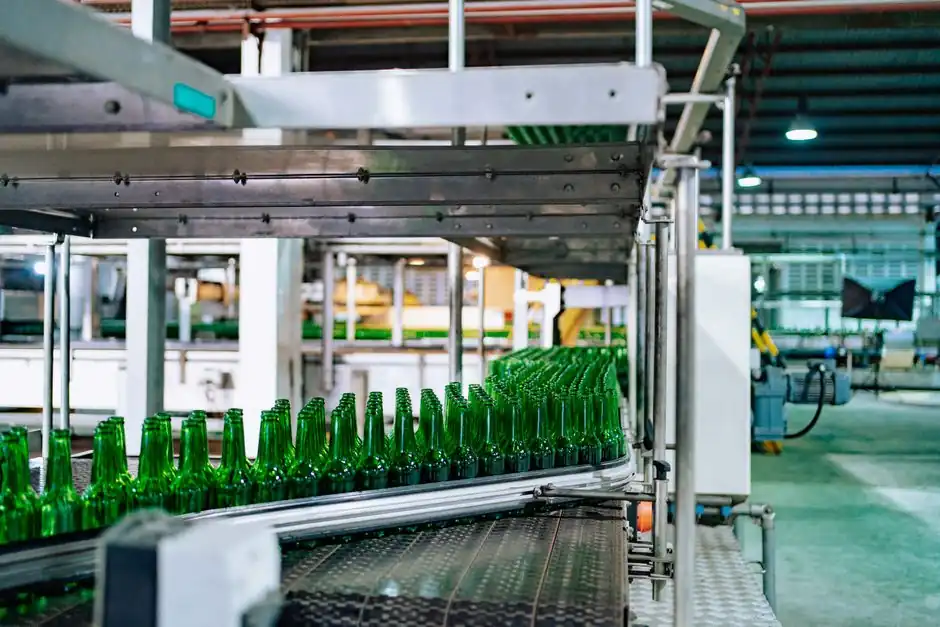
Food and beverage plug-valve selection depends on whether the valve contacts product or handles utilities, with hygienic designs required for product-contact service [S1].
Product-contact duties require cleanable wetted surfaces and suitable sanitary construction, while utility applications can use broader valve designs without the same cleanability requirement [S1][S2].
Separate product-contact valves from utility service
Food and beverage valve selection starts with 2 service classes: hygienic or process valves, which contact the product and require high cleanability, and utility valves, which serve auxiliary systems and do not require product-level cleanability [S1]. A product-contact line can include raw ingredients, water, syrups, beverages, acids, fats and cleaning chemicals, so each valve should be assessed against the specific chemistry and cleaning cycle.
Rotary plug valves are used in food and beverage utilities such as heating and cooling, and FDA-approved non-metallic parts permit direct food and beverage contact in suitable designs [S2]. The plug valve category is therefore credible for both utility isolation and controlled sanitary applications, but product contact must be established from the specific construction and documentation rather than from the operating principle alone.
For handling multiple products through shared piping, cross-contamination risk must be addressed at the system level. A conventional plug valve should not be treated as an automatic mixproof solution unless its certified isolation arrangement provides the required separation.
Match rotary construction to sealing and control duties
A tapered or cylindrical plug rotates 90 degrees to open or close, while the conical plug has broad contact with the body seat and generally produces greater friction than a ball valve [S3]. That characteristic favors rugged shutoff, but it also raises operating torque. An eccentric plug valve changes the geometry by offsetting the plug axis from the seat axis, causing the plug to cam into the seat without rubbing or scraping across the full closing stroke [S5].
The comparison below separates the realistic options by cleanability, torque, throttling and contamination risk. Ball valves are included because they are a common alternative for sanitary isolation, even though the article focuses on plug valves.
Use sanitary materials, finishes and documentation
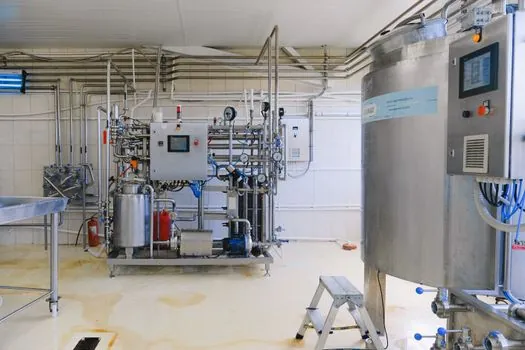
FDA-approved non-metallic parts can be used for direct contact with food and beverages [S2]. The elastomer specification still needs to match the process: a compliant compound does not establish chemical compatibility with every cleaning chemical, hot caustic, acid, oil or flavoring. The plug, seats, stem, body, gaskets and any exposed drive components should be reviewed as one assembly.
For sanitary food service, the selection should favor the material set required by the specified process compatibility and cleaning regime, with stainless steel commonly considered where corrosion resistance is needed. No research excerpt establishes a universal pressure rating or material grade for all food and beverage plug valves, so those values must come from the selected model datasheet.
Elastomer seating can provide drip-tight shutoff, while metal plug facings are associated with ANSI/FCI 70-2 Class IV performance in the cited eccentric-plug design family [S5]. That performance designation must not be applied automatically to every plug valve, body material, trim or actuator package. It should appear in the procurement specification only when it matches the named model and configuration.
Set pressure, temperature and product limits from the model
Selection must begin with 3 variables: the medium, operating pressure and product condition [S6]. For food and beverage service, that third variable should include temperature, viscosity, solids, abrasiveness, crystallization tendency and cleaning exposure. A plug valve selected only by nominal line size can fail the duty if the seat material, actuator or end connection is outside its qualified envelope.
Eccentric plug valves are available in a wide range of sizes [S5]. Pressure classes, allowable temperatures, steam suitability and food-grade approvals need to be verified per model. Food and beverage utilities may include hot water, steam, cooling water and glycol, each with a different pressure-temperature boundary.
Plug valves are generally favored over ball valves for low-pressure applications, while ball valves are more commonly associated with high-pressure and high-temperature service [S8]. That is a screening rule, not a model-specific limit. It is not a reason to accept a plug valve outside its certified pressure-temperature range or to reject one without checking the available trim.
Choose actuation and failure behavior deliberately

A rotary plug typically requires a 90-degree actuator stroke, and the operator must provide enough torque for the selected plug geometry, pressure class, seat arrangement and differential pressure. The conical plug in a plug valve generally has greater friction than the ball in a ball valve, which is associated with low-torque efficiency [S3]. Eccentric cam action lowers the closing effort through minimal seating compression [S5].
Electric, pneumatic and manual operation should be compared on fail action, actuator sizing, travel control and maintenance access. The eccentric design can support precise flow control and throttling [S5], but control performance depends on characterized trim, actuator resolution, position feedback and the actual process rangeability. Do not substitute a standard isolation plug for a modulating control valve without checking the trim and authority over the required flow range.
For automated product lines, the actuator package should also be compatible with the plant's clean-in-place or clean-out-of-place philosophy. Valve status feedback, fail-close versus fail-open behavior, and the ability to detect a stalled plug are more reliable selection criteria than actuator brand alone.
Know where plug valves are the wrong choice
A plug valve is not automatically the best choice for every food and beverage isolation point. Butterfly valves can offer a compact, lower-cost arrangement in some hygienic lines, but the cited food-processing guidance identifies lower high-pressure capability, less effective closure against flow and increased hydraulic-shock risk as limitations; they are also excluded from dairy applications because they do not meet FDA Pasteurized Milk Ordinance requirements [S1].
Standard industrial plug valves are a poor default for product contact when they lack cleanable construction, appropriate surface finish or compatible elastomers. They are also a poor choice where frequent throttling is required without a qualified control trim, where minimum torque from a very small actuator is essential, or where pigging demands a demonstrably drainable internal geometry. For applications requiring positive product separation, an automatic recirculation valve may be relevant when hygienic construction, drainage and controlled return are specified.
Product chemistry remains a hard gate. The food and beverage check valve selection guide can support a broader line review, but it does not replace the plug-valve check for pressure, temperature, seat material, actuation and cleaning compatibility.
Build the procurement datasheet around evidence
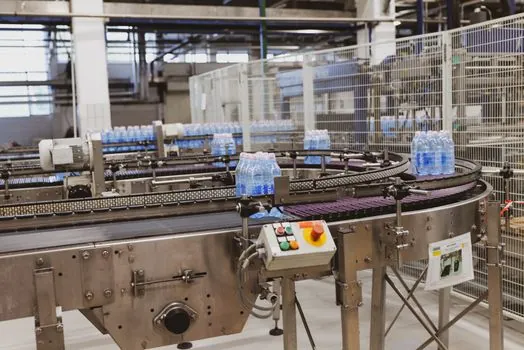
For sanitary product-contact service, request the model's wetted-material list, elastomer grades, surface finish, end-connection specification, pressure-temperature table, clean-in-place suitability, sealing classification, actuator data and actuator-fail-action data. The valve datasheet should identify whether compliance is based on FDA-approved materials, 3-A sanitary design, or another stated basis; material approval and sanitary design are not interchangeable claims [S1][S2].
For utility service, document fluid, temperature, pressure, pipe size, flow direction, allowable pressure drop, operating frequency and maintenance access. Plug-valve families also include lubricated, non-lubricated and sleeved configurations for water, wastewater, chemical and general industrial service [S7]. Food and beverage utilities should avoid lubricated configurations where lubricant migration or maintenance residues create an unacceptable risk.
The shortlist logic is straightforward: choose a sanitary rotary plug valve for validated product contact, an eccentric plug valve where cam action and low seat wear are valuable, and a utility plug valve for heating, cooling or other non-product service. Hold the final selection until the named model demonstrates the required pressure, temperature, material compatibility, cleanability, torque and control capability.