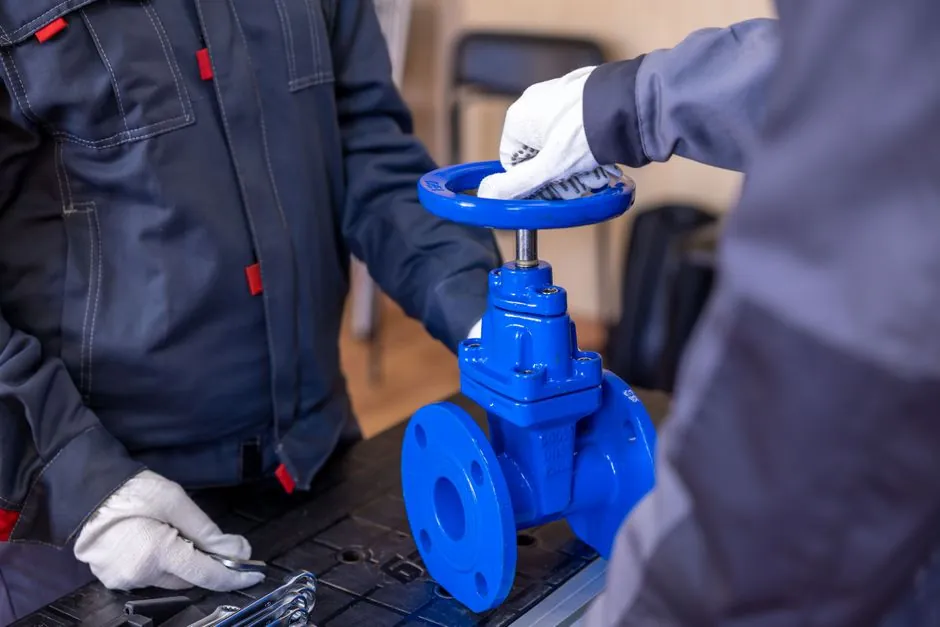
Food and beverage pinch valves commonly regulate liquids, pastes, powders, syrups, granules, and whole foods through a flexible sleeve that is the only wetted valve component [S2][S4].
Practical selection depends on tube outside diameter, sleeve durometer, media pressure, temperature and chemical compatibility, cleanability, actuation, and whether the installation requires full-bore flow or controlled throttling.
Pinch Valve Selection Starts With Product Contact and Flow Duty
A pinch valve closes by compressing an elastomeric tube or sleeve, so the process fluid contacts the sleeve rather than a metal seat or disc [S7]. This arrangement removes exposed internal cavities and limits the number of product-contact components, which is useful for sanitary liquid, powder, and granular service [S2].
Use a manual pinch valve where isolation is infrequent and the installation does not need compressed air or electrical power. Use a pneumatic or automated control pinch valve when the process requires throttling, remote operation, PLC or DCS integration, dosing, pulsing, or repeatable positioning [S2].
Typical food applications include sugar, salt, flour, starch, spices, syrups, oils, dairy, beverages, chocolate, coffee, beer, wine, and whole foods such as nuts and vegetables [S4]. For broad background on the operating principle, see pinch valve.
Size the Sleeve Against Tube Diameter, Durometer and Pressure
Pneumatic pinch valves can work with tubing up to 1.6 in. OD, durometers up to 75A, and media pressures up to 80 psi [S6]. Pneumatic pinch valves can accommodate larger tubing, up to 1.6 in. outside diameter, sleeve durometers up to 75A, and media pressures up to 80 psi [S6].
These ranges are examples of available design envelopes, not universal ratings. The selected valve must match the actual tube outside diameter, inside diameter, pressure, media temperature, and sleeve material.
A valve operated only for full isolation does not need that modulation range, but it still needs a documented shut-off rating for the process pressure and allowable leakage.
Compare Manual, Pneumatic and Automated Pinch Valves
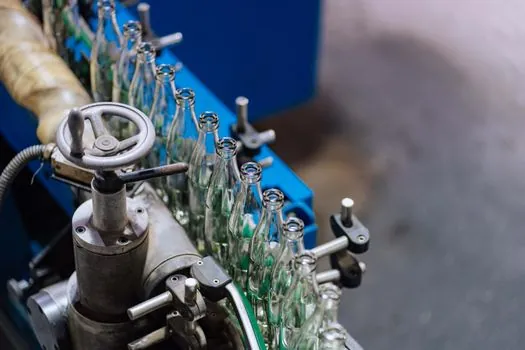
A manual pinch valve is the simplest choice for infrequent on/off service because it needs no compressed-air or electrical supply [S2]. A pneumatic control pinch valve adds smoother modulation and rapid actuation for dosing or slurry transfer, while an automated valve supports remote positioning and process-control integration [S2].
The comparison below uses the principal selection dimensions rather than a general preference. Actual actuator sizing must be checked against the valve’s published closure requirements, because pneumatic pressure does not by itself establish the sleeve force available at the tubing.
Match Sleeve Material to the Food, Chemical and Cleaning Cycle
Food-grade pinch-valve configurations are available with natural rubber, EPDM, and nitrile sleeves, combined with stainless-steel end connections [S4].
Stainless steel end connections include Tri-Clamp, threaded BSP, RJT threaded spigot, weld-on, and flange options [S4]. Available stainless-steel end connections include Tri-clamps, threaded BSP ends, RJT threaded spigot ends, weld-on ends, and flange connections [S4].
Do not approve a sleeve from the food name alone. Review the product-contact list, compatibility statement, temperature range, cleaning regime, and intended cycle life. EHEDG certification is not interchangeable with food-contact material approval, so validate the specific hygienic configuration separately.
Use Hygiene and Structural Criteria for Product Contact
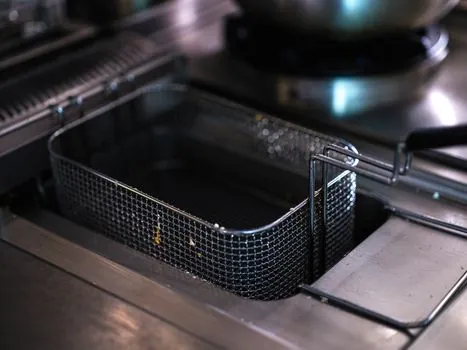
Hygienic pinch-valve configurations can be designed for clean-in-place cleaning and piggability, and special configurations may be offered with EHEDG certification [S4]. These features address drainage and access, but they do not replace verification of surface finish, crevice control, connection geometry, and the actual cleaning circuit.
This matters for dosing lines carrying expensive ingredients or products sensitive to hold-up.
Confirm product recovery requirements by asking whether the line drains by gravity, whether residual product can collect below the sleeve, and whether the downstream piping remains cleanable after an isolation event. A full-bore open position minimizes restriction, but shutoff leakage, reduced-bore throttling behavior, and trapped-volume details still depend on the selected geometry [S2].
Apply Pressure, Temperature and Duty Limits to Each Service
Pinch valves are used for steam, hot water, refrigerants, cleaning media, gases, fermentation service, carbonation, and pasteurization duties in food and beverage plants [S5]. These services should not share one generic sleeve selection. Steam and hot-water duty require heat-capable elastomers and verified pressure ratings; refrigerant duty requires compatibility with the refrigerant and its oil mist; CIP duty requires chemical and temperature compatibility [S5].
Do not assume that a valve approved for direct food contact is suitable for steam or aggressive cleaning chemistry. The food-grade sleeve selection and the temperature-pressure envelope are separate acceptance checks [S4]. Likewise, a 10% to 95% throttling range does not mean the valve should be throttled continuously at either extreme without checking actuator force, sleeve fatigue, and process pressure [S1].
For solids, evaluate the largest particle against the uncompressed sleeve bore, then check whether bridging, compression of solids, or sleeve abrasion can restrict opening. Pinch valves can handle abrasive food streams because the metal body does not contact the media, but the sleeve remains a consumable wear surface [S2][S4].
Define Actuation, Failure Mode and Maintenance Access
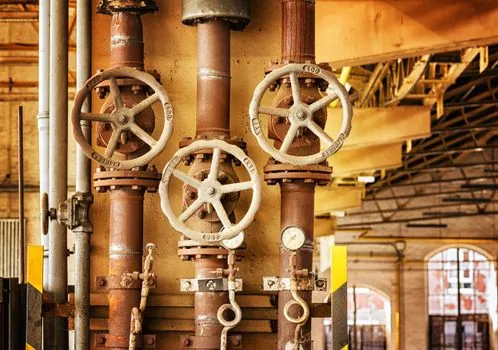
Pneumatic actuation can provide fast, consistent sleeve compression, remote operation, and DCS or PLC integration, but the specification must include the required air pressure, actuator stroke, closure force, cycle rate, and fail-open or fail-closed behavior [S2]. For hygienic installations, verify that the actuator and controls remain outside the product-contact zone and that the valve can be serviced without contaminating the line.
Manual valves reduce utility dependencies but require sufficient operating torque and ergonomic clearance. Automated valves reduce repeated operator effort and improve consistency, but add air supply, solenoid, positioner, signal, and maintenance requirements [S2]. For comparison with another controlled isolation option, see the food and beverage solenoid valve selection guide.
A practical inspection plan should include sleeve deformation, cracking, blockage, leakage, actuator stroke, and closure consistency. The sleeve should be treated as the main wear component, while the actuator and controls remain standard preventive-maintenance items [S2].
Build the Selection Checklist from Verifiable Requirements
A complete food and beverage pinch-valve datasheet should identify tube outside diameter, sleeve inside diameter, straight-through bore, rated pressure, applicable temperature, sleeve material and durometer, connection type, actuator type, control range, and certification requirements [S1][S3][S4][S6].
Shortlist manual units for simple, infrequent isolation; pneumatic units for fast cycling or throttling; and automated units for integrated dosing or remote isolation. Then verify the selected valve against the product, cleaning chemistry, 80 psi maximum envelope used for pneumatic food-service examples, and 10% to 95% practical throttling range before approval [S1][S6].
The final procurement record should also include the installation orientation, drainability, piggability, service access, expected sleeve replacement frequency, and evidence of food-contact material approval. A valve with a food-compatible sleeve but an unsuitable clamp, sealant, actuator surface, or cleaning protocol is not a hygienic assembly.