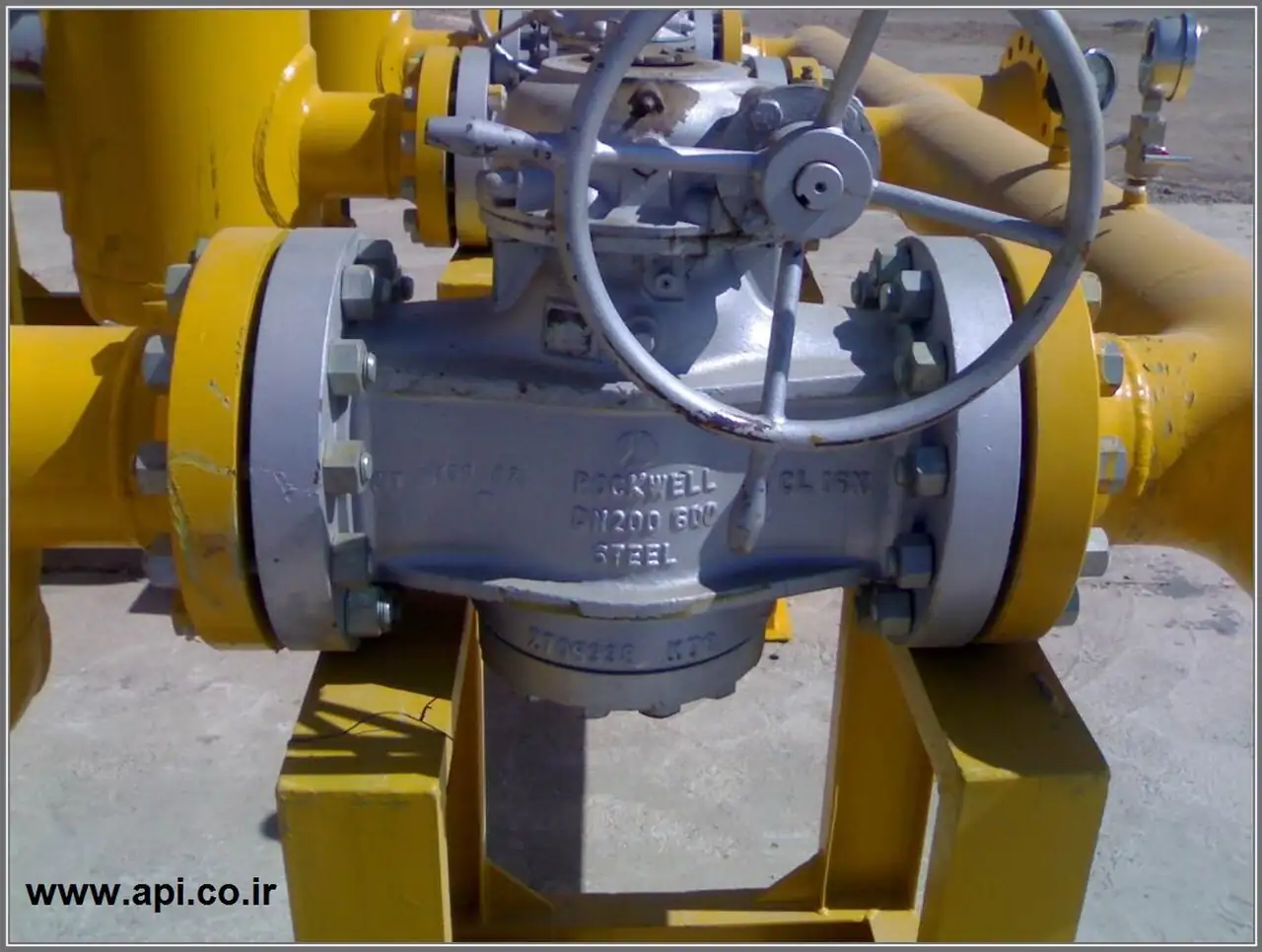
An eccentric plug valve is a rotary control valve whose closure member is a contoured plug carried on a shaft offset from the seat centerline. In the closed position the plug land presses against a single seat ring; within the first few degrees of opening travel the eccentric geometry cams the plug clear of the seat with no sliding contact, and through the remaining quarter turn a machined contour opens the flow area progressively. The offset is the whole idea: the plug touches the seat once per stroke, along one line, wiping it clean instead of grinding across it, and the rest of the travel runs free. Catalogs sell the same architecture under the names eccentric rotary plug valve and rotary plug control valve, and this page uses the terms interchangeably.
Procurement engineers meet these valves where the fluid destroys ordinary trim: paper machine thick stock at 2 to 6 percent consistency, black and white liquor in Kraft recovery, mining slurry and flotation froth, FGD scrubber recirculation, digester gas and biogas headers, sugar juice and food slurries, and dirty saturated steam. The decision this page settles is whether the dirty duty justifies the rotary plug, and then the four commitments that follow: size and class at the operating point, seat construction against the abrasion and temperature envelope, and the actuation package with fail action and positioner. The answer lands as an RFQ line set, and every chapter below feeds that line set so the control loop is bought, not hoped for.
This page treats the eccentric plug valve as a purchasing object: what the eccentric shaft and the single seat actually change in the numbers, how the trim survives stock and slurry that pack a globe cage, which datasheet rows decide seat and actuator selection, and how Cv, leakage class, materials, and fail action combine into a defensible RFQ. It is written for engineers who issue purchase specifications, not for readers who want a brochure summary.
Chapter 1 / 06
What an Eccentric Plug Valve Is and What Is Being Decided
The closure member is the difference, and the word eccentric describes it literally. The shaft axis sits a short distance off the seat centerline, so rotating the shaft lifts the plug land away from the seat on a cam path rather than sliding it across. Compare that with the two architectures it competes against: a sliding stem globe trim drives a plug into a cage and balance chamber where fibers wrap and solids pack, and a centered ball or plug rotates in full contact with its seat through the whole stroke. The eccentric rotary plug touches its seat along one line at closure, wipes that line clean as it lifts, and then rotates through an unobstructed flow passage. It is a genuine modulating control valve with a characterized contour, not an isolation device that happens to throttle badly.
What is actually being decided in this purchase is whether the process fluid has earned this trim. A valve that lives in clean water, steam at moderate drop, or hydrocarbon liquids is usually better served by other architectures that cost less or control more precisely, and the comparison chapter makes that case honestly. The eccentric plug valve earns its purchase order when the fluid carries something: fibers at paper stock consistencies, scale and sand in liquor, abrasive tailings, scrubber slurry crystals, or tar and condensate carryover in digester gas. In those services the buyer is not choosing between trim styles on efficiency; they are choosing between a valve that wipes its seat clean every stroke and a valve that must be pulled every quarter for cleaning.
The name invites one confusion that must be cleared before any specification is written. The lubricated plug valve, a taper or parallel plug sealed by injected grease and operated through a quarter turn for on/off isolation, is a completely different product that shares two words of the name. That valve is an isolation workhorse on fuel gas and crude headers, it is built for tight shutoff and infrequent operation, and it has no characterized contour, no positioner, and no intention of living mid travel. The eccentric plug valve is a control valve: bought with an actuator, closed loop feedback, and a published Cv versus travel table. Specifying one while meaning the other produces either a very expensive isolation valve or a very poor control valve, and both mistakes appear in real projects.
Four commitments ride on this purchase order. First, a geometry commitment: size, class, and contour chosen so the normal operating point lands inside the controllable band of travel, roughly the middle 60 percent. Second, a seat commitment: soft PTFE class seating for scaling but not hot service, or hardfaced metal seating for abrasive and high temperature duty, each with its own leakage class acceptance. Third, an actuation commitment: a spring return or double acting actuator sized on worst case torque with stated fail action. Fourth, an instrumentation commitment: a positioner, and on safety relevant loops a smart positioner with partial stroke testing. A quotation that prices the bare body has quoted a casting, not a control valve.
Five families of standards organize the datasheet, and a buyer should quote them by name. Sizing and capacity language comes from the ISA-75 series: ISA-75.01 defines the flow coefficient Cv and the liquid pressure recovery factor FL used in every calculation, and ISA-75.02 defines how capacity is tested to certify those numbers. Seat leakage acceptance is defined by FCI 70-2, which fixes class IV, V, and VI test methods and allowable rates. Body design sits under ASME B16.34 with flanges per ASME B16.5, stem sealing under ISO 15848-1 for fugitive emission grades, fire type testing under API 607 where the service is hydrocarbon, and material limits under NACE MR0175 where wet hydrogen sulfide is present. Face-to-face on this rotary body follows the manufacturer standard rather than a single universal ISA dimension, so the spool gap must be checked against the specific family drawing before the pipe is cut.
The RFQ should also state the station around the valve. Line isolation for maintenance belongs to a separate gate valve or a full bore quarter turn body, because a characterized control trim is never the right instrument to blind a line with. Upstream pump behavior matters: on slurry service the valve may be asked to throttle against a pump curve with the solids loading of the day, so the worst credible differential is the pump runout or shutoff case, not the nominal line pressure. Actuator interchangeability is protected by specifying an ISO 5210 or ISO 5211 mounting interface on the shaft extension, and the control signal, 4 to 20 mA to a positioner with or without an integral I/P converter based design, is part of the purchase line, not an afterthought added by the installer.
Chapter 2 / 06
How the Eccentric Plug Shapes Flow
Walk the stroke from closed to open. Closed, the intact land of the contoured plug presses the single seat ring under actuator force and line pressure, and the sealing line is a continuous circle around the flow passage. As travel begins, the offset between the shaft axis and the seat centerline does the work: the land peels off the seat on a cam path, contact pressure falling within the first few degrees, so there is no scoring contact through the throttling band. Through the middle of travel the machined contour of the plug presents a growing flow window to the passage, and at full open, roughly 90 degrees of shaft rotation, the plug swings clear and the passage presents its maximum area with the plug acting more like a deflector than an obstruction.
The seat wipe is a maintenance function hiding inside a geometry story. Every stroke, closing or opening, sweeps the sealing land across the full circle of the seat, dislodging scale, fiber mats, and crystal deposits at the one place they cause leakage. Sliding stem globe trims cannot do this: the plug enters the cage axially, and any fiber that catches the plug nose wraps, packs into balance holes, and grows until the valve hunts or sticks. This single behavior explains the service map of the whole family, pulp and paper first among them, and it is why the chapter 5 selection table keeps awarding dirty services to this architecture regardless of what the clean service efficiency tables say.
The contour sets the inherent flow characteristic, the curve of flow versus travel at constant pressure drop. Eccentric rotary plugs are machined to approximate an equal percentage response, some families closer to a modified linear law at the top of travel, and the honest statement is that the published Cv table, not the marketing word, is the truth. Equal percentage behavior suits loops where most of the circuit resistance lives elsewhere in the system, which is the normal state of a stock dilution or slurry recirculation loop. The specification consequence is the operating point rule: demand the Cv at 10, 25, 50, 75, and 100 percent of travel, and verify that normal flow sits between roughly 20 and 80 percent of travel. A valve oversized for the biggest transient will spend its life in the bottom 15 percent of the curve, where resolution is poor and where the first abrasion damage concentrates.
Flow direction is a real setting, not a formality. The family is built to prefer flow over the plug, flow to open on the seat side, which stabilizes the hydrodynamic torque through travel and keeps the plug pressed toward a defined side under flowing conditions; the alternate direction is permitted on many bodies for piping convenience but changes the torque profile and can shift the characteristic. The RFQ should state the intended direction, and the datasheet should be read for the torque table that matches it. On liquids the same choice interacts with cavitation behavior, because the recovery pattern at the vena contracta differs between the two directions on some geometries.
Torque decides the actuator, and the eccentric design is kind to it. Seating torque is low because contact exists only along one line for a few degrees; what remains through travel is bearing friction, packing friction, and the hydrodynamic torque of flow acting on the plug, which can act with or against the motion depending on direction and travel. The sizing number that matters is breakaway at maximum credible differential with the seat aged and loaded, multiplied by a 1.25 to 1.5 safety factor before the actuator is chosen. A pneumatic diaphragm actuator with spring return covers CL150 and CL300 duties and gives the defined fail action the process needs; on larger sizes and higher classes, a piston or rack and pinion actuator carries the torque more efficiently. The valve positioner is not optional on any of them: without positioner closed loop between controller signal and shaft angle, a rotary valve is an open loop guess that drifts with every change in friction.
Sizing follows ISA-75.01. In words: volumetric flow equals the flow coefficient multiplied by the square root of pressure drop divided by relative density, with unit conventions fixed by the standard, and the same calculation carries FL for liquids and an expansion factor built on Xt for gases. Representative family typical full open Cv values run about 30 at DN 25, 100 at DN 50, 400 at DN 100, 1,100 at DN 200, and 1,400 at DN 300, with maker variation of plus or minus 25 percent or more across families, so the quoted table governs. The cavitation gate deserves respect: globe trims publish FL values around 0.8 to 0.9, rotary plugs publish lower values as a class, and a high drop liquid letdown applied carelessly to an eccentric plug produces vapor bubbles that collapse against the plug face and pit it within weeks. Where the drop is severe, stage it across two valves or buy the trim that exists for that duty; chapter 5 names the boundary honestly.
Chapter 3 / 06
Construction, Trim, and Duty Boundaries
The body is a one piece or two piece casting with a straight through flow passage, offered flanged to ASME B16.5 drilling or with butt weld ends, in sizes from DN 25 to DN 600. Pressure classes span CL150, CL300, and CL600 across the family, with class availability narrowing at the largest sizes; the body rating follows ASME B16.34 pressure temperature tables, and the seat materials derate independently of the shell, which is why the datasheet carries two temperature limits that must both be read. Body materials follow the service: WCB carbon steel for utility and hydrocarbon duty, CF8M stainless steel for chemical, food, and clean applications, and CD3MN duplex for high chloride and black liquor service where austenitic grades pit and crack.
The trim is where the money goes. The contoured plug runs in CF8M or a 17-4 PH class precipitation hardening stainless, with optional hardfacing: a tungsten carbide overlay for fine abrasive slurry, or a cobalt chromium alloy overlay where both abrasion and galling risk exist. The seat is a replaceable ring, and the family splits here into two constructions. The soft seat, a PTFE class molded or supported ring, delivers FCI 70-2 class VI bubble tight shutoff and suits scaling fluids and most stock and slurry duty below its temperature envelope, roughly minus 29 to 150 deg C compound dependent. The metal seat, a hardfaced ring running against the hardfaced plug land, takes sustained duty above about 200 deg C and hard abrasive service, and is accepted at class IV or class V leakage rates with defined allowable leakage in the specification rather than discovered at the factory test.
The shaft and its seals carry the fugitive emission obligation. Shafts are 17-4 PH or 420 class stainless, supported in bearings that set the plug position relative to the seat; shaft sealing is PTFE or graphite packing, or an engineered low emission packing set qualified to ISO 15848-1 with a stated emission grade and endurance class where the site audits stem leakage. Where the service is flammable hydrocarbon, the fire type test credential API 607 is demanded explicitly, because an untested soft seated body has none. Where the fluid carries wet hydrogen sulfide, the whole material set, body, plug, seat overlay, fasteners, and springs, is specified to NACE MR0175, and the material certificates travel with the valve.
Duty boundaries deserve plain statements. This trim is not a safety device and never substitutes for a safety relief valve on any line. It is the wrong instrument below roughly Cv 10, where small globe trims meter with far better resolution. It should not take a severe liquid letdown in one stage for the cavitation reasons in chapter 2, and if the loop demands two position switching a handful of times a year, an on/off quarter turn body at a fraction of the price is the honest purchase; the characterized eccentric contour earns its premium only when the loop lives inside the throttling band for hours at a time. Above the family size ceiling, or on very large water lines where shutoff integrity demands are modest, other architectures take over, and chapter 5 draws those lines.
The service map below consolidates the construction logic into one table a specifier can scan before writing the RFQ; it pairs the classic dirty services with the construction that survives them and the failure the wrong construction produces.
Service
Construction to specify
Construction to avoid, and why
Paper machine thick stock, 2 to 6 percent consistency
CF8M body, hardfaced plug, soft or metal seat per furnish, positioner
Globe cage trim without relief: fibers wrap the plug and pack the cage within shifts
Black and white liquor letdown
CD3MN duplex body, carbide faced metal seat, graphite packing
Austenitic body without duplex chloride margin; soft seat at temperature
Mining slurry and flotation froth
Carbide faced metal seat, flush provisions, slow stroke profile
Soft seat notch: solids embed and cut the ring; idle lines settle and lock the plug
FGD scrubber recirculation
Duplex body, hardfaced trim, positioner with feedback
Carbon steel body: chloride and thiosulfate corrosion consumes the seat pocket
Digester gas and biogas header
Soft seat class VI, API 607 fire safe, NACE MR0175 trim where H2S
Unqualified soft seat without fire test on a flammable gas line
Dirty and saturated steam distribution
Metal seat above 200 deg C, ISO 15848-1 graphite packing
PTFE seat: creep and relaxation under sustained heat kills class VI shutoff
Chapter 4 / 06
Key Specification Parameters
The table below decodes the datasheet lines that decide whether a quoted valve matches the service. Each row is purchase defining; the paragraphs after the table explain what to demand and what a weak answer looks like.
Attribute
Typical range or options
What it decides
Nominal size
DN 25 to DN 600, control volume DN 40 to DN 300
Pipe schedule, flange drilling, spool gap against the family face-to-face drawing
Pressure class
CL150, CL300, CL600, availability narrowing at large sizes
Shell rating per ASME B16.34 and the seat derate applied at temperature
Site joint compatibility and the face-to-face spool gap
Shaft sealing
PTFE or graphite packing, ISO 15848-1 low emission sets
Fugitive emission grade where the site audits stem leakage
Flow direction
Flow to open over the plug preferred
Torque profile, stability through travel, and cavitation pattern
FL and Xt per ISA-75
Published per travel; rotary class values below globe
Cavitation and noise check before the valve is bought, not after
Actuation package
Diaphragm spring return, piston, or rack and pinion; positioner mandatory
Fail action, torque margin at aged seat, and loop integration
The Cv row deserves its own paragraph because it is the row most often misused. Manufacturers publish full open Cv because it flatters the valve, but a modulating selection is made at the operating point: demand the Cv versus travel table at fixed steps, 10, 25, 50, 75, and 100 percent, and check that normal flow lands between roughly 20 and 80 percent travel. The representative values above are family typical and vary plus or minus 25 percent or more between makers, so the quotation must carry the per size table. An oversized eccentric plug behaves like a quick opening device with a resolution problem, concentrates wear at the bottom of the contour where it does the most harm, and no positioner tuning recovers what the size choice destroyed.
The FL and Xt row is the cavitation and noise gate, and it is where migrating from globe trims catches buyers. The ISA-75.01 calculation uses FL to compare the allowable drop at service conditions against the required drop; globe plugs publish FL of 0.8 to 0.9 and absorb severe letdowns with cage staging, while rotary plugs publish lower values as a class and cavitate sooner on the same duty. Demand FL at the expected travel band, not one catalog number, because recovery behavior changes as the contour opens. If the check fails, the honest remedies are structural: share the drop across two valves in series, add a downstream fixed restriction, or move the station to a trim designed for that drop. The seat and characteristic tables below compress the two remaining decisions.
Abrasive slurry, black liquor, dirty steam, hot hydrocarbon with fire safe requirement
The actuation rows close the specification, and on this family they are a package decision. A pneumatic diaphragm actuator with spring return suits CL150 and CL300 duty and delivers the defined fail closed or fail open action from spring force; a rack and pinion actuator or piston cylinder suits the higher classes and larger sizes where torque and stiffness justify it. Every modulating package carries a valve positioner matched to the control signal, 4 to 20 mA from the loop through an I-P converter based design or a fully integral smart positioner, and where the valve sits in a safety instrumented function the smart valve positioner with partial stroke testing is what earns test credit in the SIL calculation. Actuator mounting per ISO 5210 or ISO 5211 keeps the package serviceable decades later, and limit or position feedback belongs on the line wherever operations audits the loop.
Chapter 5 / 06
Selection Decision Factors and RFQ Language
The decision sequence below runs as a checklist in a specification meeting, and each step eliminates a class of quotations before any price comparison starts.
Confirm the duty is genuinely modulating in a dirty fluid; if the valve only switches, buy an on/off quarter turn body and stop reading.
Define the fluid honestly: consistency percent, particle size and hardness, fiber length, scale tendency, and hydrogen sulfide presence decide seat and overlay, not brochure chemistry.
Compute the maximum credible differential from the pump runout or shutoff case, then run the ISA-75.01 cavitation check with the quoted FL before, not after, selection.
Set the temperature envelope including cleaning cycles, then choose the seat: PTFE class, or hardfaced metal, and write the leakage class acceptance into the RFQ.
Size on the operating point: Cv at travel steps, normal flow between 20 and 80 percent travel, and the minimum controllable Cv stated.
Fix flow direction and read the matching torque table, then size the actuator on breakaway at maximum differential with the 1.25 to 1.5 safety factor.
Package the instrumentation: positioner signal type, fail action, feedback, and partial stroke testing where the loop carries a SIL claim.
Fix the evidence: capacity test basis to ISA-75.02, seat test to FCI 70-2, material certificates, ISO 15848-1 grade where audited, API 607 where flammable, NACE MR0175 where sour.
Against the neighboring architectures, the honest comparison runs as follows, and it belongs here in the selection chapter. The globe control valve remains the reference instrument for clean service and severe drops: its higher pressure recovery, FL published around 0.8 to 0.9, its anti cavitation cages, and its precision at small flows are unbeatable where the fluid cooperates, and for ordinary clean throttling duty the plain globe valve is still the default answer; the eccentric plug wins exactly where the fluid does not cooperate, on fibers and solids that pack a cage. The segmented ball valve is the closest rotary rival: both rotate a contoured member out of a single seat, the segment ball carries higher full open Cv per size, but the eccentric plug wipes its seat on a longer land and behaves better on scaling fluids. The v-port ball valve characterizes with a notch edge that shears fibers cleanly, an excellent neighbor for stock dilution, while the eccentric rotary plug offers a blunter, stronger contour that survives coarse mineral slurry the notch edge would erode around. A plain ball valve or a lubricated plug valve is an on/off device being asked to modulate: cheap, available, and wrong for a loop that lives mid travel. The butterfly valve wins large diameters on weight and installed cost where modest shutoff integrity and rangeability are acceptable. And for extreme letdown service the choke valve or a multistage globe trim, not any quarter turn body, is the correct instrument. Choose the combination the loop and the fluid need, not the type a supplier has on promotion.
Two more selection notes complete the map. On small lines below roughly Cv 10, a needle valve or a small globe valve meters with resolution this family cannot match, and buying a DN 25 eccentric plug for a dosing loop wastes both money and control quality. Between architectures, the segmented ball valve and the characterized v-port ball valve compete for the same stock and slurry stations at a paper mill, and the choice usually lands on which seat geometry the furnish of the day punishes less. On lines DN 400 and larger in water and utility service, the economics of quarter turn bodies converge, and the decision usually lands on installed cost and shutoff class rather than on characteristic, which is precisely where the eccentric plug stops being the default answer.
Application
Construction to specify
Check before order
Thick stock dilution control, 2 to 6 percent
CF8M body, hardfaced plug, PTFE class seat, diaphragm actuator with positioner
Consistency limit against furnish; breakaway torque with loaded seat
Black liquor letdown to effect washer
CD3MN duplex, carbide metal seat, staged drop planning
FL check at travel; flashing and erosion at the seat line
Slurry recirculation on FGD absorber
Duplex body, carbide trim, flush provisions
Chloride alloy margin; settle-out flush before idle strokes
Digester gas pressure control
Soft seat class VI, API 607, NACE MR0175 trim set
Condensate drainage; fire safe certificate on file
Clean high drop letdown, single stage
Globe control valve with anti cavitation cage, not this valve
FL 0.8 to 0.9 class trim justified by the ISA-75.01 check
Extreme letdown and erosive choke duty
Choke valve or multistage trim designed for the drop
Any quarter turn body here pits within weeks
Large water line throttling, DN 400 and above
Butterfly valve on installed cost, eccentric plug where shutoff integrity pays
Leakage class acceptance and actuator torque growth at size
Line isolation beside any control station
Gate valve or full bore quarter turn body
Never blind a line with the characterized trim
The RFQ block should be written once and reused. A complete block reads: quantity, size, and class; Cv required at maximum and normal flow with the operating point stated, plus the Cv versus travel table demanded with the quotation; flow direction and leakage class with the FCI 70-2 test basis; fluid with consistency, particle size, and scaling description; minimum and maximum temperature with cleaning cycles; maximum steady and transient differential from the pump case; body, plug, seat, and overlay materials with hardfacing specified by name; packing and ISO 15848-1 grade where audited; actuator type with fail action and the sizing differential, positioner signal type, feedback, and partial stroke testing where a SIL claim exists; end details and the family face-to-face drawing reference; and certificates, typically capacity test to ISA-75.02, seat leakage test, material certificates EN 10204 3.1, fire type test API 607 where flammable, and NACE MR0175 conformance where sour. A quotation returned without the Cv table or the FL data is incomplete at any price.
Chapter 6 / 06
Installation, Standards, Failure Modes, and Maintenance
Installation quality decides whether the trim reaches its catalog life. Set the body with the flow arrow in the intended direction, flow to open preferred per chapter 2, and keep piping loads off the flanges: a pulled body distorts the seat ring and turns a class VI valve into a class IV valve with no visible defect. On slurry lines, avoid pockets where the line can settle solids around an idle plug; where the layout cannot avoid them, fit flushing connections and use them before any stroke after standing. Give the valve the same straight run respect as any control element, about 5 pipe diameters clear of elbows and pumps, mostly for the sake of the flow measurement the loop is tuned against. Actuator mounting follows the ISO 5210 or ISO 5211 interface, and the positioner is calibrated with the valve wet, in the line, at working pressure, because dry calibration on a rotary friction curve is a fiction.
Commissioning practice protects two things: the seat and the loop. Flush the line before first stroke, because the first closure of any seat against weld spatter engraves the land for the rest of its life, and on slurry service the commissioning period is when construction debris rides the line. Stroke the valve across full travel with the positioner in manual and record the actual end positions, the deadband, and the hysteresis; an eccentric plug with more than 2 to 3 percent hysteresis has a bearing, packing, or positioner problem that tuning will not hide. Verify the fail action by bleeding the air, not by trusting the nameplate. Capture a partial stroke test at three signal points and file it as the baseline the condition monitoring trend starts from.
The standards set the verification frame, and this family reads slightly differently from globe hardware. Seat leakage acceptance is FCI 70-2 at factory test, class VI soft and class IV or V metal. The shell is rated under ASME B16.34 with flanges drilled to ASME B16.5, but face-to-face on this rotary body follows the manufacturer family standard, so the spool drawing must reference the family dimensions rather than an assumed universal value. Stem sealing grades come from ISO 15848-1 fugitive emission testing, demanded by name where the site audits. Fire type testing to API 607 is a qualification carried by specific soft seat designs, never by the body alone, so the certificate must match the ordered seat. Sour service materials follow NACE MR0175, and capacity figures used in the ISA-75.01 sizing check are certified under ISA-75.02 testing. A specification that cites these by name moves the burden of proof to the supplier, which is where it belongs.
Failure modes in service follow a short and predictable list. Shaft bearing wear shows up first as hysteresis growth in the stroke records, then as positioner hunting, and finally as seat misalignment and leakage; the annual stroke comparison catches it years before failure. Seat wear from abrasion shows up as leakage class drift, a slow rise in the closed position pass flow that the factory class VI test never predicted, and on hardfaced seats as a mattes land visible at shutdown inspection. Packing leakage on slurry and hot service responds to adjustment up to the point the packing set is exhausted, then to replacement with the low emission set. Cavitation damage appears as pitting of the plug face and seat line when a high drop duty was misapplied, audible as gravel in the pipe, and is remedied by staging the drop or changing trim, not by replacing parts into the same duty. Actuator undersizing appears as the seat ages and breakaway torque rises: strokes slow, then stall, and the failure is always blamed on the actuator when the specification sized it on a new seat.
Maintenance intervals scale with duty severity, and the diagnostic tooling is already on the valve. On stock and slurry service, run a stroke and hysteresis check quarterly and inspect the seat at every planned shutdown, with seats budgeted as consumables from day one. A smart valve positioner records stroke counts, friction trends, and partial stroke results; read those trends at the same quarterly interval, because a rising friction signature is bearing and packing wear announcing itself. Check the I/P converter and positioner calibration annually against the loop test, and adjust or replace packing to the emission grade the site claims. Clean water duty stretches the same checks to annual plus the major shutdown internal inspection, which every continuously throttling valve earns at the first big turnaround regardless of apparent health, because a drifting characteristic curve is invisible from outside the loop until it is not.
Close the lifecycle with spares and records. Seats, packing sets, bearings, and gaskets are consumables with plant lead times, and the initial purchase should carry at least one seat set per valve. Keep the commissioning baselines, the factory seat test certificates, the Cv table, and the stroke history in one file per loop; the next RFQ for the next unit is written from that file, and a specification that restates measured hysteresis, seat life in months, and actual torque growth converts supplier opinions into line items. That is how a purchasing file gets smarter instead of just older.
FAQ
When should I choose an eccentric plug valve over a globe control valve?
Choose the eccentric rotary plug when the fluid carries fibers, scale, or solids that would pack a globe cage: paper stock, black liquor, mining slurry, scrubber loops, digester gas. Choose the globe control valve when the service is clean but the drop is high, because its pressure recovery factor, published around 0.8 to 0.9 against lower rotary values, absorbs cavitation risk a rotary plug cannot. State the solids loading honestly in the RFQ so the seat decision follows the fluid, not the budget.
What Cv range does this family deliver by size?
Representative family typical values run about Cv 30 at DN 25, Cv 100 at DN 50, Cv 400 at DN 100, Cv 1,100 at DN 200, and Cv 1,400 at DN 300, with maker variation of plus or minus 25 percent or more across families. Always request the Cv versus travel table per size and verify that normal flow lands between roughly 20 and 80 percent of travel. A single full open number cannot support a modulating selection at any price.
Soft seat or metal seat for slurry and scaling duty?
Specify a metal seat hardfaced with tungsten carbide or a cobalt chromium alloy when the fluid is abrasive or sustained temperature exceeds about 200 deg C, and accept FCI 70-2 class IV or V leakage rates in writing. Soft PTFE class seats give bubble tight class VI shutoff and suit scaling fluids within their envelope, roughly to 150 deg C compound dependent. On hard slurry a soft seat is a consumable; budget it, schedule it, and inspect it at every shutdown.
Can an eccentric plug valve take a high pressure drop liquid?
Not in one stage. As a class, rotary plugs publish lower pressure recovery factors than globe trims, so a large liquid letdown produces vapor bubbles that collapse against the plug face and pit it within weeks. Split the drop across two valves in series, add a downstream restriction to share the load, or move the station to a globe trim with an anti cavitation cage. Run the ISA-75.01 sizing check with the quoted FL before purchase, not after the first shutdown.
What actuator and fail action should I specify?
Pair a pneumatic diaphragm actuator with spring return on CL150 and CL300 duty, sized on breakaway torque at maximum credible differential with a 1.25 to 1.5 safety factor, so the spring drives the plug to the fail closed or fail open position that protects the process. On larger sizes and higher classes, a rack and pinion actuator or piston cylinder carries the torque more efficiently. Every modulating package needs a valve positioner; state the signal, the fail action, and the feedback requirement in the RFQ.
How does partial stroke testing work with a smart positioner?
A smart valve positioner with partial stroke testing nudges the plug a few degrees from its rest position on a schedule, confirms movement and torque health, then returns it, without disturbing the process enough to trip anything. The test catches a stuck plug or an undersized actuator years before a demand arrives. For valves in safety loops the accumulated test credit enters the SIL calculation per IEC 61511, so record the interval and the stroke depth in the specification.
What consistency limits apply in pulp stock service?
Treat 2 to 6 percent oven dry consistency as the classic envelope for thick stock duty. Below about 2 percent a conventional trim copes with the fiber load, and above about 6 percent the stock becomes a fiber network that no ordinary control valve meters reliably, so pump speed control or a specialized approach takes over. Inside the band, specify hardfaced trim for abrasive furnish, respect the preferred flow direction, and expect the seat wipe, not the shutoff class, to be the feature that pays.