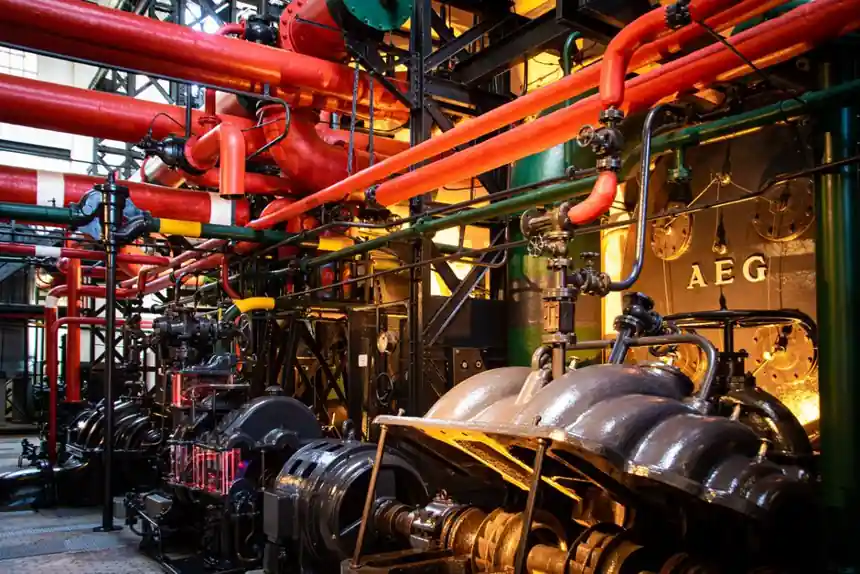
A sanitary safety relief valve must combine the protected equipment’s relief demand with a hygienic flow path, compatible wetted materials, and a documented set pressure.
Food and beverage plants use sanitary relief devices for vessels, pasteurizers, brewing tanks, carbonation systems, steam equipment, CIP/SIP circuits, and utility systems.
Separate product-contact and utility relief duties
Product-contact service requires hygienic construction, cleanability, compatible wetted materials, and a discharge arrangement that does not contaminate the product area. LESER describes low dead space and gap-free internal construction for its food-industry safety valves, while its clean-service concept supports CIP or SIP and uses surface packages based on ASME BPE and DIN 11866 [S1].
Utility service can use an industrial safety valve when the fluid is not product-contact, but pressure, temperature, relieving capacity, inlet pressure loss, and discharge safety still govern selection. Relevant applications include steam boilers and headers, hot-water loops, compressed-air receivers, nitrogen blanketing, ammonia refrigeration, and CO₂ utility systems [S2].
A product-contact valve is the correct choice when the relieved medium can contact food, beverage, ingredients, or cleaning solution. An industrial valve is suitable for a non-product utility only after the material, set pressure, capacity, back pressure, and discharge route are verified. Do not substitute an ordinary sanitary isolation valve for a relief device, and do not assume that a sanitary finish solves the pressure-relief duty.
Build the selection from the relief case
Selection begins with the protected equipment, medium, maximum allowable working pressure, set pressure, required relieving capacity, operating temperature, hygiene requirement, material compatibility, cleaning method, discharge route, and documentation requirement [S2]. The relief case must also identify the credible cause of overpressure rather than relying on a generic vessel datasheet.
For steam boilers and steam lines, steam overpressure and blocked outlet are identified as relief cases, and the valve must provide the required relieving capacity and have a suitable discharge route [S2]. In beverage carbonation systems and CO₂ storage and distribution lines, regulator failure and blocked outlet are identified as relief cases, and selection must account for required relieving capacity and the discharge route [S2].
For liquid-filled vessels, thermal expansion and blocked-outlet conditions are identified as relief cases, and selection must account for required relieving capacity, inlet pressure loss and the discharge route [S2]. For CIP/SIP systems, material compatibility and resistance to thermal and chemical cycling are selection considerations, along with the cleaning method [S2] [S3]. Ammonia refrigeration is identified as a service risk, and the discharge route and documentation requirements are among the selection considerations [S2].
Compare the main valve configurations
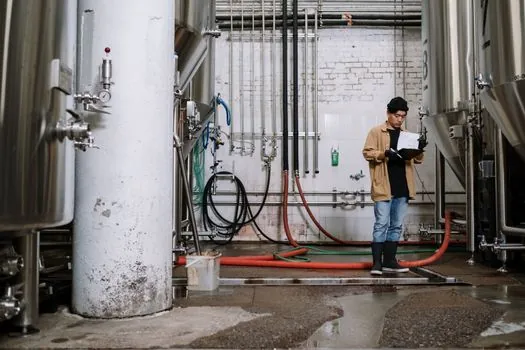
The principal choice is between a conventional industrial safety valve, a sanitary product-contact safety valve, and a change-over or dual-device arrangement.
LESER groups clean-service safety valves, compact valves with variable connections, high-performance valves, and change-over solutions for food and beverage applications [S1]. The sanitary option wins where the valve can contact product or cleaning media; the industrial option wins on utility simplicity; the change-over arrangement wins where valve removal would otherwise remove the protection needed to keep the line operating.
Specify materials, finish, connections, and seals
Sanitary selection commonly uses 304 or 316L stainless steel, with 316L considered for product-contact service where the medium and cleaning chemistry require it. Sanitary safety relief-valve selection should account for surface finish, materials and certifications [S3]. These values must be confirmed for the selected model, medium, temperature, and certification package rather than copied into a purchase order as generic requirements.
Connections should match the installed piping without creating restrictions or uncleanable voids. Sanitary safety relief-valve selection should account for connection type, while dead legs and contamination are identified as service risks [S2] [S3].
Spring housings, bonnets, diaphragms, and bellows require specific attention. A sealed bellows or diaphragm arrangement can isolate internal components and reduce opportunities for pooling, but the selected closure must still suit the medium, set pressure, and relieving capacity [S3]. Compare 316L bodies, elastomer seals, and connection sizes against temperature, CIP chemicals, product chemistry, and pressure, rather than treating “316L” as sufficient documentation.
Match installation and discharge to hygiene and safety
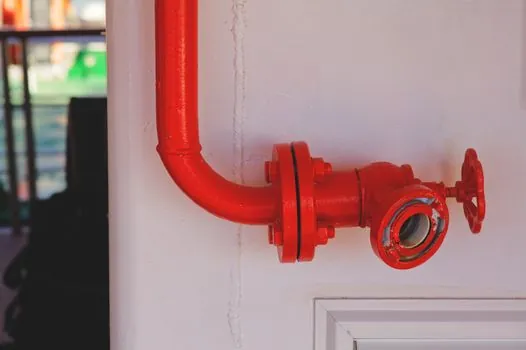
Installation must preserve access for testing, inspection, seal replacement, and spring or diaphragm service [S3].
The inlet must avoid excessive pressure loss, while the discharge must address the medium’s physical and toxic hazards. Steam discharge requires a safe route and adequate capacity; CO₂ discharge requires ventilation and asphyxiation controls; ammonia requires a discharge strategy that limits personnel exposure; and clean-product relief requires a hygienic termination that avoids contamination [S2]. An air-release valve or pressure/vacuum relief device is not a substitute for a code-sized pressure safety valve when the protected vessel can exceed its allowable pressure.
Discharge piping also introduces back-pressure and reaction-load questions. Those conditions must be included in the sizing and support design before a sanitary valve is ordered. A clean inlet connection does not compensate for a restricted outlet, a liquid hold-up point, or an unsupported discharge reaction.
Use documents and operating records as selection gates
A purchaser's technical package should state the protected equipment tag, medium, design and operating temperature, set pressure, required relieving capacity, inlet pressure, back pressure, connection, material, surface finish, seal specification, cleaning method, orientation, and discharge destination. The RFQ output should include the valve datasheet, sanitary requirement, material, set pressure, and test documentation [S2].
Requested records commonly include verification of set pressure, capacity, and seat leakage. The cited sanitary selection guidance also points to ASME BPE, CRN, and FDA compliance, together with test certificates supporting traceability and audits [S3]. These references establish the applicable documentation context, but each certificate must be matched to the exact valve, size, set pressure, and governing requirement.
Do not overlook the operating regime. A safety relief valve can remain mechanically compliant yet perform poorly if it is exposed to unsuitable process conditions, corrosive cleaning chemicals, cycling temperatures, deposit formation, or a system that requires frequent testing. Record the valve serial number, set pressure, test date, inspection interval, and replacement seals so future verification can be tied to the installed service.
Match the valve to the failure and maintenance plan
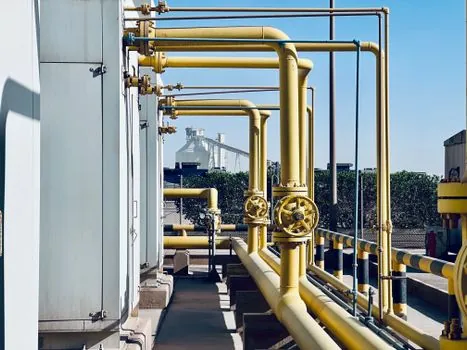
A sanitary pressure and vacuum relief valve is appropriate where a protected system requires pressure-vacuum protection and the design basis specifically calls for that function, but a conventional PSV remains the primary choice for pressure overpressure relief. The selection package must distinguish these functions and document the governing overpressure case. [S2]
The wrong choice is a valve selected mainly for its hygienic appearance, a product-contact valve without verified capacity, or an industrial valve with exposed crevices in a washdown zone. The right choice is a documented valve whose set pressure, capacity, temperature limit, material, connection, discharge conditions, and cleaning arrangement match the actual process. For continuous lines where a failed valve must be replaced without interrupting protection, evaluate a change-over package alongside the selected sanitary valve [S1].
Before purchase, close three engineering gates: confirm the relief calculation and set pressure, approve the hygienic material and connection package, and accept the discharge and inspection plan. Then compare the shortlist against the steam trap selection for food and beverage processing only when steam condensate and relief-system interactions affect the same installation.