
Plunger pump configurations are named directly by the number of reciprocating plungers on a common crankshaft, with simplex (1), duplex (2), triplex (3), quadruplex (4), and quintuplex (5) covering the vast majority of industrial units in service [S1][S3].
Flow pulsation drops sharply with plunger count: a single-plunger (simplex) unit swings roughly ±50% around mean flow, while a triplex running three plungers 120° apart flattens that residual to about ±5% [S2]. The trade-off is mechanical complexity, package length, and cost, which is why triplex has become the default in pressure washing, oilfield water injection, and reverse osmosis feed service [S2][S4].
Where the Names Come From: Crankshaft Geometry
The Latin prefix directly states the plunger count: simplex (1), duplex (2), triplex (3), quadruplex (4), quintuplex (5), and beyond into septuplex (7) and nonuplex (9) for very high-flow process skids [S1]. The crankshaft is the element that fixes the count: each crank throw drives one plunger, throws are spaced evenly around the shaft, and plunger phases are set by crank-pin keying.
A triplex unit with three cylinders 120° apart uses a crankshaft similar to an automotive crankshaft, with the plungers perpendicular to the input shaft [S5]. Quadruplex and quintuplex designs extend the same logic with four or five throws on a single shaft, and frame stresses, bearing span, and torsional mode become serious review items once you pass five throws [S1][S4]. Plunger diameters in commercial high-pressure units typically fall between 25 mm and 40 mm, while displacement per stroke is calculated as plunger area times stroke length, then multiplied by RPM, plunger count, and volumetric efficiency [S7][S2]. A worked example in the calculator at S2 (25 mm plunger, 30 mm stroke, 600 rpm, 3 plungers, 0.94 volumetric efficiency) returns about 24.9 L/min (6.58 GPM) and 41.5 mL per revolution.
Simplex vs Duplex: Where the Simpler Builds Still Make Sense
Simplex plunger pumps use a single plunger and one set of suction and discharge check valves, which is the simplest possible positive-displacement architecture and the lowest-cost way to generate high pressure on intermittent duty [S1][S3]. A duplex runs two plungers 180° out of phase, which roughly halves the flow ripple relative to a simplex but still leaves substantial pulsation for downstream pulsation dampeners to absorb.
Simplex and duplex builds are common in small pressure-washers, dosing skids, and OEM machine tools where package cost matters more than flow smoothness [S4]. A related decision point, which is whether to upsize to a multi-plunger machine or stay single-cylinder with a larger pulsation dampener, is usually driven by the cost of the dampener and the customer's tolerance for vibration in downstream piping [S2]. For deeper sizing math on per-stroke displacement, see the worked formula treatment in plunger displacement volume per stroke and pump sizing math.
Triplex: The Industrial Default
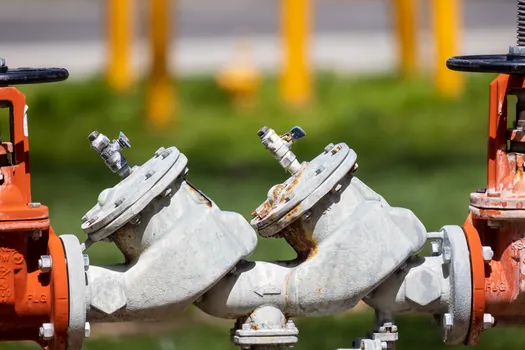
Three plungers running 120° apart on a common crankshaft is the dominant configuration in industry because flow pulsation flattens to roughly ±5% versus ±50% for a single-plunger unit, and the package still fits on a reasonable skid [S2]. Commercially, the triplex architecture is what backs 70 to 4,000 bar service in Cat Pumps and KAMAT product lines, which covers pressure washing, oilfield water injection, and reverse osmosis feed [S2].
The triplex also keeps mean plunger speed in a reasonable band: the S2 worked example runs 600 rpm with a 30 mm stroke, which gives 0.6 m/s mean plunger speed, well inside the cavitation-safe range for clean water service [S2]. If the suction line cannot deliver the required net positive suction head (NPSH), the cylinder cavitates: operators hear a gravel-rattle, and the discharge valves hammer themselves to scrap within a few hundred hours [S2]. The pump end itself is also covered in our plunger pump reference for the wider operating envelope.
Quintuplex and Beyond: When More Plungers Pay
Quintuplex (5-plunger) and septuplex (7-plunger) designs are the answer when flow rate must climb without forcing mean plunger speed into the cavitation zone [S1][S4]. Splitting the same total displacement across five or seven smaller plungers keeps each plunger's mean linear speed low, which is the single biggest lever for extending packing and valve life on continuous-duty high-pressure service [S4].
Quintuplex is preferred for precision continuous-duty applications because the residual ripple after five overlapping strokes is even lower than triplex, and pulsation dampener sizing on the discharge manifold becomes far less aggressive [S4]. The trade-off is shaft length, bearing span, and torsional mode: a five-throw crankshaft is more expensive to balance and dynamically analyze than a three-throw shaft, and frame alignment becomes less forgiving during overhaul. Sourcing guidance for the fluid end (pressure rating, working fluid, drive arrangement, duty cycle) is the same regardless of configuration; clarify those four points at RFQ so the OEM does not default to a stocked triplex when a quintuplex is the right tool [S8].
Selection Criteria: Count vs Pressure vs Pulsation vs Cost
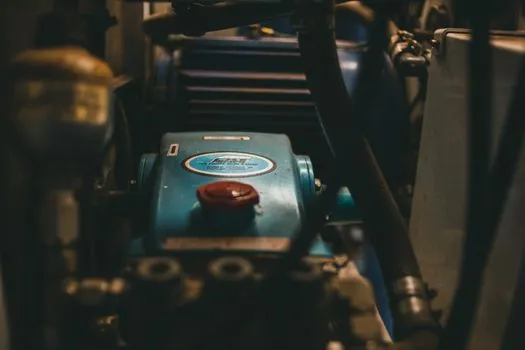
The selection decision collapses to four criteria: target flow and pressure, acceptable residual flow pulsation, available NPSH margin, and package budget. The table below lines the three most common configurations up against those criteria so a specifier can extract a structured comparison. [S2]
1) Simplex (1 plunger): lowest cost, smallest footprint, but ±50% flow ripple and the highest cyclic stress on discharge piping; pressure range matches a standard plunger pump fluid end, typically up to a few hundred bar in commercial units [S1][S2]. 2) Triplex (3 plungers): 120° phasing, residual ripple about ±5%, and 70-4,000 bar demonstrated in commercial triplex units, which is why it is the industry default [S2]. 3) Quintuplex (5 plungers): 72° phasing, the lowest residual ripple of the three, preferred for continuous-duty precision service where packing life matters more than package cost [S4]. For adjacent architectures outside the plunger family, the centrifugal pump reference covers the rotary flow end used where pressure requirements drop below about 15-20 bar.
Materials, Tolerances, and the Failure Modes That Drive Configuration Choice
Plunger surface finish is a hard gate: surface roughness above Ra 0.4 µm chews packing in days rather than months, and the typical build holds plunger finish below Ra 0.2 µm using ceramic-coated stainless or solid ceramic rods [S2]. Solid ceramic plungers are common in water and oil service for continuous duty, but they are not universally compatible with highly acidic media, which is why OEM datasheets always call out the pH window [S3]. Cylinder heads in pressure-washer-class pumps run aluminum for general service, brass for soap solutions, and stainless steel for severe environments, with cast iron and nickel-plated brass reserved for high-pressure builds [S5].
The mechanical failure modes all trace back to clearances and NPSH. If plunger-to-packing clearance grows beyond about 0.05 mm due to wear, leakage past the packing drops volumetric efficiency below 90% and the lantern ring drain starts to weep [S2]. Inadequate pulsation dampening downstream cracks discharge manifolds, and cavitation from low NPSH takes chips out of plungers or cracks solid ceramic rods outright [S2][S5]. For comparison, the diaphragm pump reference covers an architecture that trades the high-pressure packing interface for an elastomer or metal diaphragm, which removes the plunger-clearance failure mode but caps pressure well below plunger-pump range. The hydraulic pump entry covers the broader family that includes these positive-displacement units as a subset of industrial hydraulic machinery.
Standards, Sourcing, and What to Confirm at RFQ
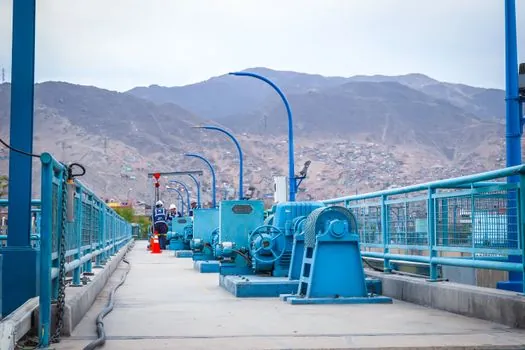
Plunger pumps for oil and gas, petrochemical, and high-pressure process service are typically specified against API 674 (reciprocating positive-displacement pumps) for the power end and against the customer's piping and material standards for the fluid end. Material selection for sour service follows NACE MR0175, which restricts hardness and metallurgy for any wetted part exposed to H2S; do not assume a standard triplex build satisfies sour service without an explicit MR0175 callout at RFQ. For general industrial and pressure-washer service, manufacturer standards and CE machinery directive compliance are the typical references, and the OEM datasheet is the controlling document [S3][S5].
At RFQ, the four facts to pin down are: (1) required pressure and flow duty point, (2) working fluid chemistry and temperature, (3) continuous vs intermittent operating duty, and (4) driver type and speed [S8]. If any of those four are left open, the OEM will default to a stocked triplex build on a standard 1,450/1,750 rpm electric driver, which is the right call for about 70% of industrial duties but the wrong call for high-flow continuous-duty reverse osmosis feed or sour-service oilfield water injection [S2][S8]. Two trackable signals to watch on the supplier side: published quintuplex builds for RO feed at sustained flows above about 50 L/min, and explicit NACE MR0175 fluid-end certifications on triplex product lines [S1][S4].