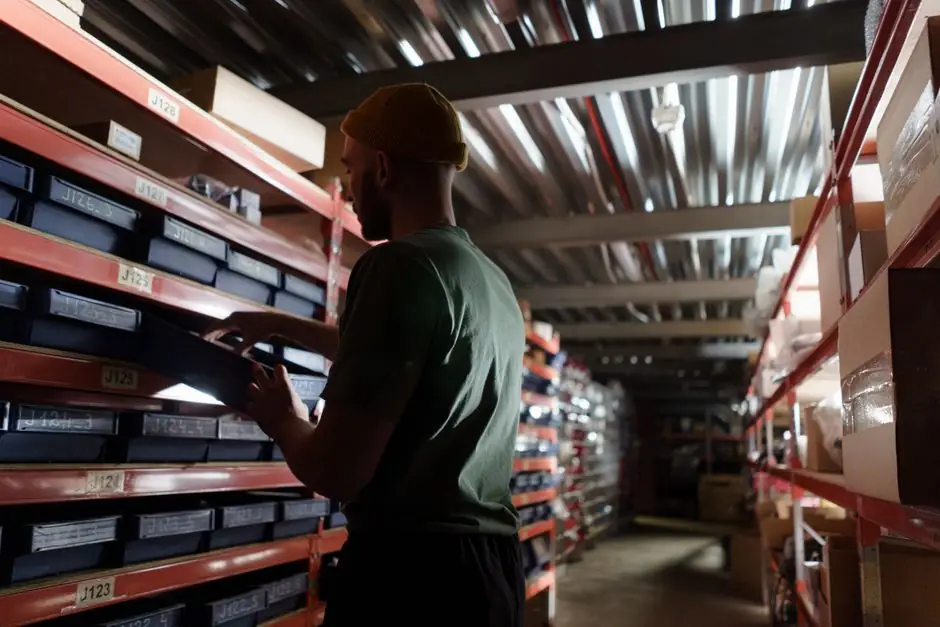
E-commerce fulfillment centers handling dry bulk goods such as plastic pellets, starch, animal feed, and packaging-grade polymers are turning to pneumatic conveying because sealed air-driven lines cut dust emissions, eliminate cross-contamination, and route around racking without fixed-path belt infrastructure [S3].
Pneumatic systems can move particles from fine powders to pellets at bulk densities of 16–3,200 kg/m³ (1–200 lb/ft³) and particle sizes up to roughly 2 inches in diameter, with the caveat that a 2-inch polymer resin is conveyable while a 2-inch lead ball is not [S2]. For parcel-scale operations the relevant envelope sits at the lower end: free-flowing granules, recycled plastic flake, and powdered additives at throughputs a single 10–25 hp blower package can sustain.
Why Pneumatic, Why Now for Fulfillment
Pneumatic conveying is gaining ground in fulfillment-adjacent verticals (food & beverage, pharmaceuticals, chemicals, manufacturing) because it offers contamination-free transfer and faster throughput than mechanical conveyors, and analysts tracking the segment cite automation rollouts as a primary growth driver [S6]. Three structural advantages matter for a fulfillment setting: lines are totally enclosed so there are no moving parts contacting the product; the system can be rerouted wherever a pipe can run, which suits retrofits into existing mezzanines; and clean-air operation removes the dust-load burden that bag-house filters and housekeeping crews would otherwise carry [S2].
That same enclosure, however, raises the bar on the upstream blower, rotary airlock valve, and receiver filter: every transition is a leak path and a contamination path, so a pneumatic conveyor build for a fulfillment hall needs the same component discipline as a pharmaceutical-grade transfer line, even when the product is far less sensitive than an API.
The Three Conveying Modes: Dilute, Dense, and Air-Activated Gravity
Dilute-phase conveying is the most common configuration: a continuous, high-velocity, low-pressure stream that suspends particles in air, generally held above 2,500–6,000 fpm minimum conveying velocity for most materials [S2]. Dense-phase conveying moves material in slugs under low velocity and high pressure with a high product-to-air ratio, suiting fragile or abrasive products where degradation or line wear would be unacceptable [S2]. Air-activated gravity conveying rides product on a thin air film through a drilled or slotted surface, useful where headroom exists and the route is largely downhill [S2].
For e-commerce dry-goods handling, dilute-phase vacuum is the workhorse because pickup points are distributed (multiple pack stations, multiple returns lines) and a central receiver with dust collection keeps the floor clean. Dense-phase earns its place when the product is a friable granule that fractures at suspension velocity, or when a single batch must be moved with minimum air contact, for example hygroscopic polymers.
Core Components and Where They Decide the Build
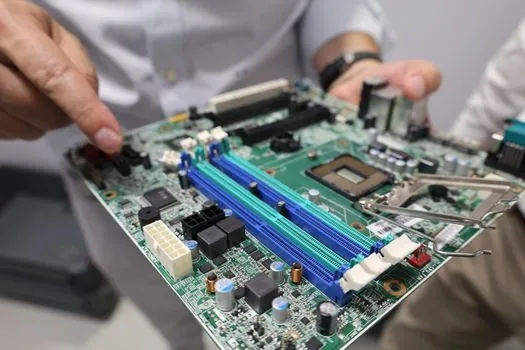
Every pneumatic line reduces to a short parts list: a positive-displacement blower or compressor that generates the pressure or vacuum, a feeder (rotary valve, flap valve, or butterfly valve) sized to the material, a conveying line (typically metal pipe), a receiver with filter, and diverter valves to route product to multiple destinations [S4][S8]. Blower selection is driven by system type, material characteristics, and conveying distance; the same line at 50 m and at 250 m will not share a blower curve [S8].
Carriers that are starved for service access tend to over-spec the rotary airlock and under-spec the diverter, which is the wrong way around: a worn airlock leaks air and kills the conveying ratio, while a pneumatic fitting or a wye diverter that is correctly sized for the material and the duty cycle is the part that keeps a multi-station system honest. Flex-tube diverters and wye configurations allow several discharge points to feed a shared receiver, eliminating the need for individual filter receivers at every drop point and shrinking the dust-collection footprint [S7].
Selection Criteria That Drive the Decision
Selection hinges on six gates, in roughly this order of weight: material bulk density and particle size, throughput in t/h or lb/h, conveying distance and routing complexity, mode (vacuum vs. positive pressure), product fragility and contamination tolerance, and available service air or blower power [S3][S4]. The same source that frames these criteria also flags safety and standards compliance as a non-negotiable gate, because reactive powders and combustible dust shift the design toward nitrogen inerting, explosion isolation, and ATEX- or IECEx-rated hardware [S3].
A useful shorthand for fulfillment: if the product is free-flowing, non-reactive, and the route is under 150 m with a single receiver, dilute-phase vacuum is the default. If the product fractures, is hygroscopic, or the line exceeds 200 m with multiple bends, dense-phase pressure pays for itself in reduced air consumption and gentler handling. If the product is a fine powder at high tonnage, air-activated gravity deserves a look, but only where vertical drop and floor loading allow it [S2].
Comparison of the Three Modes on Decision Criteria
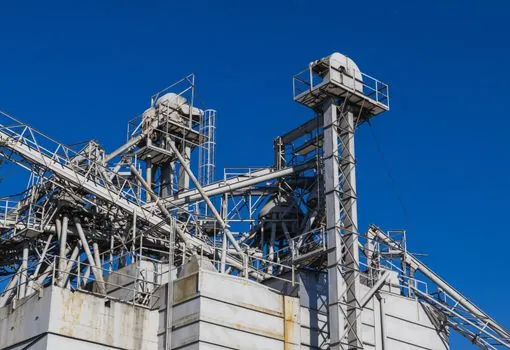
On the four criteria that most often decide a fulfillment build, the modes line up as follows. Dilute-phase vacuum offers low capital cost and easy multi-point pickup, with high air consumption and moderate product degradation at 3,200+ fpm typical velocity [S2]. Dense-phase pressure offers low velocity (gentle handling), low air consumption, and the ability to feed directly into enclosed process vessels vented to downstream dust collection, but at higher capital cost and longer purge cycles per batch [S2][S7]. Air-activated gravity offers the lowest energy use where the geometry fits, but it demands a downhill or flat route, drilled or slotted deck sections, and a dust collection strategy at the discharge [S2].
For a parcel hub that handles 5–20 t/h of plastic pellet or regrind across 200–500 m of routed pipe, the operating-cost crossover typically lands at the boundary where a second blower would otherwise be needed to push a dilute-phase line; that is the point at which a dense-phase system should be costed as an alternative. For an operation that simply needs clean transport of a non-fragile granular feedstock, a dilute-phase vacuum system with a single positive-displacement blower and a central filter receiver is hard to beat on installed cost and on the simplicity of the controls package [S8].
Where Pneumatic Fits (and Where It Does Not) in E-Commerce
Pneumatic conveying is a fit where the product is a dry bulk solid that must arrive at a pack station or a returns line clean, dust-free, and at a controlled rate; it is the wrong tool for individual parcels, totes, or anything that has a shipping label already applied, which is the bulk of the e-commerce conveyor workload and is still the domain of belt conveyors and sortation [S5]. The useful overlap is in the upstream and downstream of the parcel flow: resin and regrind movement in a returns-recycling loop, dry-ice or coolant pellet handling in cold-chain nodes, sugar or starch feed in co-located food packaging, and additive dosing for in-house label or mailer production.
That overlap is also where dust control, noise, and condensation become real constraints: a pneumatic silencer on the blower discharge is not optional in a occupied warehouse, and the receiver filter must be sized for the material's bulk density, not the line's nominal throughput, or it will load with fines and starve downstream. Operators that ignore these two pieces tend to blame the conveyor when the real failure is the noise complaint or the filter change interval.
Implementation Signals to Track

Trackable signals in the next planning cycle: (1) whether the site's bulk-goods tonnage crosses the 5 t/h threshold, which is where the dilute-vs-dense operating-cost crossover starts to bite; (2) whether the conveying distance exceeds 200 m or includes more than six bends, which is where blower sizing and line erosion diverge from the textbook curves; (3) whether the product is hygroscopic or explosive-dust-classed, which forces a redesign around inert gas, explosion isolation, and ATEX/IECEx hardware regardless of throughput. [S2]
A related reference for material handling in parcel and ULD flows is covered in the air-cargo bucket elevator selection map, which covers the upstream parcel side of the same fulfillment picture. For dry bulk downstream, the engineering fundamentals tracked here, plus the pneumatic cylinder, pneumatic tubing, and pneumatic actuator choices that drive the diverter and blower-skid assembly, are the components a fulfillment engineer should pin down before locking in the conveyor OEM.