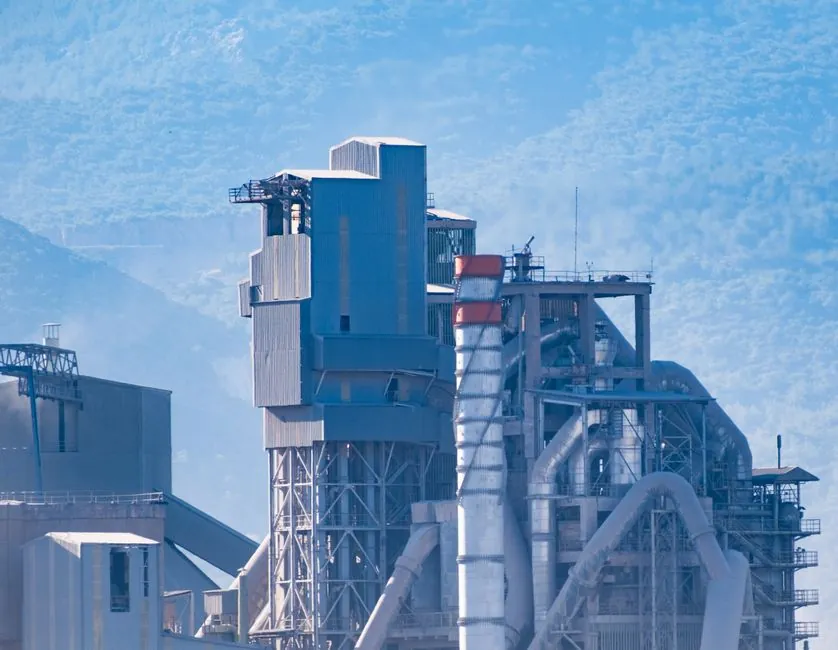
A warehouse-automation bucket elevator is specified against seven first-pass data points: material density, capacity in cubic feet per hour or bushels per hour, discharge height, material temperature, moisture content, maximum lump size, and percent of lumps [S1]. Skipping any one of these forces a re-quote once structural steel and drive sizing are already committed.
For light-duty warehouse and parcel handling, capacity bands run from 75 BPH on a 4 in (102 mm) belt up to 8,000 BPH on a 24 in (610 mm) belt in the Universal Industries U-Series, with the U-94ED delivering 94 ft3/hr (2.7 m3/hr) and the U10-10000 delivering 10,000 ft3/hr (283 m3/hr) on the same architectural platform [S3]. The wide range tells a specifier that model number, not marketing copy, drives the footprint.
Spec gate 1: material classification codes
Material characteristics are coded before the elevator is sized, and the code dictates bucket shape, spacing, and belt speed. The Martin Sprocket selection code uses a density column plus a size column: A200 for very fine material passing a No. 200 sieve (0.0029 in and under), B6 for fine material passing 0.132 in, C1/2 for granular up to 1/2 in, D3 for granular 1/2–3 in, D7 for 3–7 in, D16 for lumpy up to 16 in, and DX for any lump over 16 in with the actual size written in [S5].
Pairing the size code with bulk density fixes whether a centrifugal or continuous bucket design is correct. Centrifugal discharge runs at higher belt speed and is matched to free-flowing, low-lump feeds; continuous discharge runs slower to handle friable, abrasive, or high-temperature material and keeps bucket fill closer to 75–85% rather than the 90%+ target of a high-speed centrifugal unit. Picking the wrong type is the most common rework cause in retrofit warehouse projects.
Spec gate 2: capacity, lift height, and footprint envelope
Capacity must be quoted in two units and the elevator model must be checked against both. The Chief CBE48 design guide catalogs standard models from 500 BPH (13 MTPH) up to 20,000 BPH (544 MTPH), with 750, 1,000, 1,500 (40 MTPH implied), 5,000 (136 MTPH), 6,000 (163 MTPH), 7,500 (204 MTPH), 10,000 (272 MTPH), 12,000 (326 MTPH), and 15,000 BPH (408 MTPH) sitting in the mid-range [S4]. Below 500 BPH, units like the U-94ED at 75 BPH (94 ft3/hr) cover the small-footprint warehouse mezzanine use case [S3].
Lift height and center distance set the structural loading, the leg length, and the number of buckets on the belt. Layout data the supplier expects on a submittal includes lift height, horizontal center distances, hopper dimensions, and discharge chute angles, plus foundation and support structure requirements [S2]. For warehouse retrofits where the leg must thread an existing structural bay, the center distance is often the binding constraint, not throughput.
Spec gate 3: centrifugal vs continuous discharge trade
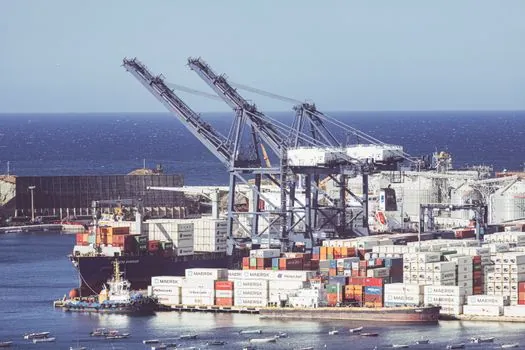
Centrifugal discharge elevators throw the material out of the bucket at the head pulley using belt speed in the 250–400 fpm range and are the default for free-flowing, non-friable product such as grain, plastic pellets, and dry granular fertilizer. Continuous discharge, including the gravity-tilt EASY DUMP configuration on the Universal U-Series, runs at lower belt speed and the bucket orientation is changed mechanically as it passes over the head, giving a gentler cascade suited to fragile or coated product [S3].
For warehouse automation carrying sealed cases, totes, or food-grade bulk, the EASY DUMP speed option on U-94ED through U10-10000 is published as giving significantly less product damage than centrifugal-speed operation, with the caveat that the gentle-handling speed rating is only guaranteed on the lowest capacity for each elevator model [S3]. That caveat is the engineering reason most spec sheets pin a single BPH per model instead of a range.
Spec gate 4: belt vs chain and construction materials
Belt elevators are the default up to roughly 400 ft3/hr-class material; chain elevators take over when the material is hot, abrasive, or corrosive, or when the lift is long and belt stretch becomes a maintenance issue. Universal Industries publishes the option of chain instead of belt on U-Series elevators when the material runs at extreme temperatures or carries hostile characteristics [S3].
Bucket and casing material selection follows the same logic. Standard U-Series construction is powder-coated carbon, stainless, or galvanized steel, with buckets offered in HDPE, carbon steel, nylon, and urethane [S3]. For warehouse food and pharma zones, stainless casing with HDPE or urethane buckets is the common pair; for corrosive chemical warehouses, galvanized or stainless with nylon buckets is the safer pick. Floveyor also lists medium front (MF), high front (HF), and super capacity (SC) bucket profiles as selection variables that change fill ratio and discharge geometry independently of the elevator model [S7].
Spec gate 5: drive package, sensors, and safety devices
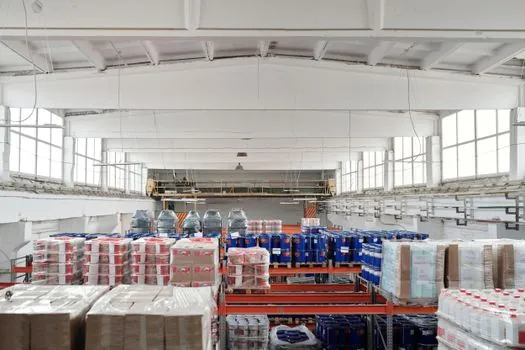
Drive sizing is the second-most-expensive line item after structural steel, and the spec sheet must list motor horsepower, gearbox ratio, and RPM [S2]. For a U3-4300 at 3,500 BPH (4,375 ft3/hr, 124 m3/hr) on a typical 30–40 ft lift, expect a 5–10 hp motor with a right-angle worm or helical-bevel gearbox, sized for a service factor of 1.4–1.6 to absorb warehouse start-stop cycling.
Safety and instrumentation items belong on the submittal, not as afterthoughts: belt misalignment switches, electronic speed guards, zero-speed switches on the head pulley, and explosion relief panels on the casing are all catalog items from Cimbria's bucket elevator line, supplied as data-sheet subassemblies rather than field-fabricated [S6]. For warehouse dust-handling service, pairing the elevator with a dust detector-class particulate monitor at the discharge is a common spec-driven move, since the same vendors that publish elevator data sheets also publish the relay and trip thresholds.
Spec gate 6: warehouse-automation integration constraints
Bucket elevators in automated warehouses are downstream of a PLC-controlled sortation or palletizing cell, so the elevator must hand off a metered, predictable mass flow to the next conveyor. This is where the spec sheet's "loading and discharge arrangements" field, including hopper dimensions and chute angles, becomes the integration point rather than a mechanical detail [S2]. A hopper that is too small causes surge-induced belt slip; a discharge chute that is too shallow causes back-spill into the bucket return path.
For PLC handoff, the elevator needs a discrete run, fault, and at-speed contact, and a 4–20 mA load signal if the cell is closed-loop weight controlled. That signal is best read from a load cell on the boot section rather than a pressure transmitter on the discharge air, because the boot mass is the direct proxy for bucket fill. For higher-end lines, a flow meter on the infeed conveyor upstream of the boot can be cross-checked against the elevator's published BPH to detect bucket degradation or belt slip before the next shift.
Spec gate 7: comparison across elevator classes
Three elevator classes cover most warehouse-automation use cases, and the choice is driven by four criteria: capacity, lift height, material temperature, and required gentleness of handling. Centrifugal belt units cover up to roughly 4,000 BPH on abrasive-free dry bulk and use the smallest footprint per BPH. Continuous-discharge belt units (EASY DUMP class) cover 75–8,000 BPH on fragile or coated product, run slower, and are the right pick for food and parcel handling. Chain-elevator units cover hot, abrasive, or corrosive material above 400 ft3/hr and dominate where centrifugal belts fail, with a higher unit cost and a larger head-section. [S3]
Concrete trade-off numbers from the published tables: a U1-630 centrifugal-class unit at 500 BPH (630 ft3/hr, 17 m3/hr) on a 6-1/2 in (165 mm) belt sits in the mid-volume range, while a U3-5600 at 4,500 BPH (5,625 ft3/hr, 159 m3/hr) on a 12 in (305 mm) belt handles the heavy-warehouse case on the same architectural platform [S3]. On a site visit for a bucket elevator selection for cold chain logistics project, the same model table applies but with stainless plus chain spec'd instead of carbon plus belt, because cold-chain wash-down rules out painted steel.
Failure modes and validation steps before sign-off
The four most common in-service failures on warehouse bucket elevators are belt slip from under-sized drive, bucket back-spill from a too-shallow discharge chute, belt misalignment from incorrect take-up tension, and explosion risk from combustible dust accumulation inside the casing. Each has a countermeasure on the submittal: a service-factored drive, a chute angle above the material's angle of repose, an alignment switch on both sides of the head and boot, and explosion relief panels on the casing [S6].
Pre-shipment validation should include a no-load run at rated RPM to confirm the speed guard picks up the head pulley pulse correctly, a no-load alignment check at both pulleys, and a bucket-to-belt pull test on at least three sample buckets. A useful cross-reference for a similar spec-driven selection is the bucket elevator selection for food and beverage map, which reuses the same seven spec gates but adds sanitary-seal and wash-down requirements to the bucket-and-casing material list. For a more hazardous warehouse service such as chemical shipping, the bucket elevator selection for chemical shipping reference applies the same seven gates with chain, explosion relief, and a higher drive service factor.
Trackable signals after sign-off: the published BPH at EASY DUMP speed must be re-verified at commissioning with a weigh-belt reading, and the boot section's load-cell baseline should be logged against the industrial valve and PLC trip setpoints before the first production shift so any drift in bucket fill shows up in the trend rather than as a maintenance call.