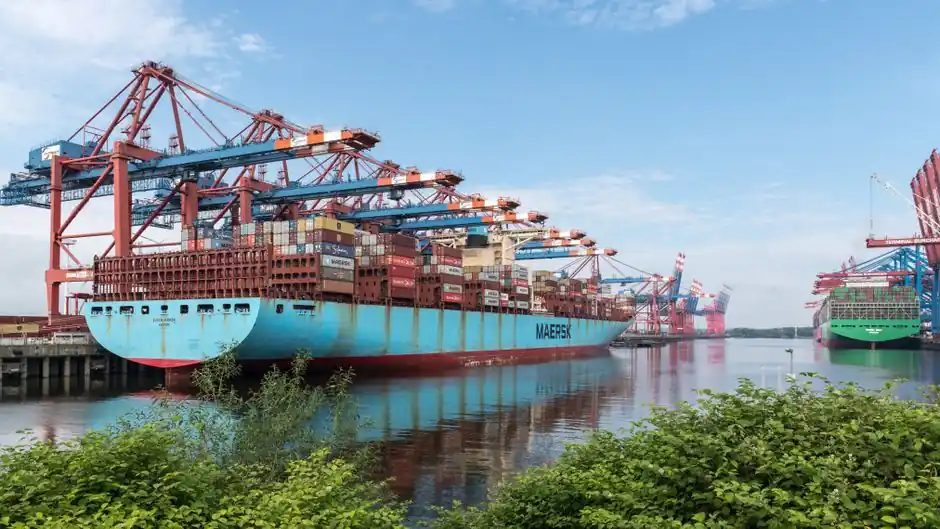
Port terminals handling dry bulk cargo from 500 BPH (13 MTPH) bagged-grain barges to 30,000 BPH (816 MTPH) mineral concentrate vessels run centrifugal and continuous bucket elevators as the dominant vertical-lift workhorse, with 8-to-48 inch pulley diameters and belt speeds of 1.59 to 3.65 m/s matched to capacity [S3].
Selection of a port-duty unit is driven by eight published data points: material type, bulk density, capacity in cubic feet per hour or BPH, discharge height, material temperature, moisture content, maximum lump size, and duty hours per day, all logged on the OEM specification form before the gearmotor is sized [S1][S7].
Centrifugal vs Continuous Discharge: Selection Gates
Centrifugal discharge elevators are specified for free-flowing, fine-to-lumpy dry bulk where centrifugal force at the head pulley throws material clear of the buckets, with standard industrial units running belt speeds from 314 FPM (1.59 m/s) at 500 BPH (13 MTPH) on a 10 inch (254 mm) pulley up to 718 FPM (3.65 m/s) at 28,000-30,000 BPH (762-816 MTPH) on a 48 inch (1219.2 mm) pulley [S3].
Continuous bucket elevators, with buckets spaced on a closely-pitched chain, carry slower, more abrasive, hot, or high-moisture cargoes such as clinker, fertilizer, and wet grain, and are the standard pick on port unloaders where product degradation or belt slip is unacceptable [S1]. Material temperature, moisture percentage, and lump size are the three published discriminators between these two architectures on the OEM data sheet [S1].
Capacity Range and Pulley Mapping for Port Throughput
The Chief CBE series published port duty capacities laddered in standard steps: 500 BPH (13 MTPH), 1,000 BPH (27 MTPH), 2,000 BPH (54 MTPH), 5,000 BPH (136 MTPH), 10,000 BPH (272 MTPH), 15,000 BPH (408 MTPH), 20,000 BPH (544 MTPH), and 30,000 BPH (816 MTPH), each matched to a specific pulley diameter and bucket spacing, with 6x4 inch (152.4x101.6 mm) buckets on 12 inch (304.8 mm) centres at the low end and twin 16x8 inch (406.4x203.2 mm) buckets on 8.5-13 inch (215.9-330.2 mm) centres at the 20,000-30,000 BPH tier [S3].
For mid-capacity European and Asian feed-and-bulk terminals the ANDRITZ BE range covers 15-141 m³/h in 8 model sizes, BE50 through BE200, with belt widths of 120-250 mm, 1.1-18.5 kW motors, and 50 m maximum lift height, an envelope typical of the 35-150 m discharge heights found in port-applied grain and biofuel elevators [S5].
Bulk Density, Lump Size, and Bucket Spacing
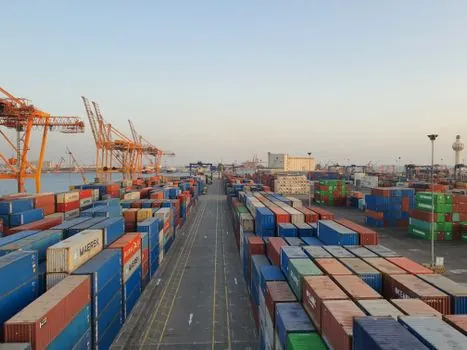
Bulk density, lump size, and the percentage of lumps in the feed directly govern bucket volume and the spacing on the belt, as codified in IS 7167 (1974), the Indian Standard that tabulates recommended elevator type, bucket profile, and speed for materials from aluminium ore and bauxite to crushed bones, fertiliser powders, and bagged-barley cargoes [S2].
For port grain and fertilizer cargo, published bucket-and-spacing data for a 6,000 BPH (163 MTPH) centrifugal unit is 12x7 inch (304.8x177.8 mm) buckets on 8-12 inch (203.2-304.8 mm) centres at 3.20 m/s on a 36 inch (914.4 mm) head pulley running 65 RPM, a geometry that drops to a single 6x4 inch bucket on 6 inch (152.4 mm) centres at 314 FPM for the 750 BPH (20 MTPH) bagged-spice tier [S3].
Drive, Belt, and Safety Package
Port-grade specifications require drive details (motor horsepower, gearbox ratio, head RPM), belt construction (heavy-duty rubber or PVC, oil-resistant option for fertilizer and oilseed cargo), bucket material (HDP-MD or malleable iron), and the full safety-device list: belt misalignment switches, electronic speed guards, explosion relief panels, and back-running stops [S4][S5][S6][S8].
Standard Cimbria safety accessories published for port-duty bucket elevators include the Electronic Speed Guard, the Misalignment Detector XY-81.AT2.11, and Explosion Relief panels matched to ATEX dust zones, while Kongskilde KBE units ship standard with a back-running stop, mechanical belt tightener, clean-out door, and a shaft-mounted gear motor in a galvanised industrial-quality casing [S6][S8]. Shaft-mounted gear motors in the 1.1-18.5 kW range cover the BE50-to-BE200 envelope, with belt widths of 120, 150, 200, and 250 mm matched to bucket sizes S100 through S230 [S5].
Selection Criteria: A Decision Map for Port Specifiers
Four criteria govern the published comparison between the main elevator types used in port logistics: (1) Material character, where centrifugal units serve dry free-flowing grain and meal at 1.59-3.65 m/s, while continuous units carry hot, wet, or lumpy clinker and fertilizer; (2) Capacity tier, with the centrifugal CBE48 frame rated 500-30,000 BPH (13-816 MTPH) on pulleys from 10 inch (254 mm) to 48 inch (1219.2 mm), and the continuous BE series from ANDRITZ covering 15-141 m³/h on belts 120-250 mm wide; (3) Bucket volume and spacing, scaling from 6x4 inch (152.4x101.6 mm) at 12 inch (304.8 mm) centres to dual 16x8 inch (406.4x203.2 mm) on 8.5-13 inch (215.9-330.2 mm) centres as capacity climbs past 20,000 BPH; and (4) Drive and safety envelope, with shaft-mounted gear motors 1.1-18.5 kW, belt speeds of 314-718 FPM, and the standard safety stack of speed guard, misalignment switch, back-running stop, and explosion relief [S3][S5][S6][S8].
Port Use Cases and Limits
At a dry-bulk grain terminal a 10,000-20,000 BPH (272-544 MTPH) centrifugal unit on a 48 inch (1219.2 mm) head pulley at 3.65 m/s is the published work-rating for ship-to-silo transfer, while cement and clinker terminals at the same throughput select a continuous bucket elevator on a chain because of higher temperature, dust load, and lump content [S1][S3].
For a fertilizer or oilseed berth where oil-resistant belt, pressure transmitter-linked speed interlocks, and ATEX explosion relief are mandatory, the published spec form requires that the OEM capture material temperature, moisture percentage, and explosion-class data points before sizing the gearmotor [S1][S4][S6]. A typical lift height of 35-50 m at 50-141 m³/h on the BE150-BE200 frame covers most 8-12 story port-silo elevations, beyond which a second lift stage or a deeper boot is required [S5].
Sourcing, Standards, and Data Discipline
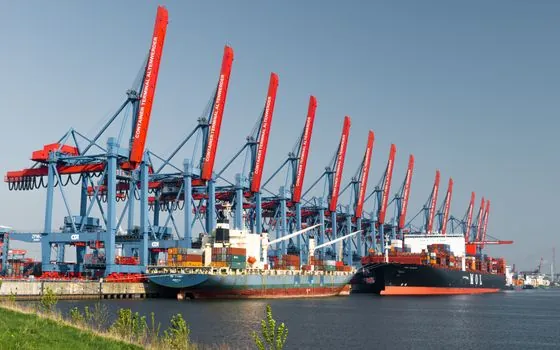
The two published standards that anchor port bucket-elevator selection are IS 7167 (1974), the Indian Standard that codifies bucket profile, speed, and percentage filling for named bulk cargoes, and the OEM specification forms from Screw Conveyor Corporation, Chief Industries, TAPCO, and Cimbria, which capture capacity, lift height, lump size, moisture, and temperature as the irreducible data set [S1][S2][S3][S7]. Port specifiers should compare the ANDRITZ BE range and the Chief CBE series against the Kongskilde KBE platform on three numbers: peak capacity in m³/h or BPH, lift height in metres, and motor kW per m³/h, then verify the safety stack (speed guard, misalignment switch, back-running stop, explosion relief) is rated for the dust zone declared on the data sheet [S5][S6][S8]. A vendor offering a complete spec form, matched safety accessories, and an ATEX-compatible drive package is the verifiable procurement signal; published data on the spec sheet and the safety datasheet are the engineering deliverables, not a brochure promise [S4][S6][S7]. For related cross-industry selection logic in adjacent heavy-equipment categories, see the Skid Steer Loader Selection for Road Construction: Spec Map and Decision Gates reference, which applies the same capacity-versus-architecture trade-off. Sourcing for similar 2026 reference work on conveying equipment types also includes the Bucket Elevator Selection for Electronics Handling: Spec Map, where finer bucket profiles and antistatic belts are specified instead of port-grade mining geometry.
Component reference pages worth checking: flow meter.