Pneumatic cylinders built to ISO 15552 carry a maximum working pressure of 10 bar (1000 kPa) at the standard's defined reference conditions, while general industrial air rams are commonly run between 6 bar and 8 bar shop-air pressure [S3].
Across the broader market, nominal pressure ratings span 3.5 MPa to 16 MPa and bore sizes range from 20 mm up to 160 mm depending on the series [S1]. The most frequently specified "normal" operating window sits between 60-100 psi (roughly 4-7 bar) for general automation, robotics, and assembly lines [S4].
ISO 15552 Working Pressure and Bore Range
ISO 15552 is the dominant international standard for double-acting, single or double-rod pneumatic cylinders up to 25 bar maximum, and the standard's defined maximum working pressure is 10 bar (1000 kPa) [S3]. The same standard family covers bore sizes 32-320 mm for tie-rod and profile cylinders, and ISO 6432 covers mini-cylinders down to 8 mm bore [S3]. For any cylinder specified to ISO 15552, the spec sheet should show both a maximum working pressure figure and a reference temperature figure (typically 23°C) so the derating curve is reproducible.
Selecting bore size against the 10 bar ceiling matters because force scales with the square of the bore: doubling bore from 40 mm to 80 mm at 6 bar roughly quadruples thrust from ~75 kg to ~300 kg, so running at the ISO pressure ceiling without re-checking the rod column and end-cap machining is how buckling and seal blow-by incidents start [S5].
Operating Pressure Bands by Application
Low-pressure air cylinders (60-80 psi, roughly 4-5.5 bar) are specified for packaging, light-duty indexing, and minor automation; medium-pressure (80-100 psi, 5.5-7 bar) covers most robotics, assembly lines, and general manufacturing automation; high-pressure service above 100 psi, sometimes exceeding 150 psi, is reserved for heavy machinery and high-force pressing where the OEM has validated the body, rod, and end-cap machining for the elevated stress [S4].
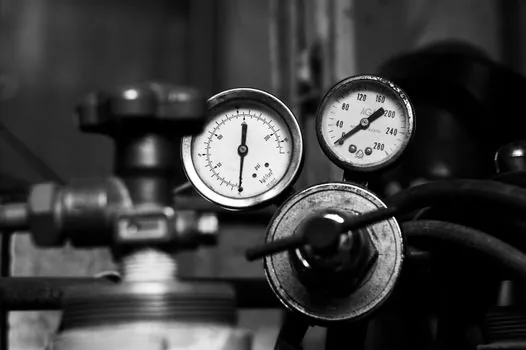
For shop air that is regulated at the standard 6 bar (87 psi) setpoint, theoretical air consumption per 10 mm of stroke can be tabulated against bore: a 32 mm bore at 6 bar uses a small fraction of the air that a 200 mm bore uses, and standard sizing tables publish these values at 6 bar reference to make compressor sizing straightforward [S8]. Designers regularly verify pressure at the cylinder port with a gauge, not at the regulator, because line losses across filters, dryers, and pneumatic FRLs can drop 0.2-0.5 bar before the air reaches the cylinder.
Standard Temperature Limits: -20°C to 80°C
Most standard pneumatic cylinder variants are rated for ambient and fluid temperatures down to -20°C, which covers the majority of factory floor and outdoor-sheltered installations [S6]. For cold-store and refrigeration work down to -40°C, the cylinder version TT/T3 with low-temperature seals and special grease is the documented option; above 80°C, fluorocarbon (FKM) seals and high-temperature lubricant substitution are required, and the manufacturer must be consulted for sustained service above 100°C [S6].
Series MB documentation explicitly separates "maximum operating pressure", "minimum operating pressure", and "ambient and fluid temperature" as three independent ratings on the same data sheet, and adds a separate "maximum ambient temperature for the rod boot itself" line for cylinders fitted with a bellows or boot [S9]. That separation matters because the elastomer in the rod wiper, the piston seal, and the boot each have a different upper limit, and the lowest of the three governs the actual service ceiling.
Seal and Lubricant Materials Set the Practical Ceiling
The published pressure ceiling is meaningless without matching seal and lubricant ratings. NBR (nitrile) piston and rod seals are the default for standard-temperature service and work with petroleum-based lubricants, while FKM (Viton-class) seals are needed when the cylinder runs above 80°C or in chemically aggressive ambient air [S6]. Cold-store TT/T3 variants substitute low-temperature elastomer compounds so the seal does not go glassy and leak at -40°C [S6].
Because the rod wiper is the first seal to see contamination, the pneumatic cylinder seal stack is a three-part system: piston seal (pressure-side dynamic seal), rod seal (static pressure-side seal around the rod), and wiper (excluder that keeps dust, paint, and washdown media out of the rod bushing). For long-stroke, high-cycle applications, getting all three from the same material family and same temperature rating is the cheapest insurance against early leak failure.
Selection Criteria Comparison: ISO 15552 vs Compact vs Mini
Three families cover most general-purpose pneumatic work, and the decision turns on bore, stroke, pressure ceiling, and mounting footprint rather than on brand. [S3]
ISO 15552 profile or tie-rod cylinders (32-320 mm bore) carry the 10 bar maximum working pressure, accept standard tie-rod or profile mounting, and are the safe default for new machinery in the 50-320 mm bore range [S3]. ISO 21287 compact cylinders (20-100 mm bore) share the same 10 bar pressure class but use a shorter overall length and integrated mounting, which suits clamping and short-stroke ejection on tight footprints. ISO 6432 mini-cylinders (8-25 mm bore) are built to a different dimensional standard and are the right pick for low-force, high-cycle work like small-parts pick-and-place, but their smaller rod diameter caps the usable stroke before buckling becomes a concern.
For long-stroke service where bore and stroke both get large, the stroke-to-bore buckling limit check has to run alongside the pressure check, because Euler column failure of the rod at full extension is a more common limit than the 10 bar pressure ceiling. And for any application that swings between hot washdown and cold-store loading, the pneumatic cylinder seals selection determines whether the cylinder survives the duty cycle, regardless of the rated pressure class.
Sourcing, Standards, and Verification
Always request three values on the OEM data sheet before purchase: maximum working pressure (with reference temperature), minimum operating pressure (for spring-return single-acting units that can stick if inlet pressure is too low), and the ambient plus fluid temperature band [S9]. The data sheet should also list the standards the cylinder was built and tested against: ISO 15552 for the 32-320 mm profile family, ISO 6432 for 8-25 mm mini-cylinders, ISO 21287 for compact 20-100 mm units, and ISO 6020 for hydraulic-derived heavy-duty pneumatic service [S3].
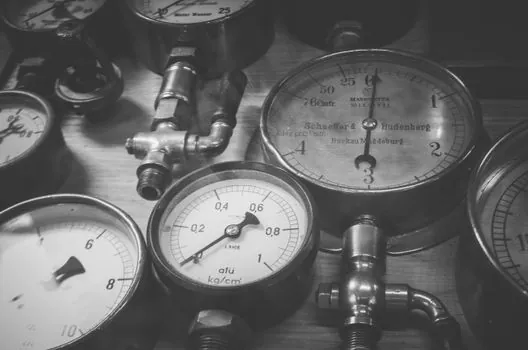
For pneumatic circuits that drive valve actuators, clamping fixtures, or material-handling gates inside a construction machinery and equipment assembly cell, the same pressure ceiling governs both the cylinder and the checking and testing apparatus used to certify the line before commissioning. Pressure-test gauges should be rated to at least 1.5x the working pressure and re-calibrated annually, because a gauge that reads 6 bar while the line is actually at 4 bar is the most common root cause of sluggish-cylinder complaints on a freshly built machine.
Two trackable signals for the next quarter: confirm whether your OEM publishes a pressure-derating curve above 80°C (most do, but the slope differs by seal compound), and verify the FRL pressure drop on your shop-air ring because a half-bar loss between regulator and cylinder port is a more common limit than the cylinder's own rating.