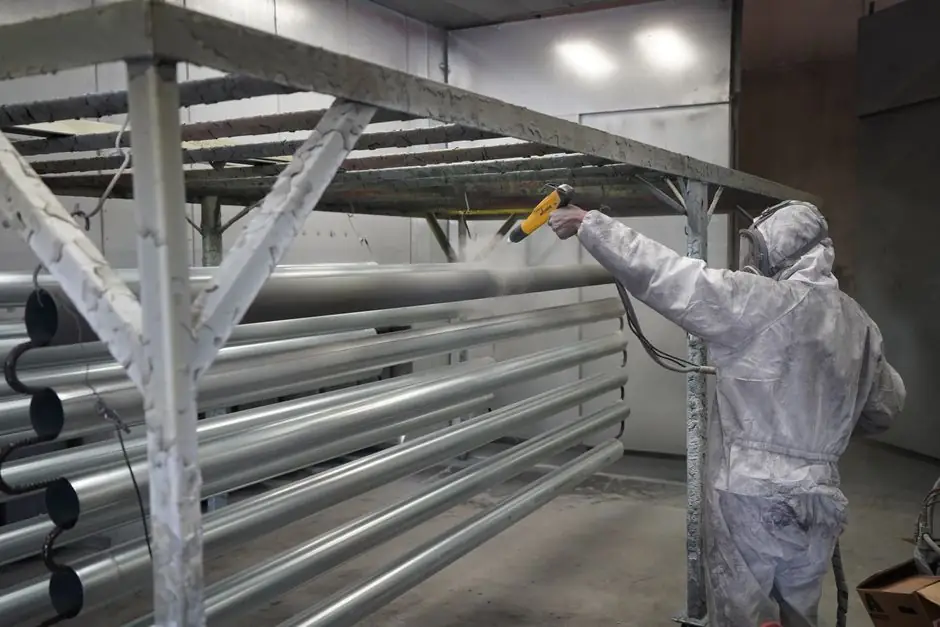
A pneumatic nail gun drives fasteners with compressed air, and the right tool for interior finishing is the one whose gauge, collation, and operating pressure match the workpiece thickness and trim profile [S1]. Zhejiang Chaoyue Hardware & Chemicals, a Chinese OEM founded in 1993 with two production bases and roughly 500 staff, supplies the brad nails, finish nails, and strip nails that feed these tools across 20-plus export markets [S1].
Finishing-grade pneumatic nailers broadly split into three gauge families, 23 gauge (headless pins, 0.6-0.7 mm shank), 18 gauge (brad nails, 1.0-1.4 mm shank), and 15-16 gauge (angled finish nails, 1.4-1.6 mm shank), each engineered for a different hole visibility and holding power on MDF, plywood, and softwood trim [S1]. Coil collation serves high-volume framing, while 0/20 degree and 28-34 degree paper or plastic strip collation are the formats interior trim carpenters actually load on site.
Gauge Selection by Trim and Cabinet Application
23 gauge headless pins leave a hole under 1 mm and are the standard for picture rail, decorative molding, and pre-finished cabinets where filling is impractical [S1]. 18 gauge brad nails (typical 10-50 mm length) are the workhorse for door jamb stops, base shoe, and light casing, providing roughly 1.4 mm shank holding without splitting mitered joints on pine or poplar [S1]. For heavier door casings, window stools, and stair treads, 15-16 gauge finish nails (commonly 25-64 mm, 20 or 34 degree collation) deliver the withdrawal resistance that brads cannot.
Workpiece material changes the math: hardwoods like oak or maple under 12 mm thick routinely split with 16 gauge at 32 mm length, so stepping down to 18 gauge 25 mm brads or switching to 23 gauge pins is the field fix. Plywood edge nailing into MDF, a common cabinet back-to-side joint, takes an 18 gauge 15-20 mm brad at 5.5-6.0 bar (roughly 5.4-5.9 kgf/cm squared) to bury the head without blowout [S1].
Collation Format: Strip Angle and Magazine Geometry
Two collation angles dominate interior work: 0/20 degree straight strip and 28-34 degree angled strip. 20 degree straight magazines sit lower on the work, useful in tight toe-kick or cabinet interior nailing, while 28-34 degree angled magazines give better access into inside corners and stair stringers because the nose profile is shorter [S1]. Paper-tape collation (common on 34 degree finish nailers) fragments into dust on firing, whereas plastic-tape collation survives drops and damp job sites but leaves a small tab to clear after each strip.
Strip-nail product lines from Asian OEM catalogs confirm 28 and 34 degree paper strip configurations as the standard interior trim format, and round-wire coil nails (commonly 16 degree) are reserved for siding, pallet, and packaging lines rather than cabinetry [S1]. Selecting a collation that matches the locally stocked fastener format is often the cheapest way to avoid a 4-6 week import wait on a remote job.
Air Supply, Pressure, and Duty Cycle

Operating pressure for most finishing nailers sits in the 3.5-4 kgf/cm squared (50-57 psi) range; installers running 4 kgf/cm squared typically see cleaner countersinks than those at the upper 7 kgf/cm squared limit found on framing guns [S2]. A small 6-9 CFM @ 90 psi oil-lubricated or oil-less compressor supports a single trim carpenter's brad or finish nailer continuously; two carpenters with mixed pin and brad guns need a 12-15 CFM twin-stack or a hard-mounted reciprocating unit to avoid pressure sag during burst firing.
Dust and condensate control matters more than peak CFM. A regulator with a 5 micron particulate filter and a moisture separator at the gun inlet keeps oil aerosol off pre-finished trim, and an in-line lubricator set to 1-2 drops per minute extends the O-ring life on a tool fired 4,000-6,000 cycles per day [S2]. For seasonal shops that run sub-zero supply air, fitting a heat exchanger upstream of the regulator prevents seal embrittlement that otherwise surfaces as nose-bolt leaks by mid-winter.
Tool-Side Criteria: Weight, Nose, Depth, and Safety
Interior finish work rewards guns under 1.6 kg with a non-marring nose tip, a tool-free jam clearing door, and a depth-of-drive adjustment that can be dialed flush or countersunk without swapping bits. Actuation mode is a second-tier decision: sequential (single fire, contact work) for cabinetry where double nailing would split the part, versus bump (contact) for speed on long runs of baseboard where misfires stay cosmetic. [S1]
For comparison at a glance, the three dominant interior finishing platforms line up against typical selection criteria as follows: a 23 gauge headless pin gun is the lightest (about 1.0-1.2 kg), runs at 3.5-4 kgf/cm squared, holds roughly 100-130 pins per strip, and leaves a near-invisible hole; an 18 gauge brad nailer at 1.2-1.5 kg, 4-5 kgf/cm squared, 100 brad strip, splits hardwoods under 20 mm less than a 15 gauge; a 15-16 gauge angled finish nailer at 1.6-1.9 kg, 5-7 kgf/cm squared, 50-70 nail strip, gives the highest withdrawal load but the most visible fill requirement [S1]. Each maps to a finishing-material category through the trim work it is asked to fasten, the same logic used in selecting finishing material for a wall or ceiling.
Common Failure Modes and Field Fixes
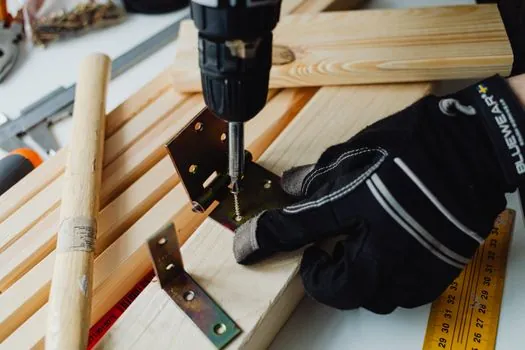
The three recurrent complaints on interior trim lines are misfires (no drive), over-drive (head buried too deep), and nail curl at the tip. Misfires trace to low supply pressure under 3.5 kgf/cm squared, a kinked 6-8 mm ID hose over 8 m, or a worn piston O-ring; over-drive is almost always the depth-of-drive dial set one step too high after switching from soft MDF to harder maple. Nail curl, where the fastener hooks sideways as it leaves the nose, points to a damaged driver blade or a wrong collation strip jammed in the magazine, both fixed by clearing the magazine and inspecting the blade tip for chips. [S1]
Air-side contamination is the silent killer: unfiltered supply slowly loads the nose valve with oil varnish, and on a gun fired 2,000 cycles a shift the sticky-valve symptom appears around the 6-8 week mark. A weekly 5 mL pneumatic oil charge through the inlet and a 5 micron filter element replaced every 60 days hold the duty cycle steady. Pneumatic systems more broadly follow the same supply-side discipline, as detailed in the pneumatic fundamentals entry.
Who It Is For, and Who Should Use Something Else
Pneumatic finishing nailers are the right tool for production trim carpenters, cabinet shops running 50+ cabinets a week, and flooring crews nailing 12 mm engineered plank, where cycle time per fastener and consistent depth drive pay back the compressor and hose cost. They are the wrong tool for a homeowner hanging one shelf, where a cordless 18 gauge brad driver saves the compressor rental, and for steel framing or concrete fastening, where rotary hammer, powder-actuated, or structural screw tools are required. The same pressure-discipline logic that drives a pneumatic cylinder on a production line applies to a trim gun: under-rated supply pressure breaks the cycle just as it breaks a nail. [S2]
Sourcing and Standards Reference

Most OEM pneumatic nailers ship with CE, RoHS, and on request, CSA or ETL marks for North American jobs; for European sites, EN 792-13 covers hand-held non-electric power tools safety and is the standard typically cited in tender documents. Fastener compliance tracks ASTM F1667 for driven fasteners, which lists nail diameters, head styles, and mechanical properties that buyers should cross-check against the OEM data sheet. For the broader market context, China-based OEM catalogs list 16 degree coil nails, 28 and 34 degree paper strip nails, 18 gauge brad families (F, T, DT finish, headless pin), and 22 gauge staple families as stock items, with 20-30 day lead times for non-standard lengths [S1].
Trackable signals to watch for in the next procurement cycle: OEM-published duty-cycle ratings in cycles per shift (currently a soft spec on most finishing gun datasheets, often absent), and the spread of tool-free depth-of-drive adjustment into 15 gauge angled finish nailers, currently more common on 18 gauge brad tools. For shops weighing cordless against pneumatic, the deciding question remains cycles per charge per shift, since most 18 V cordless brad drivers on the market rate 1,000-2,000 shots per battery at 18 gauge 30 mm, well below the pneumatic tool's only-on-compressor-runtime limit.
For related coverage, see Deformed Rebar Selection for Warehouses: Grade, Diameter, and Splice Map.