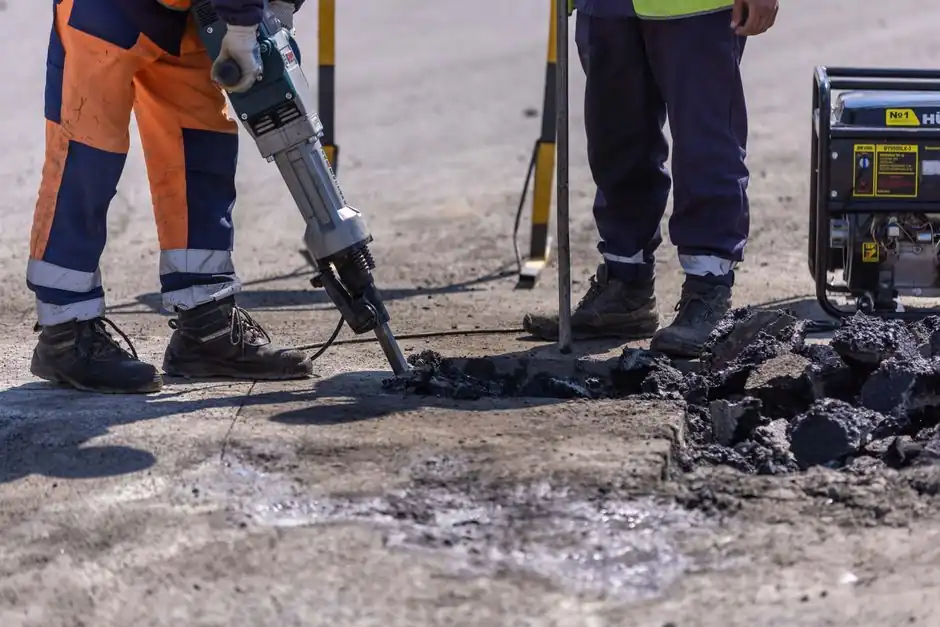
The MAX CN-650M2 pneumatic auto-feed nail gun drives 27-50mm nails into concrete and steel, the SF5040 dual-purpose unit fires 15-50mm F-type and horse-shoe brads/staples at 4-7bar with an 8.3bar ceiling, and road maintenance work crosses both tool classes in a single shift [S1][S6].
Selection lives or dies on three variables the marketing copy hides: substrate hardness (wood template vs. cured concrete vs. mild steel form-tie plate), fastener length band, and continuous-fire duty cycle; the SF5040 sits at 1.5kg body weight with a 100-piece magazine, the CN-650M2 is an auto-feed strip system aimed at structural fastening rather than finish work [S1][S6].
Substrate match: wood formwork vs. concrete and steel
For temporary wood formwork, road sign backers, and timber curb forms, the SF5040 class of 18Ga brad/staple tool handles 15-50mm fasteners into softwood and plywood at 60-100PSI (4-7bar), with a magazine capacity of 100pcs and a touch-strike safety that requires deliberate contact before firing [S1]. The unit ships at 55x245x250mm and 1.5kg (3.3Lb), which matters when a maintenance crew is overhead-fastening form lumber for hours; lighter tools drop operator fatigue and let one tech set 200-400 brads per shift on road sign and fence rebuilds [S1]. Where the work crosses into concrete patch panels, cured asphalt edging, or steel form-tie plates, the brad-class tool is the wrong instrument: 18Ga shanks will deflect, bend at the tip, or fail to penetrate, which is why road-base crews step up to the MAX CN-650M2 platform with L=27-50mm hardened drive pins rated for concrete and steel substrates [S6].
Pressure envelope and air supply discipline
The SF5040 specification sheet states a required pressure of 60-100PSI (4-7bar) and a maximum pressure of 120PSI (8.3bar), and the manual explicitly forbids exceeding 0.8MPa at the tube joint and bans oxygen, acetylene, and any high-pressure air compressor as the power source [S1]. Road-maintenance air supplies typically come from portable piston compressors in the 7-10bar cut-out range, so a regulated downstream set of 6-7bar at the nail gun protects the seal kit and prevents the depth-adjustment wheel from overdriving fasteners into old asphalt patch panels [S1]. The notes go further: drop a small amount of lubricant at the tube joint before use, verify the compressor pressure gauge is correct and reliable, and disconnect the air line plus clear the magazine before any maintenance step [S1]. Crews that skip the lubricant step usually see sticky trigger valves within the first 200 cycles, especially in dust-heavy shoulder-grading work.
Auto-feed strip vs. dual-purpose magazine for crew productivity
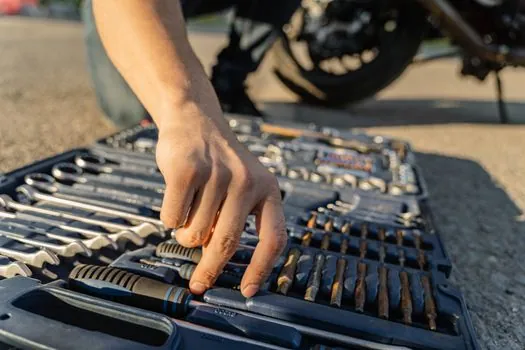
The MAX CN-770D-class auto-feed pneumatic nailer for wood framing accepts nail lengths from L=45-70mm on a tilted strip, while the CN-650M2 variant pushes L=27-50mm pins into concrete and steel on a similar auto-feed strip, both carrying a price premium over dual-purpose brad/staple tools [S3][S6]. Auto-feed systems win on road sign rebuilds, guardrail timber lagging, and bridge-deck forming because the operator does not pivot to reload every 8-10 shots, the way a 100-piece SF5040 magazine forces; in a continuous nailing workflow on a 200m guardrail run, reload time alone is the difference between one shift and two [S1][S3][S6]. The trade-off is the SF5040's 2-in-1 magazine, which fires both 18Ga brads and 18Ga staples by swapping the follower block, letting one tool cover cabinet-back tack work and ceiling-batten fastening on the same job site [S1]. For purely structural road work, that flexibility is irrelevant and the auto-feed platform is the right pick [S3][S6].
Safety interlocks and operator protection on live roads
SF5040 documentation mandates safety goggles and protective gloves, a touch-strike security system so the gun cannot fire without contact, an adjustable air exhaust to keep debris off the line of sight, and a hard ban on pointing the barrel at any person, including the operator [S1]. Live-lane road maintenance adds requirements the datasheet does not cover: high-visibility clothing, hard hat, hearing protection above 85dBA exposure (most pneumatic nailers sit in the 95-105dBA range at the operator ear), and a positive air shutoff at the manifold so a dropped tool cannot free-fire on the roadway [S1]. The manual also forbids any use near flammable or explosive materials and any environment with severe corrosion, rust, or dust, which is why milling-residue and hot-mix-asphalt (HMA) zones need either a sealed work booth or a rescheduled fastener step [S1]. Maintenance crews working next to cold milling machine selection for urban road works have to sequence the nailing pass before the milling drum exposes fresh steel aggregate that can ricochet pins.
Selection comparison: SF5040 vs. CN-650M2 vs. CN-770D class

Across the three tools named in current listings, the SF5040 covers 15-50mm brads and staples on wood at 4-7bar with a 1.5kg body, the CN-650M2 covers 27-50mm pins on concrete and steel via auto-feed strip, and the CN-770D covers 45-70mm nails on wood frame via auto-feed strip [S1][S3][S6]. Decision criteria line up as follows: substrate (wood vs. concrete/steel vs. wood-frame structural), fastener length band (15-50mm brad vs. 27-50mm pin vs. 45-70mm framing nail), magazine type (dual-purpose 100pcs box vs. auto-feed strip), and maximum supply pressure (8.3bar vs. higher compressor-fed for auto-feed framing) [S1][S3][S6]. The CN-650M2 is the only option that survives direct contact with cured concrete patch panels and steel road sign backings, and the SF5040 is the only one of the three that fires both brads and staples from one magazine, which is decisive on small sign-and-fence repair tickets where a second tool is overkill [S1][S6].
Where pneumatic nailers fit (and do not fit) in road work
Right tool: temporary wood formwork for curb and gutter pours, road sign backer installation, timber lagging on guardrail rebuilds, bridge deck form panels, and tack-down of warning markers on timber posts [S1][S3][S6]. Wrong tool: any fastening into aged concrete bridge deck that requires HILTI-class powder-actuated systems, any structural hold-down on highway railing that calls for a torque-verified bolt per state DOT specs, and any application in explosive atmospheres or near HMA where the surface temperature can degrade the tool's seals [S1]. On pneumatic actuator supplier map 2026: brands, tiers, and selection criteria the same 4-7bar regulated supply discipline shows up, and the same lubrication cadence at the tube joint applies across the pneumatic tool family for predictable seal life.
Practical buying and field check signals for 2026

Check the air regulator setpoint before the first shot (target 6-7bar for SF5040-class tools, never above 0.8MPa at the fitting), confirm the magazine matches the fastener length band the road job actually needs, and verify the touch-strike or sequential-trip safety is functional before stepping onto a live lane [S1]. Trackable signals to watch: the appearance of a 70mm-class auto-feed framing nailer priced under the CN-770D tier, and any CN-650M2 successor that drops the L=27-50mm lower bound into 20-25mm territory for thin concrete patch panels [S3][S6]. The SF5040 18Ga dual-purpose platform remains the workhorse for 15-50mm wood-side fastening on road sign and timber form work in 2026 [S1].
For component-level specifications, see pneumatic nail gun, road roller, and pneumatic.