
Total cost of ownership for polycarbonate (PC) is the sum of purchase, operating, training, maintenance, and disposal cost, discounted to present value across the asset life, per the standard TCO formula TCO = P + PV(O + T + M + W + E − S) [S1][S3].
Polycarbonate is an amorphous aromatic engineering thermoplastic, density 1,200 kg/m³, water-insoluble, and the fastest-growing of the five general engineering plastics [S5]. According to one estimate, capital hardware and software costs account for only 25% of the $6,515 per-desktop annual cost for Microsoft NT workstations, with the remaining 75% attributed to management and technology support, while the Gartner Group estimates the five-year cost of a personal computer at $44,250 [S2].
Resin Grade and Material Cost Driver
Resin grade selection sets the first cost line and propagates through every downstream TCO term; virgin optical/medical-grade PC commands a 2-4× multiplier over general-purpose injection grade at the same thickness [S5].
Polycarbonate density 1,200 kg/m³ [S5] means a 1 m² × 3 mm sheet weighs 3.6 kg, and mass-based logistics scale linearly with this density across molding, transport, and recycling yield. Glass-fiber reinforced PC (typically 10-30% GF) trades a 10-20% price uplift for 2-3× stiffness and a 20-40°C lift in heat-deflection temperature, which directly extends service life in load-bearing glazing and structural covers. For non-load-bearing indoor glazing, general-purpose grade is the cost-rational default; for outdoor or UV-exposed service, UV-stabilized or cap-layered grades are required to avoid a yellowing/brittleness failure that would otherwise compress the 15-20 year service life into 5-7 years [S5].
Processing, Tooling, and Conversion Cost
Processing cost (drying, injection molding, extrusion, or thermoforming) is the second TCO line and the line most often underestimated by buyers who compare resin price per kilogram only. [S3]
PC must be dried to ≤0.02% moisture before melt processing at 280-320°C [S5]; underdried resin hydrolyzes during molding, dropping molecular weight and producing a brittle, hazed part that fails in service. Drying energy (typically 3-4 h at 120°C), scrap rate (1-3% for well-controlled injection), and machine time are the three sub-drivers, and at modest production volumes they routinely exceed the resin cost itself. For 2-3 mm sheet, extrusion throughput is roughly 300-600 kg/h on a standard 120 mm line, and the conversion cost per kg of finished part is the line item to interrogate, not the raw pellet price. Specifying net-shape or near-net-shape tooling cuts post-machining and joins, both of which show up in the maintenance column of the TCO equation [S1][S3].
Installation Labor, Fastening, and Joining

Installation cost is the third TCO line and is dominated by labor hours, fastener count, and the joining method chosen at design stage. [S2]
Field installation of PC panels averages 0.15-0.40 h/m² for screw-fastened systems, but jumps to 0.6-1.0 h/m² when solvent or adhesive bonding is used because of surface prep and cure-window penalties; mechanical fastening is the labor-cheaper choice when panel replacement frequency is non-zero [S1]. Polycarbonate expands at 6.5 × 10⁻⁵ /°C, roughly 7× aluminum and 3× glass, so oversized slotted holes and compliant gaskets are not optional; under-engineered joints crack in 12-24 months outdoors and trigger a maintenance event that recurs every 3-5 years. For a deeper look at fastener selection and joint detail, see this Polycarbonate installation guide on drying, fastening, and joining.
In-Service Failure, Maintenance, and Replacement
Maintenance cost (M in the TCO formula) is the fourth line and the one that separates a 15-year PC asset from a 6-year PC asset. [S1]
PC's continuous service temperature ceiling of 115-135°C (grade-dependent) and low-temperature brittleness threshold near −40°C define the operating window; excursions outside this band drive crazing, stress cracking, and brittle fracture [S5]. UV-exposed unprotected PC yellows and drops impact strength by 50-80% within 3-5 years, while a UV-cap or coextruded protective layer keeps ΔYI under 5 over a 10-year horizon. Cleaning chemistry is another quiet driver: aromatic, ketone, and chlorinated solvents attack PC and cause immediate stress-cracking failure, so specifying neutral pH cleaners (pH 6-9) and avoiding isopropyl concentrations above 50% is a low-cost TCO lever. For spec-driven buyers running 10-20 year asset lives, see this engineering TCO breakdown for safety-relay specifiers — the same five-line TCO logic applies directly to PC.
Disposal, Recycling, and End-of-Life Salvage
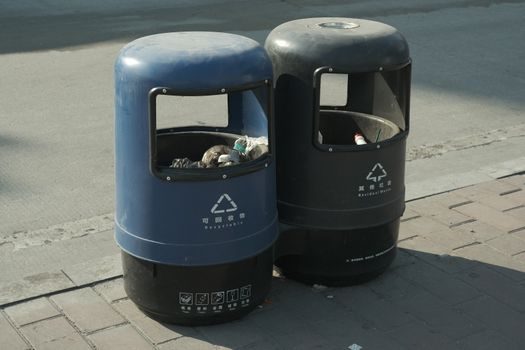
End-of-life cost (E) and salvage value (S) form the fifth TCO line and are netted against the rest of the equation per the standard formula [S1][S3].
PC is recyclable by mechanical re-grind or by chemical depolymerization back to bisphenol-A monomer; re-grind content of 10-30% is commonly reprocessed into non-optical parts without property loss, while high-purity reclaim targets optical/medical streams [S5]. Density 1,200 kg/m³ [S5] sets the per-part mass for landfill or recovery revenue, and EU end-of-life vehicle (ELV) and WEEE directives require take-back for many PC-containing electronics housings, putting a hard floor on E. Specifying a single-polymer, filler-free grade at design stage lets the entire assembly be reground without separation cost; specifying multi-resin laminates or PC/ABS blends blocks that path and pushes the asset onto the landfill column of the TCO ledger.
Comparison of Cost Lines on Decision Criteria
Five PC cost lines rank very differently on four buyer-relevant criteria: cost share, volatility, controllability, and risk of mis-spec. [S2]
Resin (P) is 25-35% of TCO, low volatility (Asia-Pacific spot moves ±5-10%/quarter), fully controllable by grade choice. Processing is 10-20% of TCO, moderate volatility (energy-driven), controllable by scrap rate and throughput. Installation is 15-25% of TCO, low volatility, controllable by joint design and panel size. Maintenance/replacement is 20-40% of TCO, the highest-volatility line, and the line most exposed to mis-spec (UV grade, solvent exposure, thermal cycling). End-of-life net is −5 to +5% of TCO, low volatility, controllable by mono-material design. Buyers chasing the lowest 15-20 year spend should target the maintenance line first, not the resin line. A wider cross-category view of cost drivers across industrial polymers sits in this insulation board TCO breakdown with 30-year math, and a second reference frame is this rebar coupler TCO analysis covering 5-10 year spend.
Who TCO Discipline Is For (and Who It Is Not)

TCO discipline pays off for spec-driven buyers, EPC contractors, and asset managers running 10+ year service lives, where the 65-75% non-purchase share of lifetime cost dominates the IRR equation [S2].
It is overkill for one-off prototype parts, short-tenn pop-up builds, or disposable consumer goods with a 1-3 year life, where the discounted maintenance and disposal terms collapse to near zero and the resin price-per-kg is the correct decision metric. TCO discipline is also the wrong tool for purely mechanical property selection (impact vs. stiffness vs. optical clarity); that is a polycarbonate material property selection problem, not a TCO problem, and the two analyses should run sequentially, not in parallel. A useful sanity-check on the boundary is this: if your part is in service for more than 5 years, the maintenance and disposal lines together are likely larger than the purchase line, and TCO discipline is warranted [S1][S3].
Trackable Signals and Reference Links
Track Asia-Pacific BPA and PC spot prices on a quarterly cadence; a ±10% resin move is the largest single TCO lever, since it propagates through processing, transport (density 1,200 kg/m³ [S5]), and disposal mass. Track ASTM D3935, ISO 7823-1, and UL 94 V-0/V-2 listings for the grade under spec; these are the documents that lock in the maintenance and replacement assumptions in the TCO model. Cross-check the five-line TCO formula TCO = P + PV(O + T + M + W + E − S) against the standard definition [S1][S3] any time a vendor offers a "lifetime cost" number, because most vendor numbers exclude one or more of O, T, W, or E. Material property data and grade selection guidance sit in the polycarbonate encyclopedia entry.
For component-level specifications, see industrial pc, and total station.